Author name: Bhavishya Goyal

Bhavishya Goyal is the lead developer and content strategist at PickMyTrade, specializing in automated trading systems, TradingView automation, and prop firm trading solutions. With deep expertise in algorithmic trading and trade copier technology, Bhavishya writes about trading automation strategies, broker integrations, and Pine Script development.

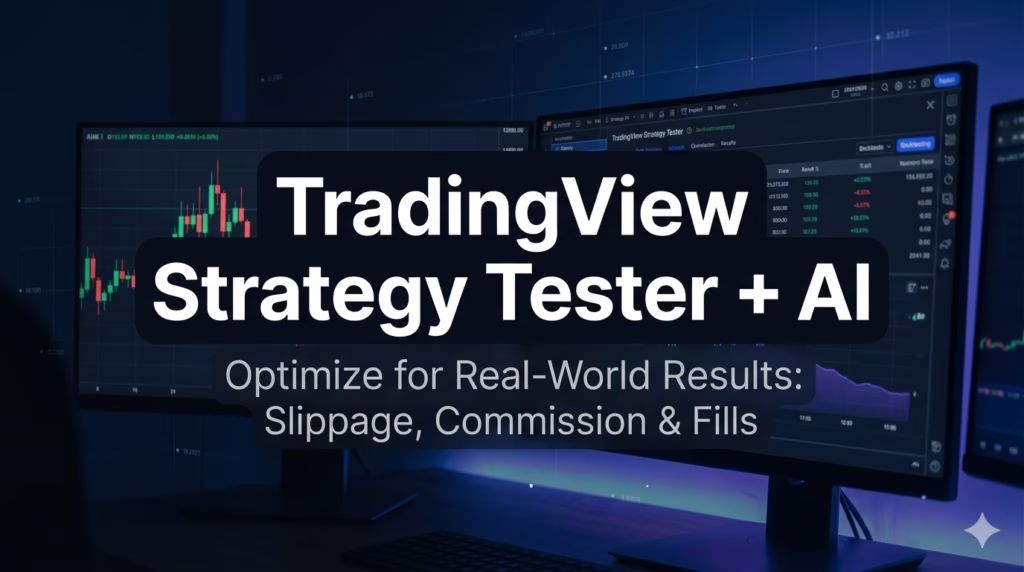
Dark trading workstation with multiple monitors showing TradingView candlestick charts and strategy tester panels, with text overlay reading TradingView Strategy Tester + AI โ€“ Optimize for Real-World Results: Slippage, Commission and Fills
TradingView

TradingView Strategy Tester + AI: Optimize for Real-World Results

Your TradingView strategy tester shows 300% returns in backtesting โ€” then loses 40% in its first live month. Sound familiar? You’re not alone, and your strategy isn’t necessarily broken. The problem is almost always hidden in three settings most traders never touch: slippage, commission, and fill assumptions. A 20โ€“50% reduction in performance is common when

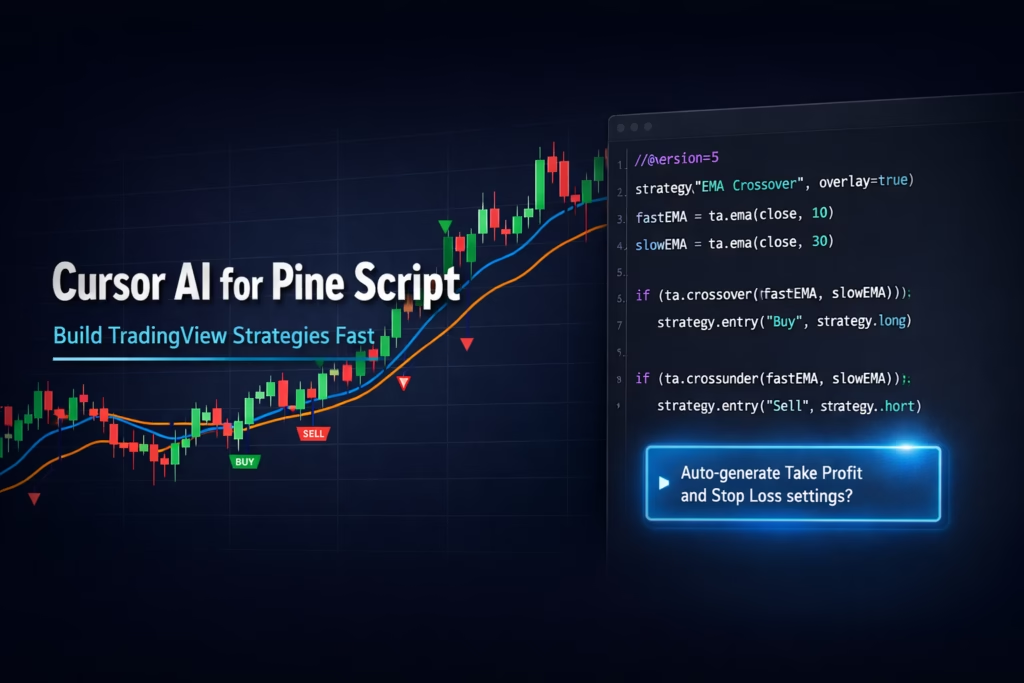
Blog post cover showing a TradingView candlestick chart and Pine Script code editor side by side, with the title "Cursor AI for Pine Script: Build TradingView Strategies Fast" overlaid in bold white and cyan text.
AI & Machine Learning

Cursor AI for Pine Script: Build TradingView Strategies Fast

Most Pine Script developers spend hours debugging syntax errors, chasing deprecated functions, and stitching together logic that should take minutes. That’s a real problem, especially when TradingView now hosts over 150,000 community scripts and the competition to build better strategies keeps growing. Cursor AI changes that equation. Developers using AI coding assistants complete tasks 55.8%

A dark-mode algorithmic trading dashboard showing AI-powered stock market charts, real-time price data, and a Python code editor in the background, representing an AI-driven trading strategy setup
Algo trading

Building Your First Algorithmic Trading Strategy with AI

Algorithmic trading is no longer reserved for Wall Street quant desks. The global algorithmic trading strategy market reached an estimated $21 billion in 2024 and is projected to nearly double to $43 billion by 2030, according to industry analysis. Open-source Python tools mean a retail trader can build, test, and run AI-powered strategies from a

Scroll to Top