TradingView

TradingView

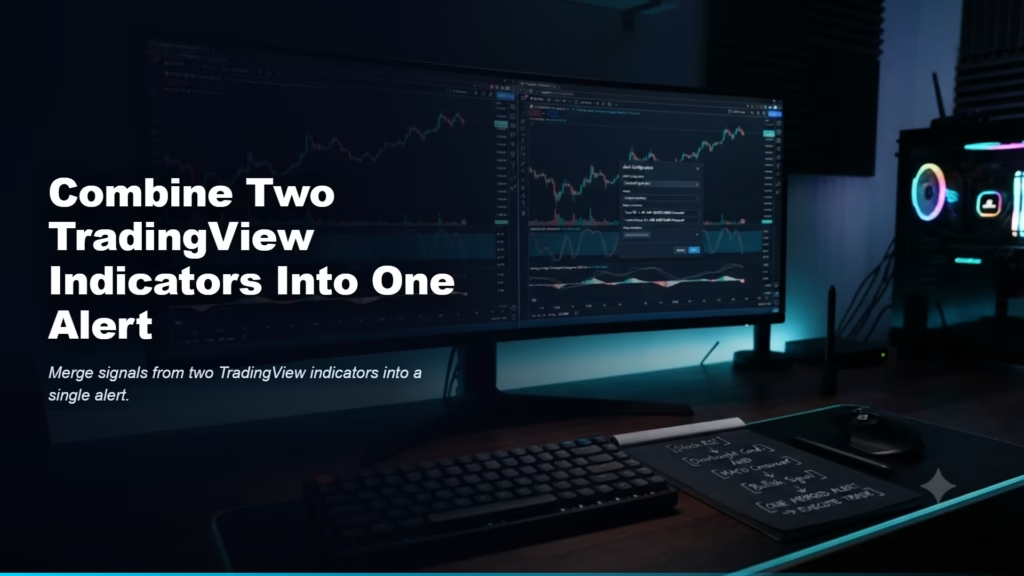
How to Combine Two TradingView Indicators Into One Alert

You add a Bollinger Bands cross and an EMA cross to your chart, set up two alerts, and now your phone buzzes twice for what is really one trade idea. One buzz means “price crossed the band.” The other means “price crossed the EMA.” Neither one alone means “both conditions lined up, take the trade.” […]
TradingView

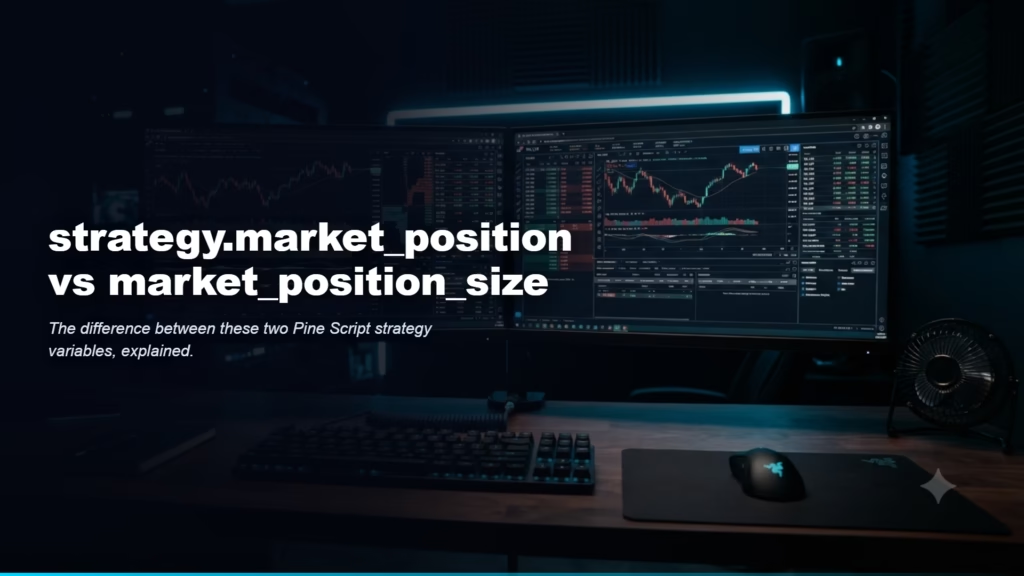
strategy.market_position vs market_position_size Guide

If your TradingView alert fires but PickMyTrade rejects the payload or sends the wrong contract count, the cause is often one mixed-up placeholder. {{strategy.market_position}} and {{strategy.market_position_size}} look almost identical in the alert editor, but they return completely different data types. A third relative, {{strategy.position_size}}, adds a signed-number trap on top. Pick the wrong one for

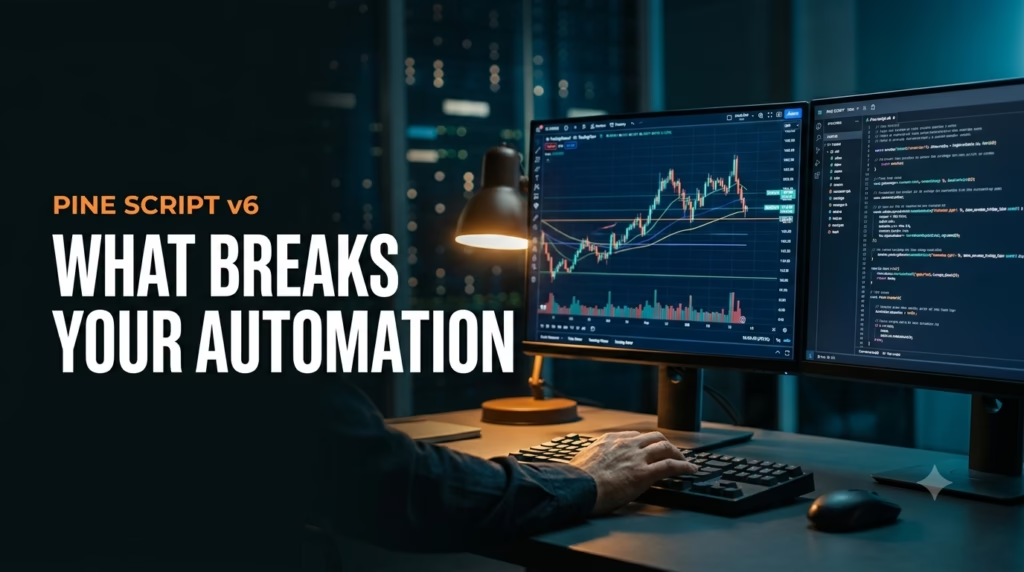
A dark trading workstation with TradingView charts and Pine Script v6 code, illustrating what breaks live automation
TradingView

Pine Script v6 : What Breaks Your Live Automation

TradingView’s Pine Editor can convert a Pine Script v5 strategy to v6 in one click, and the result compiles clean almost every time. That’s the trap. A script that compiles isn’t the same as a script that trades the way it did yesterday. Pine Script v6 changed how order functions evaluate conditions, how margin gets

Data center server aisle at night with cool blue LED lighting and a single amber beam cutting through the dark, symbolizing TradingView's 4-IP webhook allowlist protecting a PickMyTrade automation pipeline.
TradingView

How to Allowlist TradingView’s 4 Webhook IPs

TradingView sends every webhook alert, from every account, on every plan, for every strategy, from exactly four IP addresses. Not four thousand. Four. That’s a small enough number that anyone running a self-hosted relay in front of PickMyTrade can lock the door and let only those four through. I run a small VPS-based bridge in

Scroll to Top