
The IBKR API cost is zero. It’s also the least useful number on your statement. We priced a micro futures bot trading four round turns a day, line by line, from Interactive Brokers’ published rates. The month came to $207.42, and only $42.00 of it was IBKR’s own commission.
Table of Contents
- Is there an IBKR API cost at all?
- The free forms that still block orders
- What does one futures round turn really cost?
- Which market data does a bot actually have to buy?
- Two ways a data bill jumps
- The receipt: one MES bot, one month
- What if the same bot trades ES instead?
- What changes when the bot trades stocks?
- And if the bot trades options?
- When does API throughput start costing money?
- The small print on an IBKR statement
- Where does PickMyTrade sit on the bill?
- Frequently asked questions
- How to keep your IBKR API cost down
So where does the rest go? Exchange fees, data you may or may not need, a server to keep Trader Workstation awake, and the tools on either side of the broker. A few charges only ever hit API users, and IBKR’s commission pages don’t show most of them. Want IBKR’s headline rates on one page? Our overview of Interactive Brokers API costs lists them in one table, with stocks and futures side by side. This post turns those rates into receipts.
Key Takeaways
- The IBKR API itself is free. FIX carries a $1,500 monthly minimum commission, and IBKR Lite has no API.
- An MES round turn costs $1.22, and CME’s $0.70 is more than IBKR’s $0.50.
- Our MES bot’s month cost $207.42 all-in, $102.48 of it broker-side.
- Non-pro CME data is $1.55, waived above $20 of commissions. Pros pay $145.
Is there an IBKR API cost at all?
The API itself has no price over an ordinary internet connection. IBKR’s required-minimums schedule lists a $0 monthly minimum for both the TWS API and the Web API on an internet connection, and there’s no API subscription to buy. The catches sit in two other places: FIX sessions, which carry a $1,500 monthly minimum commission, and IBKR Lite, which has no API at all.
The TWS API is IBKR’s socket interface to Trader Workstation or IB Gateway, running on a machine you control. The Web API is its REST and WebSocket service. FIX CTCI is the institutional order-routing protocol. Over a normal internet connection, only the last one carries a price tag.
| How you connect | TWS API | Web API | FIX CTCI |
|---|---|---|---|
| Internet, through IB Gateway | $0 minimum | $0 minimum | $1,500 first session, $1,000 each extra |
| Extranet, leased line or cross-connect | $500 minimum | $500 minimum | $1,500 first session, $1,000 each extra |
| VPN | Not supported | Not supported | $1,500 first session, $1,000 each extra |
Every figure in that table is a monthly minimum commission. In other words, it’s a floor rather than a surcharge. For example, if a FIX account generates $900 of commissions in a month, IBKR bills the $600 shortfall, while an account that trades past $1,500 pays nothing extra. FIX also needs $10,000 of equity before IBKR starts the connection process. That’s a lot of floor for a retail strategy to fill.

IBKR Lite is the second catch. IBKR’s own Lite versus Pro comparison marks the APIs as a Pro-only feature. So the one plan with $0 US stock commissions is the one plan a bot can’t use.
The free forms that still block orders
Two forms cost nothing but will stop you if they’re skipped. The Market Data API Acknowledgement has to be signed in Client Portal, or API data requests come back as “not subscribed.” And the day after your first API futures trade, IBKR assigns the API User Activity Certification. It asks whether your orders are automated, which software sends them and who operates it.
Building the connection in your own code instead? Our IB API Python setup guide walks through that route from the first socket call.
What does one futures round turn really cost?
$1.22 for a Micro E-mini S&P 500 (MES) and $4.48 for the full-size E-mini (ES), at IBKR’s base tier. Each side of the trade carries IBKR’s commission, CME’s exchange fee and a $0.01 National Futures Association (NFA) regulatory fee. On both contracts, CME’s share of the bill is bigger than IBKR’s.
A round turn is the entry and the exit together, which means two contract sides, and IBKR bills every side separately.
Here’s the split per side. MES costs $0.25 of IBKR commission, $0.35 of CME exchange fees and $0.01 for the NFA, so $0.61 in total. ES costs $0.85, $1.38 and $0.01, or $2.24. At this volume IBKR’s Fixed and Tiered plans charge the same commission, and both pass the exchange and regulatory fees straight through on top. One difference does show up overnight, and the small print section below has it. So why does everyone quote $0.25? Because it’s the only number IBKR controls. The exchange fee runs 1.4 times the commission on MES and 1.6 times on ES, and no plan choice moves it.
The volume discounts won’t rescue a micro bot either. IBKR counts each CME micro contract as one tenth of a standard contract toward its monthly tiers. Reaching the $0.20 micro rate takes more than 10,000 micro contracts in a month, which is about 5,000 round turns, or 238 every trading day. For nearly every retail micro strategy, $0.25 is the permanent price. Trade count is the only dial left to turn.
Scalpers who think in round turns rather than sides should read our comparison of round-trip and per-contract futures costs before sizing up. If you’re still choosing between micros and minis, the micro futures contract sizing guide covers the tick math.
Which market data does a bot actually have to buy?
Usually one CME feed, and it often ends up free. Non-professional CME top of book costs $1.55 a month and depth costs $12.10, and IBKR’s price list marks both as waived once commissions pass $20. The $10 US Securities Snapshot and Futures Value Bundle covers top of book on all four CME Group exchanges, and it’s waived at $30.
Which one fits? A bot that only trades ES or MES needs CME alone, so $1.55 is the cheapest real-time route. A bot spread across several exchanges, such as ES on CME and crude oil on NYMEX, is where the bundle can win.
That’s because waivers don’t stack. Each waived service uses up its own threshold, so four separate feeds need roughly $80 of commissions to all go free, while the bundle needs $30. Below $30 of commissions, however, four feeds at $6.20 still undercut it.
Every subscription comes with conditions attached:
- The account needs $500 of equity on top of what the data costs.
- It has to be IBKR Pro. Lite accounts can’t take the bundles at all.
- Demo accounts can’t subscribe, full stop.
- One paper account can share the live user’s subscriptions, so testing doesn’t double the data bill.
Our IBKR paper trading setup guide shows where that sharing switch lives.
Two ways a data bill jumps
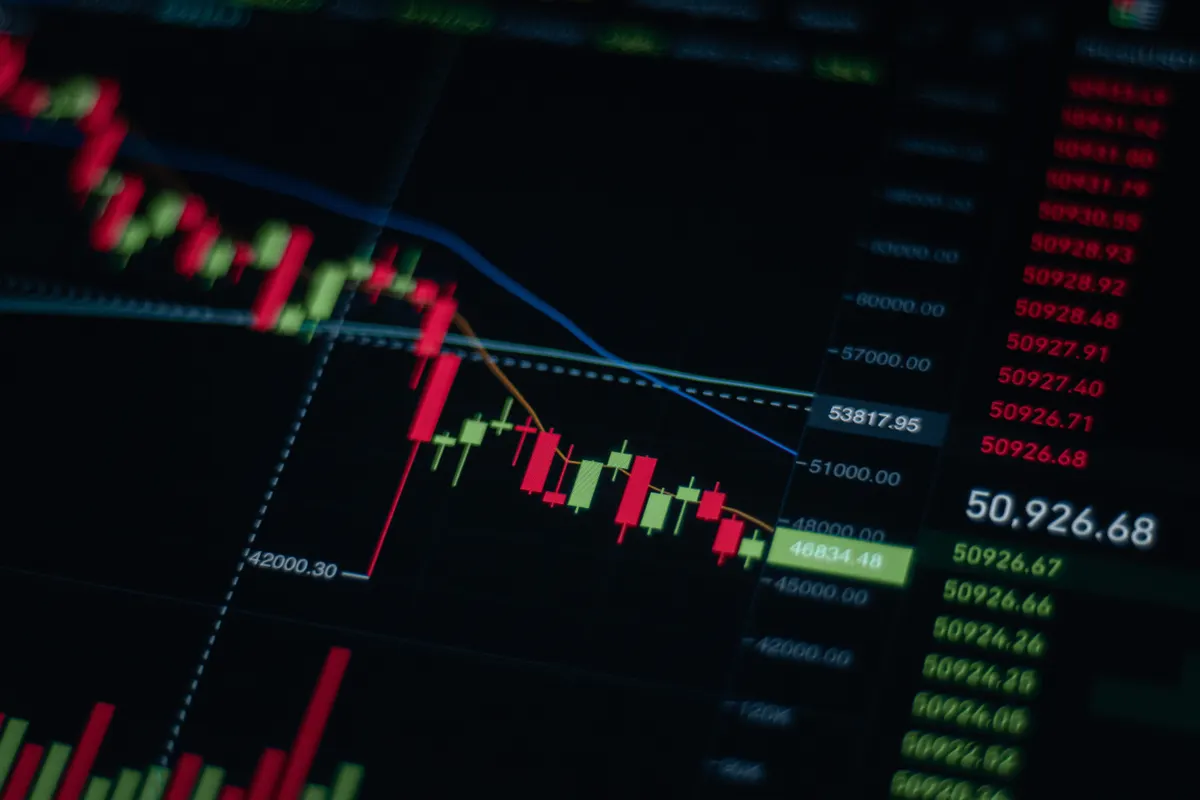
We analyzed IBKR’s market data schedule row by row, and two lines can multiply a bill. The first is classification. IBKR’s API documentation says users start out classified as professional until they update their subscriber status, and accounts held by companies count as professional by default. That matters more than it sounds. A professional pays $145 a month for CME top of book plus depth, with no waiver listed. Run a strategy through an LLC across all four CME Group exchanges and data alone passes $500 a month.
The second is the gap between Trader Workstation and the API. IBKR treats API data as off-platform, so some data that’s free inside TWS doesn’t reach the API. A bot that asks for it gets error 10089, “API data requires subscription.” The free fallback is delayed data, which runs 10 minutes behind on CME and suits a dashboard far better than an order ticket.
Does a TradingView-driven bot need IBKR data at all? Not for signals. Those come from TradingView’s feed. It can still trip TWS’s order precautions, though, which check each order’s price against a live quote before sending it. PickMyTrade’s IBKR precaution error guide traces errors 354 and 163 to that check. The fix is a TWS setting, not a subscription.
The receipt: one MES bot, one month
$207.42. Our test case trades one MES contract four round turns a day for 21 trading days, which is 84 round turns and 168 contract sides. IBKR, CME and the NFA take $102.48 of it. The other $104.94 pays for the alerts, the bridge and a server that keeps Trader Workstation logged in.
We built this IBKR API cost receipt from IBKR’s published rates on September 15, 2026, and nothing is rounded until the final line.
| Line item | How it’s calculated | Monthly cost |
|---|---|---|
| IBKR commission | 168 sides at $0.25 | $42.00 |
| CME exchange fee | 168 sides at $0.35 | $58.80 |
| NFA regulatory fee | 168 sides at $0.01 | $1.68 |
| CME top-of-book data | $1.55, waived above $20 of commissions | $0.00 |
| API access | TWS API over the internet | $0.00 |
| Market data lines | Default 100 lines, one symbol | $0.00 |
| Overnight carrying fee | Bot is flat before the close | $0.00 |
| IBKR subtotal | $102.48 | |
| TradingView Essential | Cheapest plan with webhook alerts | $14.95 |
| PickMyTrade Monthly | TradingView-to-IBKR bridge | $50.00 |
| VPS for TWS | QuantVPS Starter+, optional | $39.99 |
| Total | $207.42 |
Watch two of those zeros. They depend on how the bot behaves. The data waiver holds because $42 of commission clears the $20 threshold with room to spare. The carrying fee stays at zero because the bot ends each day flat.
Divide the bill by 84 and every round turn costs $2.47 before the strategy earns a cent. An MES tick is worth $1.25, so the bot needs about two ticks per trade just to cover the month. IBKR and CME alone account for one of those ticks.
Run TWS on your own machine instead of a VPS, and the all-in cost drops to $1.99 a round turn.
What if the same bot trades ES instead?
The broker side jumps to $376.32 and the month to $481.26, or $5.73 a round turn. That’s less than half of one $12.50 ES tick. Now look at what flipped. Alerts, bridge and server were 51% of the MES bill but only 22% of the ES bill.
On micros, then, shop the fixed subscriptions hardest, not the commission rate. At this volume, switching between IBKR’s Fixed and Tiered plans saves nothing on commission, though Fixed does skip the carrying fee that Tiered charges on overnight positions. Paying PickMyTrade annually at the September 2026 price of $350 saves about $21 a month, and the VPS discount code saves another $6. For costs beyond the broker, our breakdown of hidden trading automation expenses goes wider.
What changes when the bot trades stocks?
On stocks, the per-order minimum takes over. On IBKR Pro Fixed, a 100-share order costs $1.00, double what $0.005 a share would come to. Tiered charges a $0.35 minimum plus venue, clearing and pass-through fees. Five 100-share round trips a day in a $50 stock cost $222.93 a month on Fixed and about $153.68 on Tiered.
| Line item (210 orders, 105 of them sells) | Fixed | Tiered |
|---|---|---|
| Commission | $210.00 | $73.50 |
| Exchange fee (taking liquidity at $0.0030 a share) | Included | $63.00 |
| Clearing ($0.0002 a share) | Included | $4.20 |
| NYSE and FINRA pass-through fees | None | $0.05 |
| SEC fee ($20.60 per $1 million sold) | $10.82 | $10.82 |
| FINRA trading activity fee | $2.05 | $2.05 |
| Consolidated audit trail fee | $0.06 | $0.06 |
| Monthly total | $222.93 | $153.68 |
Fixed isn’t all-inclusive, and that’s the usual misreading. It folds in exchange and clearing fees, but SEC, FINRA and audit trail fees still land on top. Why does Tiered still win when every order pays to take liquidity? Because $0.35 plus a $0.30 venue fee and $0.02 of clearing comes to $0.67, well under Fixed’s $1.00. Orders that add liquidity can earn exchange rebates instead, which widens the gap further.

Here’s a charge that exists only for API users. A US stock order sent through the API and routed straight to a named exchange costs $0.01 every time it’s cancelled or modified. Each directed execution earns a $0.25 credit against that day’s fees. So the fee only bites past 25 cancels or edits per fill, and orders routed through SMART, IBKR’s own router, pay nothing.
Our guide to IBKR order types and SMART routing explains when direct routing is worth it.
Modified orders carry one more trap. IBKR treats a modification as a cancellation plus a new order, so on some exchanges a partly filled order that gets edited can pay the minimum twice.
And if the bot trades options?
Options make that same minimum hurt more. IBKR Pro charges $0.65 a contract on premiums of $0.10 or more, $0.50 between $0.05 and $0.10, and $0.25 below that, plus exchange, clearing, regulatory and transaction fees. So why does one cheap contract cost so much? Every order carries a $1.00 minimum, four times the $0.25 rate on low-premium contracts. OPRA’s top-of-book feed adds $1.50 a month for non-professionals, waived at $20 of commissions.
When does API throughput start costing money?
Throughput only starts costing money once a strategy needs more than 50 requests a second. IBKR caps the TWS API at your market data lines divided by two, and every account starts with 100 lines. Quote Booster is IBKR’s $30 monthly pack of 100 extra lines, so each pack lifts the ceiling by 50 requests a second, up to 10 packs.
Lines can also grow without buying them. After the first month, IBKR allocates the greatest of 100 lines, your monthly commissions divided by 8, or 100 lines for every $1 million of equity. Reaching 200 lines that way takes $1,600 of monthly commissions or $2 million in the account. For most traders, $30 is the cheaper route.
Four packs, $120 a month, buy 250 requests a second. That’s the same rate IBKR quotes for FIX through IB Gateway, where the first session alone carries a $1,500 monthly minimum. Buying throughput is far cheaper than buying a FIX session.
What happens when a bot goes over? It depends on one TWS setting. With “Reject messages above maximum allowed message rate” checked, TWS returns error 100, and a third breach ends the API session. Unchecked, TWS queues the extra requests and paces them itself. A bot sending a few TradingView-triggered orders an hour will never see either outcome. Scalpers polling quotes across dozens of symbols will. Our guide to API rate limits in trading automation covers how to design around them.
The small print on an IBKR statement
A few charges only appear when a strategy does something specific. IBKR allows two free withdrawals a month, bills $0.01 to $0.03 per snapshot quote after a $1.00 monthly credit, and charges $50 for a first trade-bust request. None of these touched our MES receipt, but each one can.
Here’s what to watch for:
- Carrying fees on Tiered futures. IBKR’s US Tiered schedule includes a carrying fee for positions held overnight, and its Fixed schedule says plainly that you aren’t charged one. The published rate runs from $0 a contract per night with equity at three times the margin requirement, to $0.05 at twice margin, to $0.10 when equity only just covers it. A swing bot holding four contracts on thin margin pays about $2 a week for the privilege.
- Edited and overnight orders. A modification counts as a new order, and IBKR treats an order that stays working overnight as a new one when it works out minimums.
- Trade busts. IBKR charges $50 for the first bust request in a calendar month and $100 for each one after. CME charges its own $1,000 administrative fee when a busted trade traces back to your order.
- Snapshot quotes. US stocks and ETFs cost $0.01 a request and everything else $0.03, and IBKR moves you onto streaming once snapshots cost as much as the feed.
- Account minimum and inactivity fee. Both are $0, on Pro and on Lite.
Which of these deserves a rule in your code? The trade-bust line. A runaway bot that fires a stack of orders into a thin market can turn one bad minute into a four-figure exchange bill, and no pricing plan softens that.
Where does PickMyTrade sit on the bill?
It’s the $50 line, and it replaces code, not the broker. PickMyTrade receives the TradingView alert and places the order through TWS or IB Gateway, which has to stay open and logged in during trading hours. IBKR’s commissions, exchange fees and data charges don’t change, so every number above applies either way.
That TWS requirement is why the receipt carries a VPS line. PickMyTrade’s QuantVPS setup guide for IBKR covers a server that arrives with TWS and the PickMyTrade IB app preinstalled. The Starter+ plan is $39.99 a month for 2 Ryzen cores and 4GB of RAM in Chicago, and the PICKMYTRADE code takes 15% off. A home computer that stays on through the session costs nothing extra. Just don’t let it sleep.

PickMyTrade costs $50 monthly, $120 quarterly or $350 a year at September 2026 prices, with a 5-day free trial and no card required. Every plan includes unlimited strategies, trades and tickers. One TWS setting matters on the IBKR side: turn on “Bypass Order Precautions for API orders,” or precaution prompts can leave orders sitting untransmitted.
We ran these numbers because a rate card answers the wrong question. Nobody pays a rate. They pay a statement, and the receipt above is that statement, line by line. For the full connection walkthrough, start with our TradingView to Interactive Brokers automation guide, then see PickMyTrade’s plans.
Frequently asked questions
Yes. The IBKR API cost is $0 for the TWS API and the Web API over an internet connection, both of which carry a $0 monthly minimum commission. You still pay normal commissions, exchange fees and any data you subscribe to. FIX is the exception: a $1,500 minimum commission for the first session each month and $1,000 for every extra session.
No. IBKR’s Lite versus Pro comparison lists the APIs as a Pro-only feature, and API market data also requires IBKR Pro. Lite’s $0 US stock commissions don’t reach a bot as a result. Switching plans is allowed, and IBKR processes your first three plan changes daily, then later ones quarterly.
CME top of book, at $1.55 a month. Non-professionals get it waived once commissions pass $20. The $10 Snapshot and Futures Value Bundle covers all four CME Group exchanges and is waived at $30. A professional subscriber pays $145 a month for CME top of book plus depth.
$1.22 at the base tier: $0.50 of IBKR commission, $0.70 of CME exchange fees and $0.02 of NFA fees across both sides. Micro contracts count as one tenth of a standard contract toward IBKR’s volume tiers, so the $0.25 commission rarely falls for a retail trader.
Only if your own computer can’t stay on. TWS or IB Gateway has to remain open and logged in for API orders to reach IBKR. QuantVPS Starter+ costs $39.99 a month, or 15% less with the PICKMYTRADE code, and moves that requirement off your desk entirely.
How to keep your IBKR API cost down
The IBKR API cost is $0, and the bill is everything wrapped around it. On micros that wrapping is half the month. Before a strategy goes live, run through these checks:
- Price each round turn all-in: $1.22 on MES and $4.48 on ES, not $0.25 or $0.85.
- Match data to the exchanges you actually trade, then open Client Portal and confirm your market data subscriber status reads non-professional before the first bill lands.
- Keep SMART routing on.
- Leave Quote Booster off until the bot genuinely needs more than 50 requests a second.
- Count TradingView, the bridge and the server, because on an MES bot they’re 51% of the bill.
Want to see your own version of the receipt? Start PickMyTrade’s 5-day free trial, point it at an IBKR paper account, and read the statement after a week. If a setup question comes up, contact the team, and you can read more about PickMyTrade before you decide.
Editorial note: every rate here was checked against Interactive Brokers’ published schedules, PickMyTrade’s pricing page and QuantVPS’s pricing page on September 15, 2026, then rechecked on September 16. Reviewed by the PickMyTrade Trading Systems Team. Brokers change fees, so check the numbers again before you commit capital.
Also Checkout: Tradeify Webhooks: Automate Trades from TradingView
Connect your alerts with PickMyTrade — automated trade execution, no coding required. Start free →