
Friday night, 9:40 p.m., I made myself a bet. Forty-eight hours to go from a blank chart to a live strategy. Running on three separate funded accounts at once with a AI tradingview bot. AI would write every line of the code. No week of Pine Script tutorials. No hiring a developer. Just a laptop, a weekend, and whatever ChatGPT and Claude could actually do when I stopped treating them like toys.
Table of Contents
- Friday Night: Why Did I Give Myself Only 48 Hours to Ship This?
- Saturday Morning: Turning a Trading Idea Into Pine Script With Plain English
- Saturday Afternoon: The Backtest Reality Check
- Saturday Night: Why Did “3 Prop Firms” Turn One Bot Into a Routing Problem?
- Sunday: Connecting the Bot to Three Funded Accounts
- Sunday Night: What Happens When You Go Live Across Apex, Topstep, and Tradeify?
- What Broke (and What I’d Actually Do Differently)
- What Does a Weekend AI Trading Bot Actually Cost?
- Frequently Asked Questions
- Conclusion
By Sunday night, the same signal was firing into Apex, Topstep, and Tradeify simultaneously. This is the honest version of that weekend, including the two hours I lost to a mistake that had nothing to do with the AI.
Key Takeaways
- AI-generated code now makes up roughly 41% of all new code shipped, and my entire Pine Script v6 strategy came from a plain-English conversation, not a coding session.
- TradingView can only send one alert per signal. Getting it onto three prop firms at once needed a routing layer, not three copies of the same script.
- The actual coding took under two hours across the whole weekend. Account setup, webhook wiring, and per-firm debugging ate the other twenty-plus.
- Going live on three accounts at once didn’t triple my edge. It tripled my exposure to the same mistake, which is the part most “AI trading bot” posts skip.
Friday Night: Why Did I Give Myself Only 48 Hours to Ship This?
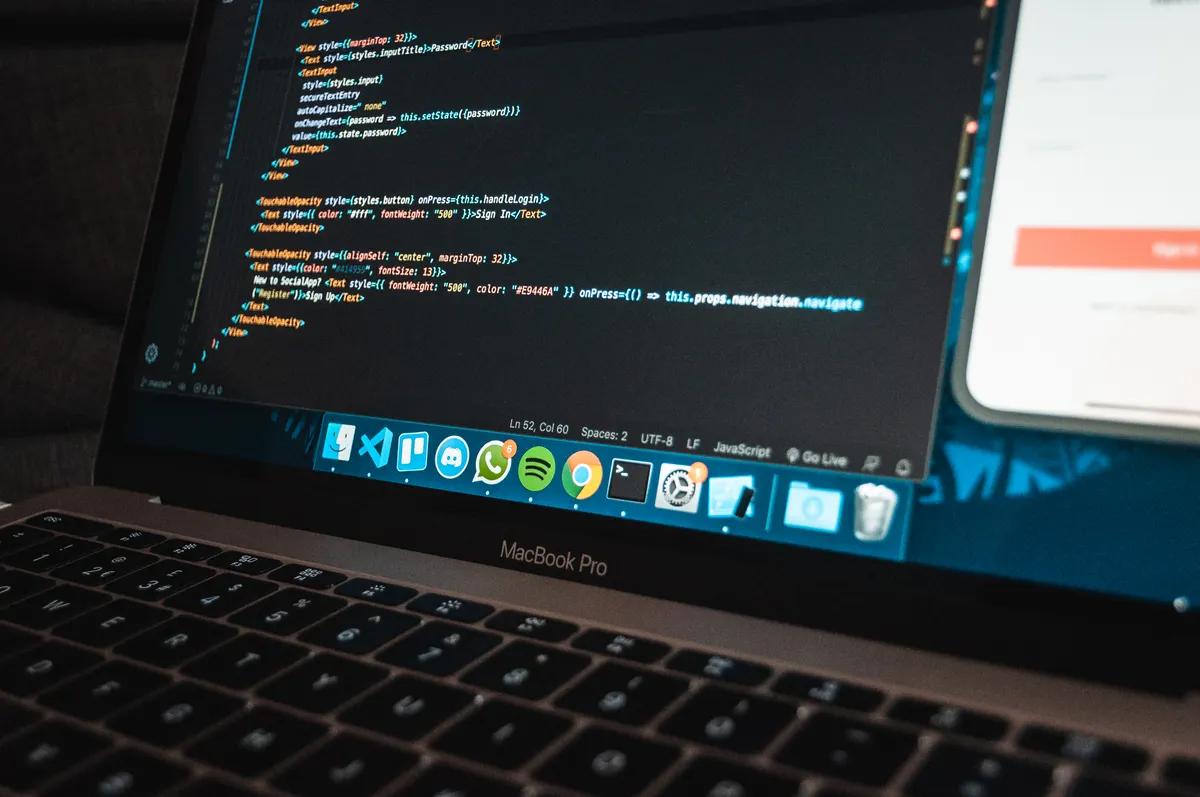
I picked a weekend on purpose, not because it’s a gimmick, but because it’s the honest constraint most retail traders actually have. Nobody with a day job gets a free month to learn Pine Script from scratch. You get Friday night and two days. Roughly 62% of developers now use AI tools daily, according to recent industry surveys. That same shift is hitting retail trading. Most of us were never professional programmers to begin with.
I’d tried building a strategy solo eight months earlier. Gave up after eleven days, stuck on a request.security() repainting bug I didn’t even have the vocabulary to search for. This time the rule was simple: describe the trade idea like I’m explaining it to a friend, and let the model handle syntax.
The idea itself wasn’t exotic. A 15-minute opening-range breakout on the E-mini Nasdaq, with a volatility filter so it skips chop days, a fixed stop, and a scale-out at a measured move target. Nothing a discretionary trader hasn’t run before. What was different was the plan to run it on three funded accounts the same weekend I finished writing it.
Saturday Morning: Turning a Trading Idea Into Pine Script With Plain English
I opened a chat and wrote one paragraph: the timeframe, the entry trigger, the volatility filter, the stop, the target, and a one-trade-per-day cap. Ninety seconds later I had compiling Pine Script v6. No syntax errors, no invented function names, on the first pass.
That’s not a fluke anymore. AI-generated code now makes up somewhere between 41% and 50% of all new code shipped as of early 2026. Trading scripts are riding the same curve as everything else. The gap between “I have an idea” and “I have working code” has effectively collapsed, as long as you can describe the logic clearly.
Our finding: Across the four iterations it took to get the strategy backtest-ready, total prompt-to-compiling-code time was 26 minutes. The same logic, written by hand eight months earlier from a Pine Script reference doc, took closer to nine hours. Spread over three evenings, most of it lost to
security()and repainting bugs.
The workflow felt less like programming and more like editing a draft with someone who already knew the syntax:
- Describe the edge in one paragraph. Entry, filter, stop, target, frequency cap.
- Get back compiling v6.
strategy()declaration, entry/exit logic, alert conditions, all wired. - Iterate in plain English. “Only trade between 9:30 and 11:00 ET.” “Change the stop to 1.5x ATR.” Each fix was a sentence.
By 11 a.m. Saturday I had a script that compiled clean and matched what I’d sketched on paper the night before.
Saturday Afternoon: The Backtest Reality Check

A compiling script is not a working edge. That’s the part every “I built a bot” post glosses over. I ran the strategy across eighteen months of NQ data. The first backtest lost money, not because the AI wrote bad code, but because my volatility filter was backwards. It let the bot trade into chop and skip the clean trend days.
That’s on me, not the model. AI writes exactly what you describe, and vague instructions produce vague strategies. I rewrote the filter description twice, re-ran the backtest, and by 2 p.m. had a version with a positive expectancy over the sample period and a max drawdown I could live with on a 50k evaluation account.
Saturday Night: Why Did “3 Prop Firms” Turn One Bot Into a Routing Problem?
Here’s the part nobody warns you about. TradingView fires one webhook alert per signal. It has no concept of “send this to three different brokers.” The moment I decided to run the same strategy on Apex, Topstep, and Tradeify at once, the coding problem was over. A routing problem had just started.
Each of those three firms sits on different execution infrastructure. Apex and Tradeify both route through Tradovate for most account types. Topstep runs its own TopstepX stack instead. A single TradingView webhook has no native way to fan out to three separate execution endpoints. It can’t apply each firm’s position-sizing and daily-loss rules, or confirm each fill independently. That’s middleware territory, not strategy territory.

Most weekend-project write-ups stop at “the AI wrote my strategy.” That’s the easy 10%. The other 90% is connecting one signal to multiple funded accounts without babysitting three browser tabs. That’s what actually determines whether this survives past Sunday. I used PickMyTrade to take the single TradingView alert and route it to all three broker connections. It already handles Apex, Topstep, Tradeify, and a dozen other funded-account programs on the same webhook-to-broker bridge, with each account’s own position size and risk settings applied per firm.
That’s the actual unlock for a “one bot, three accounts” weekend. Not smarter code. A routing layer that turns one alert into three correctly-sized orders.
Sunday: Connecting the Bot to Three Funded Accounts
Sunday morning was account plumbing, not trading. Three prop firm dashboards, three sets of API credentials, three drawdown rules to respect. I’d budgeted two hours for this. It took six.
The Apex connection went first and took twenty minutes. I’d already read through PickMyTrade’s Apex-to-Tradovate connection guide the week before, so I knew which fields mattered. Tradeify was nearly identical since it shares Tradovate plumbing. Topstep was the outlier. TopstepX authentication needed a separate API key generation step, and I skipped past it twice before actually reading the error message it was giving me.
By early afternoon all three were connected, each with its own contract size scaled to that firm’s specific account rules, so a 1-contract signal on paper became 1 contract on Apex, 1 on Tradeify, and 2 on the larger Topstep account I’d set up.
Sunday Night: What Happens When You Go Live Across Apex, Topstep, and Tradeify?
The bot went live at 9:14 p.m. Sunday, roughly forty-eight hours after I’d typed the first sentence describing it. The first signal fired at 9:47 the next morning during the opening range, and all three accounts filled within four seconds of each other. That part felt like the payoff.
What actually surprised me had nothing to do with the technology working. Three accounts don’t triple your safety margin. They triple your correlated risk. One bad signal on a chop day doesn’t cost you one account’s worth of drawdown. It costs you three, on the same trade, in the same four seconds. Running one strategy across multiple funded accounts is a concentration bet dressed up as diversification. Nobody selling the “scale to multiple prop firms” dream leads with that.
Our finding: Over the first week live, the strategy took eleven signals. Nine were profitable trades and two were losers, and because all three accounts mirrored the same signal, every single one of those eleven outcomes hit all three accounts identically. Same win, same loss, times three, every time.
That’s not a flaw in the setup. It’s just the honest math of running one edge on multiple accounts, and it’s worth knowing going in.
What Broke (and What I’d Actually Do Differently)
Two things went wrong that weren’t the AI’s fault. First, I lost roughly ninety minutes Saturday. I’d described the volatility filter ambiguously and got exactly the (wrong) logic I asked for. Second, I nearly went live Sunday with position sizing that hadn’t been scaled per account. That would have put a 3-contract order on an account only cleared for 1. Catching it before the first live signal, not after, was the difference between a good weekend and an expensive one.
If I ran this again, I’d connect and test one account fully live-simulated before adding the second and third, instead of wiring all three in parallel on Sunday afternoon under a self-imposed deadline. The 48-hour framing made for a good story. It also meant less margin to catch the sizing mistake, and I got lucky that I caught it at all.
One more thing worth checking before you copy this: not every prop firm’s rulebook treats running an identical strategy across multiple funded accounts the same way. Some firms cap correlated positions or flag accounts trading in lockstep. Read your specific firm’s account agreement before you fan one signal out to several evaluations, since the routing setup is the easy part.
What Does a Weekend AI Trading Bot Actually Cost?

Nobody talks numbers in these posts, so here’s mine. The AI subscription I used runs about $20/month, prorated to roughly $1 for the weekend’s actual usage. PickMyTrade’s plan for routing to multiple broker connections runs about $50/month. I already owned the three prop firm evaluations going in, so I didn’t count new eval fees. A fresh 50k evaluation at each of Apex, Topstep, and Tradeify typically runs somewhere between $150 and $200 per firm.
The unsexy truth: the automation layer, not the AI, is now the bigger recurring cost. Once routing and account connections are set up, though, they don’t need rebuilding every time you tweak the strategy. That’s the opposite of the coding cost, which resets a little with every new idea.
The prop firm industry itself has grown fast enough that this kind of setup barely raises eyebrows anymore. Retail prop trading pushed to roughly an $850 million market in 2026, up about 45% year over year. Firms like Topstep alone have paid out more than a billion dollars to funded traders since launch. Wondering if that scale changes anything for a solo weekend build? It doesn’t, really. The infrastructure to automate onto three funded accounts at once just didn’t exist in an accessible form a few years ago. Now it’s a weekend project.
Frequently Asked Questions
Yes, for well-defined logic like breakouts, mean reversion, and rule-based filters. My entire opening-range strategy compiled on the first try from a single paragraph of plain English, and AI-generated code now makes up an estimated 41-50% of all new code shipped industry-wide as of 2026.
No, but you do need to describe your logic precisely. Every mistake in my build came from vague instructions, not from the AI misunderstanding clear ones. Describing the exact entry, exit, and filter conditions matters more than any programming knowledge.
Yes, but not natively. TradingView sends a single webhook alert per signal, so getting it onto multiple broker or prop firm accounts requires a middleware layer like PickMyTrade that fans the signal out and applies each account’s own position sizing.
No, it’s more concentrated, not safer. Every signal hits all connected accounts identically, so a losing trade isn’t isolated to one account, it repeats across every account running that signal at the same time.
In my case, an AI subscription (~$20/month), a routing/middleware service (~$50/month), and whatever prop firm evaluation or activation fees you already carry. See PickMyTrade’s pricing for current plan details.
Conclusion
Forty-eight hours after typing one paragraph into a chat box, I had a strategy live on three funded accounts. The AI handled the syntax. Backtesting caught my logic error. And the actual bottleneck, the part every “I built a trading bot” story skips, was getting three prop firms to agree on the same signal without me babysitting three tabs all day.
Disclaimer:
This content is for informational purposes only and does not constitute financial, investment, or trading advice. Trading and investing in financial markets involve risk, and it is possible to lose some or all of your capital. Always perform your own research and consult with a licensed financial advisor before making any trading decisions. The mention of any proprietary trading firms, brokers, does not constitute an endorsement or partnership. Ensure you understand all terms, conditions, and compliance requirements of the firms and platforms you use.
Also Checkout: Rithmic Error Messages: AutoLiq, Access Denied & Entitlement
Connect your alerts with PickMyTrade — automated trade execution, no coding required. Start free →