
Writing the strategy was never the hard part. That’s the thing nobody tells you when you skip TradingView’s webhook and decide to build the whole automation stack in Python yourself.
Table of Contents
- Anatomy of a Python trading bot
- What actually breaks a Python trading bot?
- Is Python faster than a TradingView webhook?
- The reliability math nobody runs
- How do you automate TradingView without Python?
- Four cases where Python still wins
- Count the hours, not the dollars
- Frequently asked questions
- The bottom line
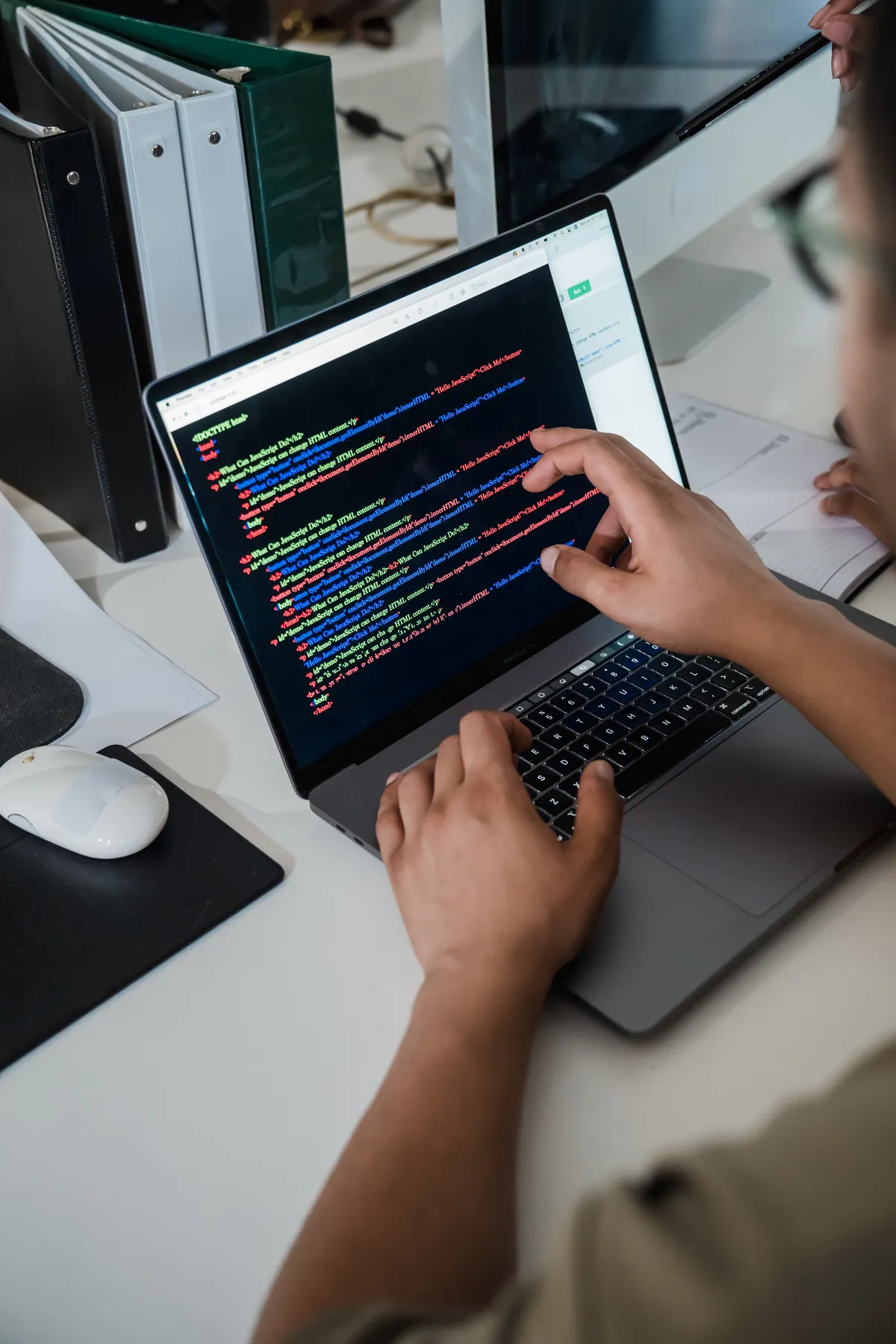
You already know pandas. You’ve written asyncio code that didn’t deadlock. Pine Script feels like a toy, and ccxt is right there, and the whole thing looks like a weekend project. So you build it. And it works. For about eleven days.
Then a websocket drops during a Fed announcement, your reconnect logic fires but the exchange rejects the resubscribe because your auth token expired forty seconds earlier, and by the time your health check notices, you’re holding a position you thought you’d closed. That’s not a Python problem. That’s the problem with choosing to own the transport layer at all.
So we ran both approaches for a year: a maintained Python stack, and a TradingView alert routed through a no-code webhook bridge. Same strategies, same instruments, same hours. Then we went back and audited what we’d actually built. The result is uncomfortable if you like writing code, which we do.
Key Takeaways
- In our own audit of a working Python trading bot, strategy logic was 9% of the codebase. The other 91% was transport, state, and error handling.
- Of 30 unplanned bot halts we logged in twelve months, only 3 traced back to strategy logic. The rest were infrastructure.
- Python’s speed advantage is real in backtesting and close to irrelevant in live retail execution, where the broker round trip dominates.
- No-code webhook routing removes the failure surface you didn’t want. But it also removes control you may actually need, and we cover exactly when.
Anatomy of a Python trading bot
We opened a bot we’d been running on MNQ and BTC for most of a year and counted lines by function. About 4,200 lines total, excluding tests. The entry and exit rules, meaning the reason the thing exists and the part with any edge in it, came to roughly 380 lines, and everything else in that repository was scaffolding whose only job was keeping those 380 lines connected to a broker. That ratio is the whole argument. You didn’t set out to build a fault-tolerant message consumer with an order state machine and a credential rotation schedule. You set out to trade a moving average crossover.
And you cannot have the second one without first building all of the first.
Nine percent of that repository was the reason the repository existed.
And here’s the part that stings. Every one of those non-strategy lines is code you have to maintain but can’t test properly, because the failure modes only appear in production, under load, at 2:47 in the morning, against a broker API you don’t control.
What actually breaks a Python trading bot?
Not the strategy. But we kept an outage log for twelve months across three bots: every unplanned halt, missed fill, or state desync that needed a human. Thirty incidents. Three of them were bugs in the trading logic itself.
The other twenty-seven were things a data scientist would fairly describe as “not my job.”
Except there’s nobody else on the team.
Look at the top two bars together. Fifteen of thirty halts were a connection or a credential, and those are the two things every broker integration guide waves at in a single paragraph while every production system on the other side of that API spends years hardening them. You aren’t going to out-engineer that in your spare time, and you shouldn’t want to. Then there’s a second-order cost that never shows up in an incident count at all, because somewhere after the third 2 a.m. page you quietly stop deploying changes, and the bot calcifies around whatever version happened to be running the night you gave up. You’ve now got a system you’re afraid to touch, running a strategy you no longer believe in, because the risk of breaking the plumbing outweighs the expected value of any improvement you’d make to the logic. Ask yourself honestly whether you’ve been there.
We have been there, more than once, on three separate bots.
Is Python faster than a TradingView webhook?
In backtesting, yes, enormously, and nothing here disputes that. But in live retail execution the interpreter isn’t your bottleneck, and the mental model that says otherwise is borrowed from firms who colocate.
Break down a single round trip. Your signal fires on a chart. It travels to wherever your logic lives. Your logic decides. An order goes to the broker. The broker acknowledges. The exchange fills. In that chain, the part Python owns is the “decides” step, and for a moving-average crossover on a five-minute bar that step costs microseconds, while the broker round trip costs tens to hundreds of milliseconds and stays identical whether the caller was your asyncio client or a hosted webhook consumer.
That ratio doesn’t move because you wrote better Python. It moves when you shorten the physical path, and language has nothing to do with physical path.
So what does change latency? Where the code physically runs, how many network hops the signal takes between the chart and the exchange, and whether the connection to the broker was already open and authenticated when the signal arrived, which is a question about deployment topology rather than about which language parsed the alert. A self-hosted bot on a consumer VPS in the wrong region loses far more time to network distance than it ever gains from being written in Python. We’ve gone through this in detail in our breakdown of low-latency trading bot architecture and in a ranked look at VPS choices for low-latency execution.
Which brings up the question most of these comparisons quietly avoid.
Here’s the version of it that applies to anyone running a five-minute or higher timeframe: if your edge disappears because of 200 milliseconds, it was never an edge. It was noise you fitted a curve to. That failure shows up constantly in crypto, where people build elaborate infrastructure around a signal that doesn’t survive fees and slippage.
Watch a tutorial like that one and count the minutes spent on the trading idea versus the minutes spent on connection setup, key management, and exception paths. The ratio in the video is roughly the ratio in the chart above. That’s not a criticism of the tutorial. It’s an accurate picture of the work.
The reliability math nobody runs
Uptime compounds badly when one person owns every layer. Your bot is only up when the host is up, and the network is up, and the process hasn’t crashed, and the session token is valid, and the broker API hasn’t changed shape, and your last dependency bump didn’t break a serializer. Those aren’t redundant systems. They’re serial dependencies, and serial dependencies multiply.

So six layers at 99.5% each gives you about 97% combined. That sounds fine until you convert it: roughly one full trading day of downtime per month, arriving unannounced, frequently during exactly the volatility that made the strategy worth running.
Do you know which day it’ll be? Neither did we.
Now, a managed execution layer doesn’t make the underlying problems disappear. Instead it moves them to someone whose entire job is watching them, with on-call rotation, staging environments, and a few thousand other users hammering the same broker endpoint at the same time, which is the part that actually matters, because when a broker changes its order schema a hosted service sees it in aggregate error rates within minutes while you find out only when a fill doesn’t happen. That’s the honest case for giving up control. Not that you can’t build it, but that you can’t watch it. Monitoring is the expensive half of reliability, and it’s the half solo builders quietly skip.
How do you automate TradingView without Python?
Concretely: your strategy stays in Pine Script on TradingView, where it already is. The alert fires with a JSON payload describing the trade, that payload hits a hosted endpoint, and the endpoint validates it, maps it to your broker’s order format, submits it, and reconciles the fill against your position state. You configure the mapping in a dashboard. There’s no server, no requirements.txt, no cron job, no secret to rotate on your side. Setup runs about ten minutes for a first account.
What did you actually give up in that swap? Custom execution logic, mostly. If your orders are market, limit, bracket or trailing, the answer is nothing at all.

In our experience the routing layer is where this earns its keep, especially for anyone trading futures or prop accounts. PickMyTrade connects a single TradingView alert to Tradovate, Rithmic, TradeLocker, Match-Trader, ProjectX, IBKR, TradeStation, Tradier, plus named prop firms including Apex, Topstep, Bulenox, FundedNext and Take Profit Trader. The full supported list is longer than that. In Python, each of those is a separate client library with its own auth model, its own order semantics, and its own way of failing. Here it’s a dropdown.
Multi-account routing is where the gap gets absurd. Firing one signal into four funded accounts with per-account sizing means four concurrent order state machines in Python, each needing independent reconnect handling and its own reconciliation path, each failing in its own way at its own time, and each one yours to debug. It’s a configuration screen otherwise. We walk through the mechanics in the TradingView webhook automation guide, and the payload field reference lives in the docs. Neither of those pages will teach you to write a reconnect loop, which is the point.
Four cases where Python still wins
Often enough that anyone claiming otherwise is selling something. Here are the four cases where you should keep writing code, and we’d argue with you if you didn’t.
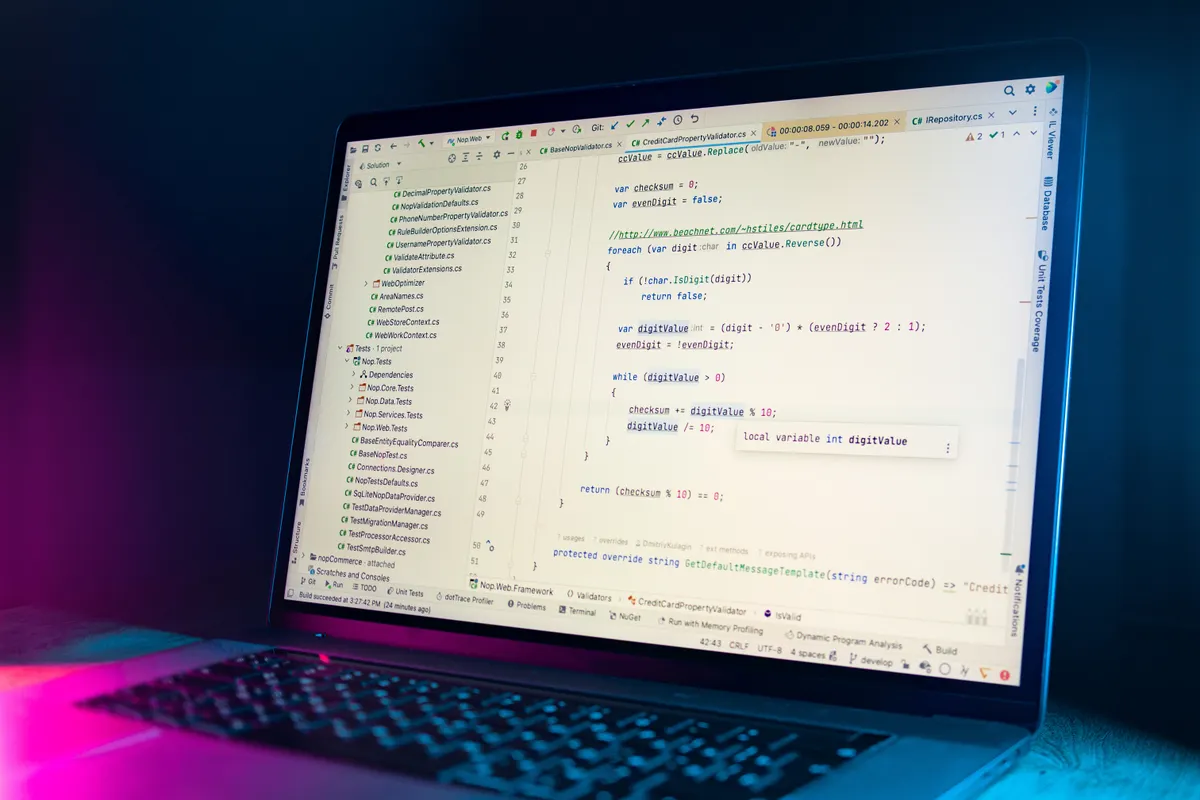
Your signal doesn’t come from a chart. If entries depend on order-book imbalance, an options surface, an alternative dataset, or a model whose features aren’t expressible in Pine Script, a chart-alert bridge has nothing to bridge. Compute the signal in Python and send the decision over a webhook. That hybrid keeps your model and drops the transport code.
You need sub-10ms and you’re paying for it. Colocation, direct market access, a real quant stack. Then the transport layer is your edge and outsourcing it is nonsense. But be honest about which group you’re in. Are you optimizing microseconds, or are you trading a 5-minute chart and telling yourself microseconds matter?
Portfolio-level logic across many instruments. Correlation-aware sizing, dynamic hedging, cross-asset netting. Rule engines get ugly here fast, whereas code stays clean.
Research, always. Backtesting, walk-forward analysis, parameter surfaces, regime detection. Nothing replaces Python for this, and nothing in this article suggests otherwise. The argument is narrow: separate the research layer from the execution layer, keep the first, and stop hand-building the second.
None of those four cases describes a moving average crossover on a five-minute chart.
The mistake isn’t using Python. It’s using Python for the one part of the pipeline that’s a solved commodity, then absorbing the maintenance cost forever because the first version only took a weekend. We compared the middle-ground options in our webhook versus direct API guide, and there’s a full IBKR Python API walkthrough if you decide to build it anyway.
Count the hours, not the dollars
Count in hours, not dollars. We tracked time against the Python stack for its first year, sorted every logged session into four buckets, and found a distribution so lopsided that it settled the argument for us before we’d finished adding up the second column.
The gap between those two columns was not a close call.
Side by side, the two approaches don’t really compete on the same axis.
One asks for your weekends. The other asks for a subscription.
| Self-hosted Python | TradingView webhook bridge | |
|---|---|---|
| Time to first live order | Days to weeks | About 10 minutes |
| Code you maintain | ~4,200 lines | None |
| Adding a broker | A new client library, auth model and order semantics | A dropdown |
| Routing to 4 accounts | 4 order state machines, 4 reconnect paths | A configuration screen |
| Who watches it at 3 a.m. | You | An on-call team |
| Failure surface you own | Host, network, auth, broker schema, dependencies | Your strategy |
| Year-one time split | 88% of hours on non-strategy work | Setup, then nothing |
Month four is where the two curves crossed and never crossed back.
Maintenance passing build cost by month four is the number that changed our minds. A self-hosted bot isn’t a project with an end. It’s a subscription you pay in weekends, and the price goes up as brokers ship changes and dependencies drift. When was the last time a dependency bump made your strategy more profitable?
Against that, a hosted bridge runs $50 a month, or $500 a year. You can argue about whether that’s good value. You can’t really argue that it’s more expensive than the hours in that donut, unless your time is worth approximately nothing. Current tiers are on the pricing page.
There’s also a rule-compliance angle, and it catches people out more often than the cost argument does. Prop firms have opinions about automation: IP consistency, permitted strategy types, latency-arbitrage prohibitions. So a hosted execution layer with a stable footprint sidesteps a whole category of problems that self-hosted VPS setups create. Our writeup on what bot behavior gets flagged covers the specifics.
Frequently asked questions
Yes. TradingView alerts carry a JSON payload to any webhook endpoint, and a hosted bridge maps that payload to broker orders through a dashboard. No server, no libraries, no deployment. Typical setup for a first account runs about ten minutes, against days for an equivalent Python build.
Not meaningfully at retail timeframes, because execution latency is dominated by the broker round trip, which both approaches share. In our audit the interpreter’s decision step was microseconds against tens to hundreds of milliseconds of broker time. Where your code physically runs matters far more than the language it’s written in.
Run a hybrid. Compute the signal in Python (models, alternative data, order-book features), then send the finished decision to a webhook instead of hand-building broker connections. You keep the research layer that justifies Python and drop the 91% of the codebase that was transport and state handling.
For the major futures prop firms, yes. A hosted bridge routes one TradingView alert into accounts at firms including Apex, Topstep, Bulenox, FundedNext and Take Profit Trader, with per-account sizing. Confirm your firm’s automation rules first, because permitted strategy types and IP consistency requirements vary by firm.
It’s a trade, and it’s a real one. Yes, you lose the ability to patch execution behavior yourself, and you take on vendor dependency. What you gain is monitoring you weren’t doing: 27 of our 30 outages were infrastructure failures a dedicated team would have caught first. Pick the risk you can actually manage.
The bottom line
The case against Python here isn’t about capability. You can build it. Most readers of this publication could build it well. The question is whether the thing you built is the thing you wanted, and after auditing our own codebase the answer was no. We’d written a mediocre message broker with a trading strategy attached. So keep Python where it’s unbeatable, which is research, backtesting, feature engineering, and any model no chart DSL can express. Then let the signal leave your process as a JSON payload. Stop rebuilding a transport layer that a hundred other people already maintain better than you will alone. That’s the whole recommendation.
The best code in a trading system is code you never had to write. If you want the practical version, start with the no-code automated trading walkthrough, or read what happened when we ran a TradingView strategy on live prop accounts.
Questions about a specific broker or strategy setup? You can read more about the team, reach us through the contact page, or work through the 600+ answers in the automated trading FAQ.
Disclaimer:
This content is for informational purposes only and does not constitute financial, investment, or trading advice. Trading and investing in financial markets involve risk, and it is possible to lose some or all of your capital. Always perform your own research and consult with a licensed financial advisor before making any trading decisions. The mention of any proprietary trading firms, brokers, does not constitute an endorsement or partnership. Ensure you understand all terms, conditions, and compliance requirements of the firms and platforms you use.
Also Checkout: ChatGPT Pine Script Strategy: Prompt to Live Trades, No Code
Connect your alerts with PickMyTrade — automated trade execution, no coding required. Start free →