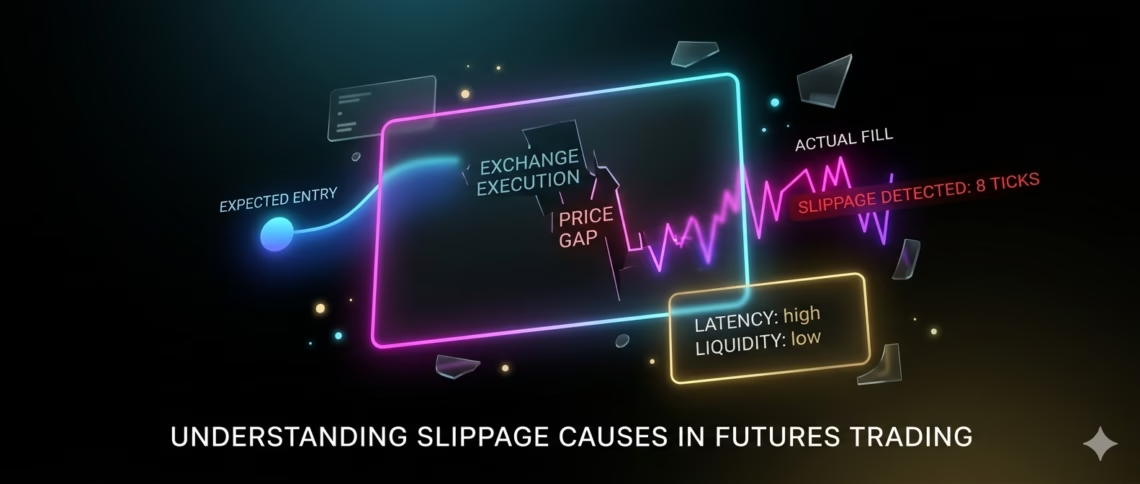
Futures traders know the frustration all too well: you click to enter at a precise price, yet the fill comes in several ticks worse. That gap between expected and actual execution price is slippage causes—and in fast-moving US futures markets like ES, NQ, or CL, even a few ticks can erase a day’s profit.
Understanding slippage causes is no longer optional in 2026. With algorithmic participation at record levels and volatility spikes driven by macro news, slippage remains one of the silent profit killers. This updated guide breaks down exactly why futures fill slippage occurs, the latest trends, and—most importantly—how smart traders are eliminating it.
What Is Slippage in Futures Trading?
Slippage is the difference between the price you expect when you place an order and the price at which the exchange actually fills it. It can be positive (you get a better price) or, far more commonly, negative. In futures, where leverage amplifies every tick, even minor slippage compounds quickly across multiple contracts.
Primary Slippage Causes in Futures Markets
Slippage causes boil down to three core forces: volatility, liquidity, and execution speed. Here’s how they play out in real US futures trading.
1. Market Volatility
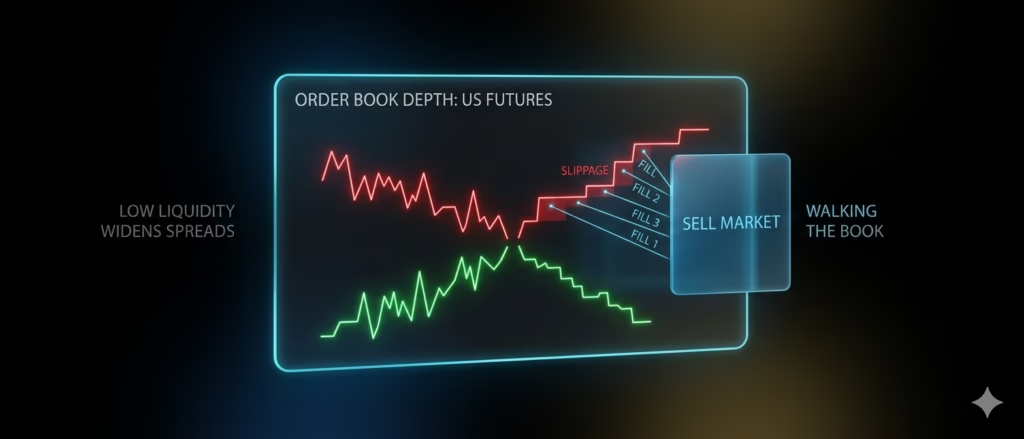
The Fastest Slippage Cause Sudden price swings triggered by economic data releases (NFP, CPI, FOMC), geopolitical events, or earnings surprises widen bid-ask spreads instantly. Your market order races through the order book while prices move, leaving you filled at the next available level. In 2025–2026, HFT algorithms reacting to the same catalysts have made these moves even sharper.
2. Low Liquidity and Thin Order Books During off-peak hours, contract rollovers, or in less popular instruments, there simply aren’t enough resting limit orders to absorb your trade. The result? Your order “walks the book,” filling at progressively worse prices. Even liquid contracts like E-mini S&P 500 can turn thin right after major news or during Asian session crossovers.
Click Here To Automate Futures Trading
3. Large Order Size and Market Impact Big market orders or stop-loss clusters exhaust available liquidity at a single price level. The exchange matches you across multiple price ticks—classic slippage. Prop-firm traders scaling up size often discover this the hard way.
4. Latency and Execution Delays Milliseconds matter. Network lag, broker routing delays, or slow platform response let the market move before your order reaches the CME. In today’s environment, even small latency creates measurable slippage causes.
5. Order Type and Phantom Liquidity Market orders guarantee execution but sacrifice price control. Meanwhile, high-frequency traders place and cancel large limit orders rapidly, creating “phantom liquidity” that disappears the moment your order arrives.
Recent Updates on Slippage Causes (2025–2026)
The mechanics haven’t changed, but the intensity has. Algorithmic order-flow anticipation and contract-rollover liquidity shifts now rank among the top slippage causes reported by futures traders. Thin markets during rollover periods fragment volume between front-month and next-month contracts, widening spreads and increasing fill slippage. Regulatory focus on best execution and the rise of low-latency prop-firm platforms have pushed brokers to improve routing—but slippage still spikes during high-impact events.
How Automation Directly Tackles Slippage Causes
Here’s where technology changes the game.
Modern automation platforms eliminate human and platform latency, the most controllable slippage causes. Tools that convert TradingView alerts into instant, rule-based orders on brokers like Tradovate (a leading US futures platform) execute in milliseconds with precise limit-order logic.
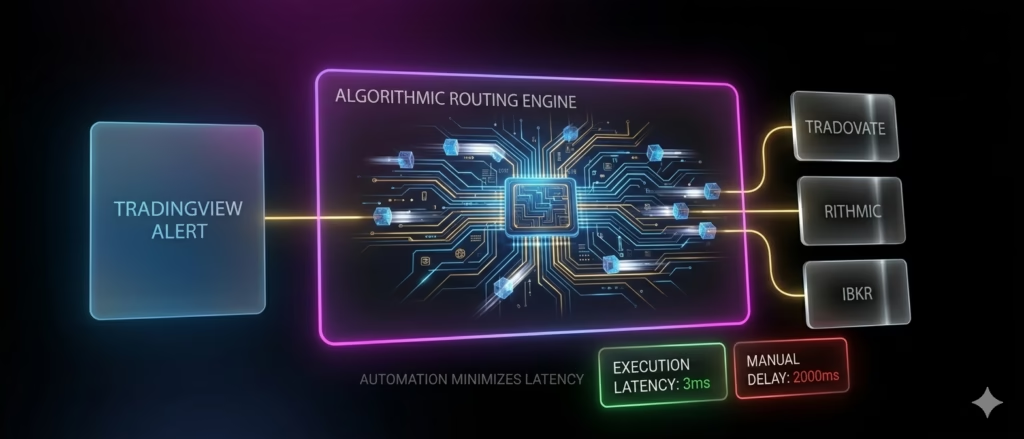
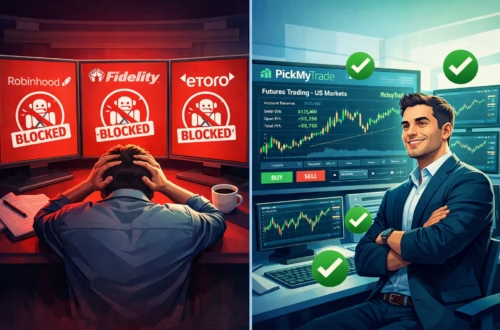
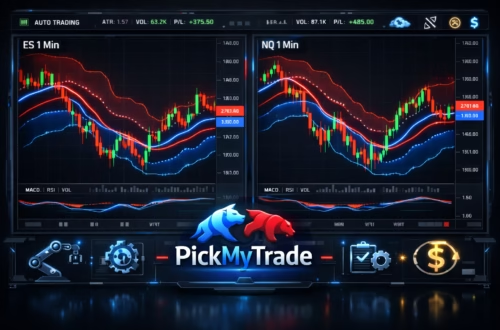
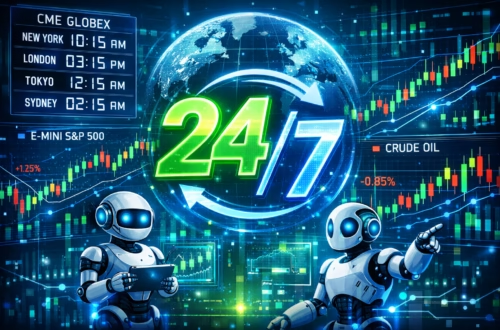
PickMyTrade stands out for futures traders on US markets. This no-code automation solution connects TradingView strategies directly to Tradovate, Rithmic, Interactive Brokers, and more. It supports 24/7 automated execution on major futures contracts (ES, NQ, YM, CL, and beyond) while enforcing risk rules that prevent oversized orders from walking the book.
Traders using PickMyTrade report significantly reduced slippage because:
- Webhook execution bypasses manual delays.
- Built-in limit-order intelligence avoids pure market-order fills.
- Multi-account scaling happens without emotional overrides during volatile moments.
By automating entries, exits, and position management on US futures markets, PickMyTrade turns slippage causes from unpredictable variables into manageable ones—letting you focus on strategy instead of watching ticks slip away.
Proven Strategies to Minimize Futures Fill Slippage
- Use limit orders or stop-limit orders whenever possible.
- Trade during peak liquidity hours (US session open for equity index futures).
- Break large positions into smaller slices.
- Avoid trading immediately before or after major news unless your strategy accounts for it.
- Leverage low-latency automation platforms like PickMyTrade for consistent, rule-based execution.
- Monitor order-book depth in real time and adjust size dynamically.
Final Thoughts
Slippage causes will always exist in futures trading, but they no longer have to dictate your P&L. By understanding the mechanics—volatility, liquidity, latency, and order flow—you can design systems that sidestep the worst fills. In 2026, the smartest traders combine deep market knowledge with automation tools purpose-built for US futures.
Ready to stop watching your fills slip? The edge belongs to those who execute faster and smarter.
FAQs: Most Asked Questions
It’s the difference between the price you intended and the price you actually received when your order executed.
No—volatility and news events will always create some risk—but latency, order type, and poor liquidity management are highly controllable.
Yes. Platforms like PickMyTrade remove human delay and enforce smarter order logic, dramatically cutting execution slippage on US futures.
Not always. Positive slippage gives you a better price, but most traders experience negative slippage more frequently.
Disclaimer:
This content is for informational purposes only and does not constitute financial, investment, or trading advice. Trading and investing in financial markets involve risk, and it is possible to lose some or all of your capital. Always perform your own research and consult with a licensed financial advisor before making any trading decisions. The mention of any proprietary trading firms, brokers, does not constitute an endorsement or partnership. Ensure you understand all terms, conditions, and compliance requirements of the firms and platforms you use.
Also Checkout: Entry Filters Explained: High-Probability Trades in 2026