In the hyper-competitive world of algorithmic trading, low-latency trading bots have become the ultimate edge. These high-speed systems execute orders in microseconds, turning fleeting market opportunities into consistent profits. Whether you’re scalping futures, arbitraging spreads, or deploying AI-driven strategies, mastering low-latency trading bots in 2026 is no longer optional—it’s essential for staying ahead.
This comprehensive guide explores everything from core technologies to practical implementation, including real-world automation for US futures markets.
What Are Low-Latency Trading Bots?
Low-latency trading bots are automated systems engineered to minimize the time between signal generation and trade execution. Unlike traditional bots that tolerate delays of 100–500 milliseconds, these operate in the microsecond to nanosecond range.
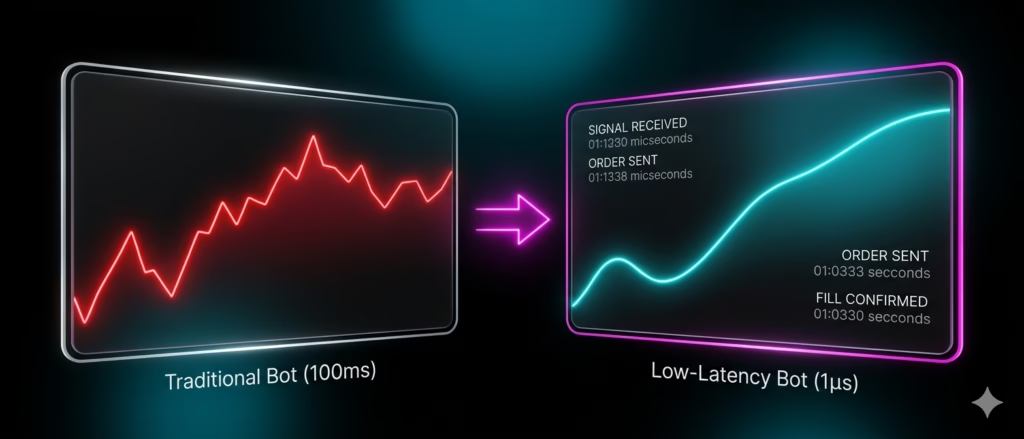
They power high-frequency trading (HFT), arbitrage, and market-making strategies where every millisecond counts. In 2026, low-latency trading bots combine AI, advanced networking, and hardware acceleration to process vast data streams and react faster than human traders—or even most retail platforms—ever could.
Why Low Latency Matters More Than Ever in 2026
Market volatility, 24/7 futures trading, and AI-generated signals have intensified competition. A 2025–2026 analysis shows that even 10–20 milliseconds of added latency can erase 30–50% of potential profits in scalping or breakout strategies.
Low-latency trading bots deliver:
- Minimal slippage — Execute at the exact quoted price before the market moves.
- Arbitrage edge — Capture tiny price discrepancies across exchanges or prediction markets like Polymarket.
- Emotional discipline — Rule-based execution without hesitation.
- Scalability — Handle thousands of trades daily across US futures contracts (ES, NQ, YM, etc.).
Platforms emphasizing ultra-low latency servers now dominate leaderboards in crypto and futures performance.
Key Technologies Powering Low-Latency Trading Bots
Building effective low-latency trading bots requires a specialized stack:

- Programming Languages: C++ or Rust for core logic; optimized Python with Numba or Cython for rapid prototyping.
- Hardware Acceleration: FPGA chips for nanosecond-order processing—used by top HFT firms for direct market access.
- Networking: Colocation servers near exchange data centers (e.g., CME for US futures) + protocols like Aeron for microsecond messaging.
- Software Frameworks: LMAX Disruptor for lock-free queues and zero-copy serialization (SBE).
- AI Integration: Reinforcement learning models that predict micro-movements and adapt in real time.
- Infrastructure: Low-latency VPS or dedicated servers with sub-1ms ping to brokers.
Quantum-inspired optimization is emerging for complex portfolio routing in 2026.
Step-by-Step: How to Design and Build Low-Latency Trading Bots
- Define Your Strategy — Focus on latency-sensitive approaches like scalping, mean-reversion, or event-driven breakouts.
- Choose Infrastructure — Deploy on colocation or low-latency VPS near target exchanges.
- Code the Core — Use event-driven architecture to process WebSocket feeds instantly.
- Backtest Rigorously — Incorporate slippage and latency simulation (walk-forward + Monte Carlo).
- Implement Risk Controls — Dynamic stops, position sizing, and circuit breakers.
- Go Live — Start with paper trading, then scale with monitoring dashboards.
- Optimize Continuously — Monitor latency spikes and retrain AI models weekly.
No-code options lower the barrier significantly for many traders.
Click Here To Automate Futures Trading
Low-Latency Trading Bots for US Futures Markets: PickMyTrade Automation
For traders targeting US futures (ES, NQ, RTY, crude oil, etc.), PickMyTrade stands out as a game-changer in 2026. This no-code platform automates TradingView strategies via webhooks directly to Tradovate, Rithmic, and IBKR—delivering millisecond execution without custom coding.
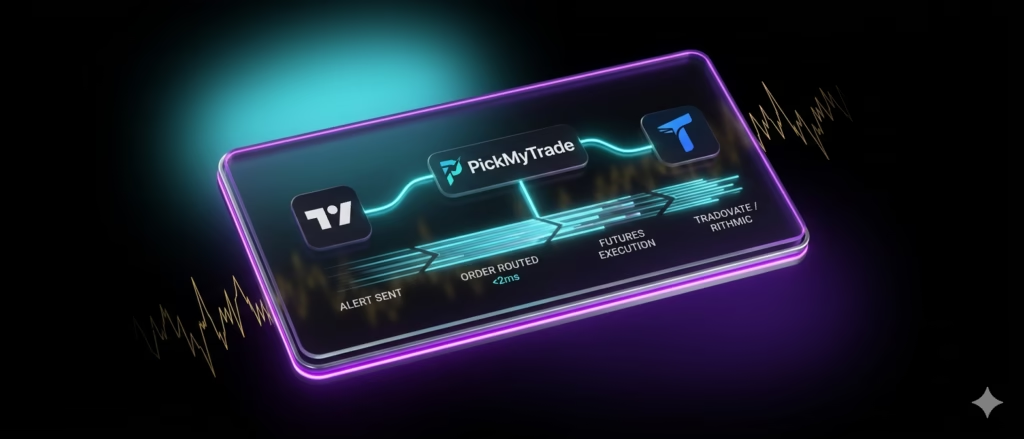
PickMyTrade shines for low-latency trading bots because:
- It routes alerts with sub-2ms replication when paired with low-latency VPS near CME.
- Supports unlimited alerts, strategies, and prop-firm accounts (Apex, Blue Guardian, etc.).
- Eliminates slippage from manual delays—perfect for breakout or scalping bots on 24/7 futures markets.
- Integrates seamlessly with Rithmic’s ultra-low-latency data routing (<250 microseconds).
Traders using PickMyTrade report consistent automation of complex futures systems while maintaining the speed edge required for profitable low-latency execution. It’s the practical bridge between TradingView signals and real-time US market orders—no API headaches, just reliable 24/7 bots.
Recent Advancements Shaping Low-Latency Trading Bots in 2026
- AI Agentic Systems: Bots that collaborate (e.g., Open Claw-style agents) for multi-timeframe decisions.
- FPGA + Direct Protocols: Nasdaq ITCH/OUCH acceleration moves order flow into hardware.
- Cloud + VPS Optimization: Dedicated ultra-low-latency servers now standard for retail pros.
- Predictive Microstructure Models: AI forecasts order-book shifts before they appear.
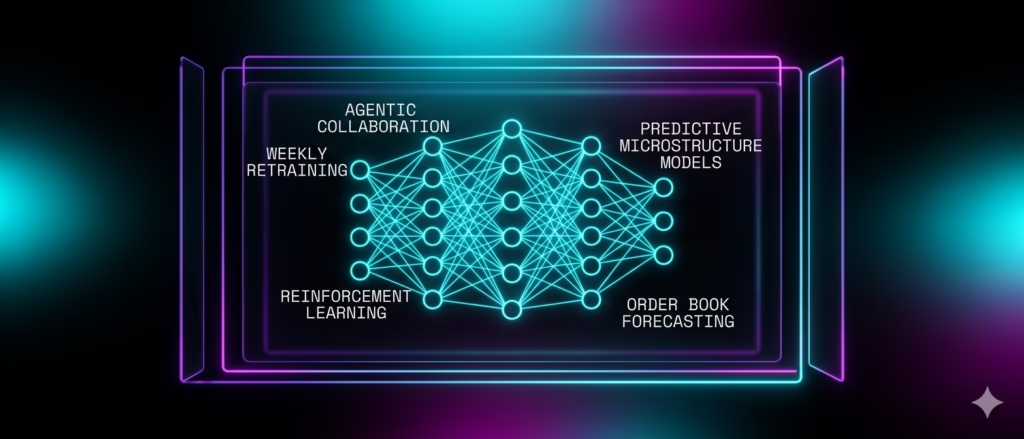
These updates make low-latency trading bots more accessible and powerful than ever.
Challenges and Pro Tips for Success
Common pitfalls include high infrastructure costs, regulatory scrutiny (CFTC for US futures), and over-optimization. Mitigate by starting small, using robust risk rules, and monitoring real-time latency metrics. Always stress-test against flash crashes and network outages.
Conclusion: Start Building Your Low-Latency Trading Bots Today
Low-latency trading bots are redefining what’s possible in 2026. With the right tech stack, AI enhancements, and tools like PickMyTrade for US futures automation, retail traders can compete at institutional speeds.
Ready to gain the edge? Audit your current setup, deploy on low-latency infrastructure, and automate your edge—your portfolio will thank you.
Most Asked FAQs
Under 10–20 milliseconds is good for most strategies; sub-1ms or microseconds is required for true HFT and arbitrage.
Not always—platforms like PickMyTrade offer no-code automation with millisecond execution for futures.
VPS/colocation starts at $50–200/month; enterprise FPGA setups run thousands but deliver nanosecond advantages.
Yes, but US futures require CFTC-compliant brokers. Avoid manipulative HFT patterns.
Disclaimer:
This content is for informational purposes only and does not constitute financial, investment, or trading advice. Trading and investing in financial markets involve risk, and it is possible to lose some or all of your capital. Always perform your own research and consult with a licensed financial advisor before making any trading decisions. The mention of any proprietary trading firms, brokers, does not constitute an endorsement or partnership. Ensure you understand all terms, conditions, and compliance requirements of the firms and platforms you use.
Also Checkout: 5 Brokers Blocking Bots in 2026 (Smart Alternatives)