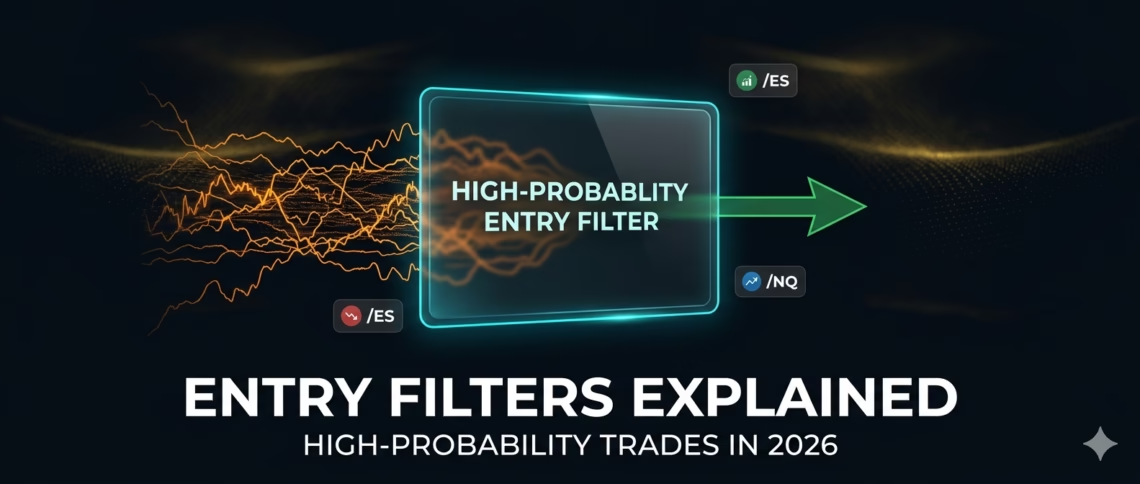
In the fast-paced world of futures trading, most traders lose money not because their core strategy is flawed — but because they enter too many low-quality setups. Entry Filters solve this problem by acting as a rigorous quality-control system. They screen every potential trade and allow only high-probability setups to reach your execution stage.
Whether you trade /ES, /NQ, or other US futures contracts, mastering Entry Setups can dramatically improve your win rate, reduce drawdowns, and turn good strategies into consistently profitable ones. This updated 2026 guide explains exactly how Entry Setups work, the most effective types, and how to automate them for US markets using PickMyTrade.
What Are Entry Filters in Trading?
Entry Filters are conditional rules or technical checks that must ALL be satisfied before you take a trade. Think of them as a gatekeeper: your base signal (pin bar, breakout, MACD crossover) is the invitation, but the Entry Filters decide whether that invitation is worth accepting.
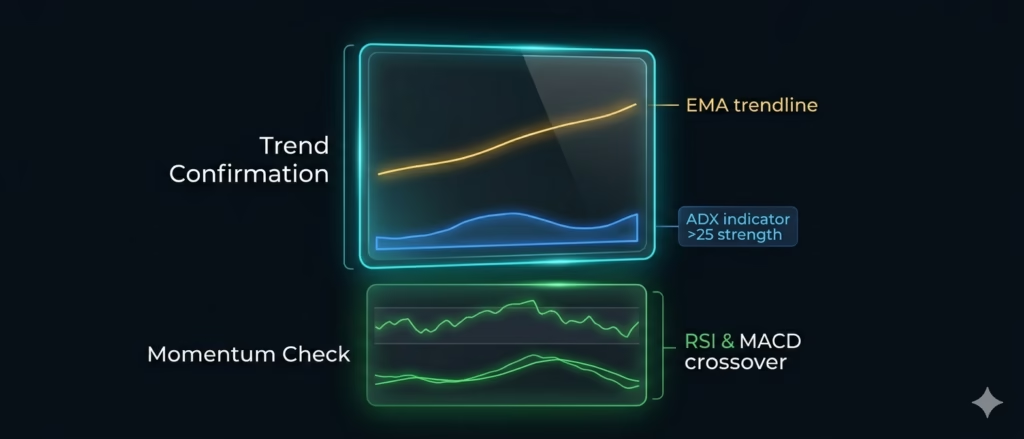
Without Entry Setup, even the best price-action or indicator strategy suffers from noise, whipsaws, and low-probability entries. Professional systematic traders and hedge-fund-style algorithms rely heavily on layered Entry Setup to achieve edge.
Recent 2025–2026 backtesting platforms (including tools like Option Alpha and Quantified Strategies) added advanced Entry Setup for expected move, daily range, and multi-timeframe alignment — proving the concept remains more relevant than ever.
Why Entry Filters Deliver High-Probability Trades
A single filter can boost expectancy, but stacking 3–5 complementary Entry Filters creates statistical power:
- Trend alignment (higher-timeframe confirmation)
- Momentum confirmation
- Volume or volatility validation
- Time-of-day or session rules
- Structural confluence (support/resistance + displacement)
Studies and live trader reports consistently show filtered systems outperform unfiltered ones by 15–40 % in win rate while cutting losing streaks.
Most Effective Types of Entry Setups for Futures Trading
1. Trend-Based Entry Filters
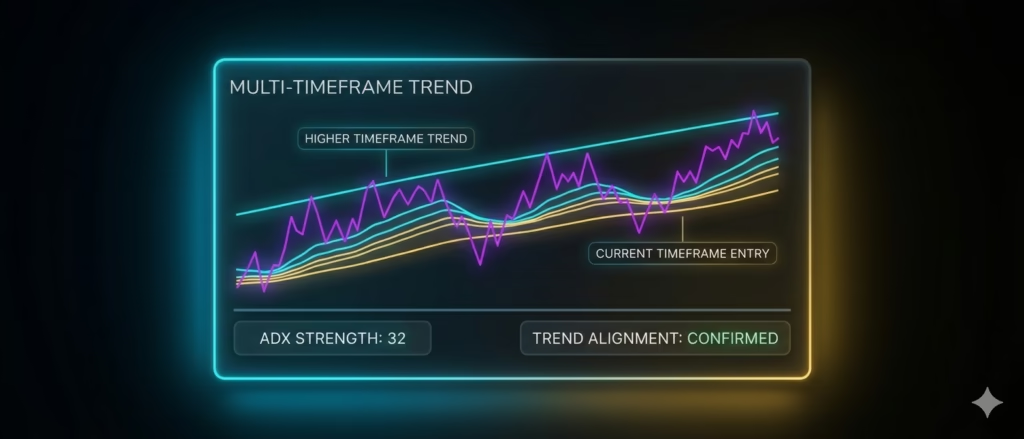
Require price to be above the 200-period EMA (longs) or below it (shorts) on the higher timeframe. Add ADX > 25 to confirm genuine trend strength — a filter popularized in 2025 algorithmic updates.
2. Momentum Entry Filters (RSI + MACD)
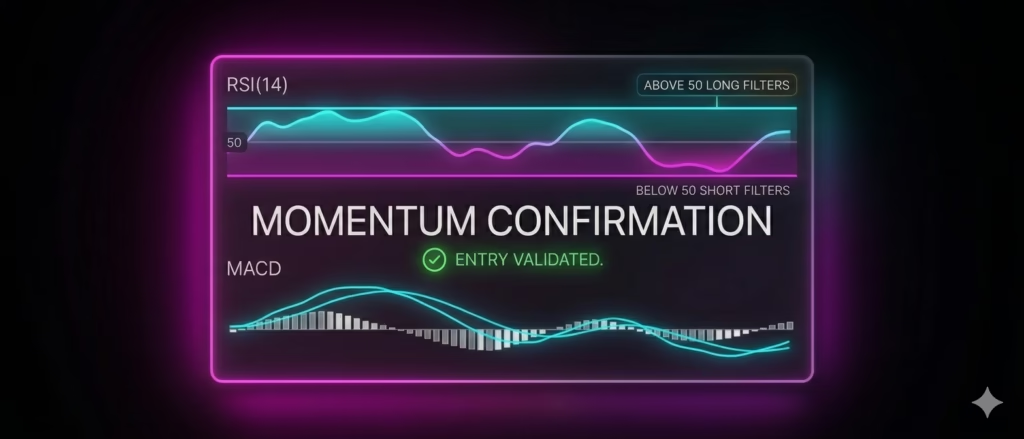
Long only when RSI(14) > 50 AND MACD line crosses above signal. Short only when RSI < 50 AND MACD crosses below. This combination remains one of the highest-probability Entry Filters in 2026 futures markets.
3. Volume and Volatility Filters
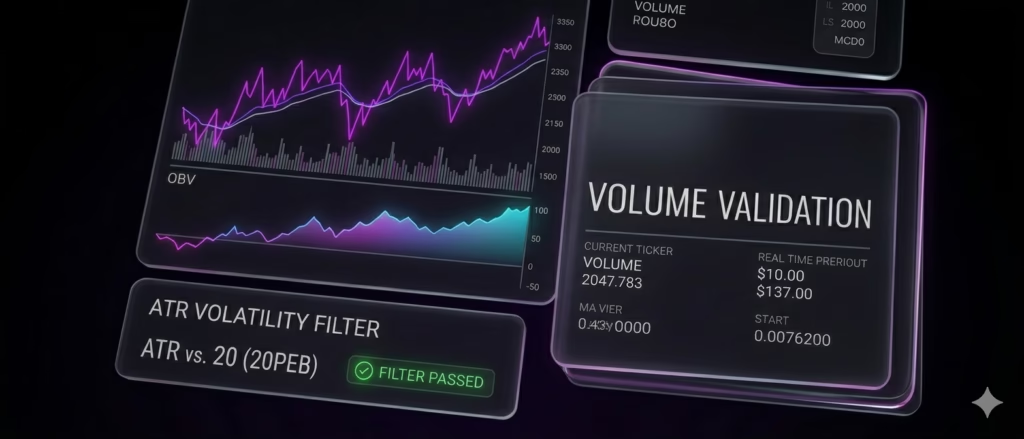
Require above-average volume on the trigger bar (or rising On-Balance Volume). Use ATR filter: enter only if current ATR is at least 0.8× 20-period average — avoids dead-zone chop.
4. Structural & ICT-Style Entry Filters
Demand a market structure shift + displacement (strong directional candle) before any entry. Filter out trades lacking fair-value gap fill or order-block confluence.
5. Time & Session Entry Filters
Avoid 11:30–13:30 ET lunch hour on ES/NQ. Restrict day trades to first 90 minutes or last 60 minutes — proven filters in 2025–2026 backtests.
Click Here To Automate Futures Trading
How to Build and Test Your Entry Filters System
- Start with a simple base strategy (e.g., EMA crossover or Opening Range Breakout).
- Add one Entry Filter at a time and backtest on 500+ trades.
- Use 2026 platforms with built-in filter comparison (strategy variant testing).
- Forward-test on demo before going live.
Aim for at least 3 Entry Setups — more than 5 often over-filters and reduces trade frequency too much.
Automate Entry Filters with PickMyTrade for US Futures Markets
Manual checking of Entry Setups is exhausting and prone to emotion. This is where PickMyTrade shines.
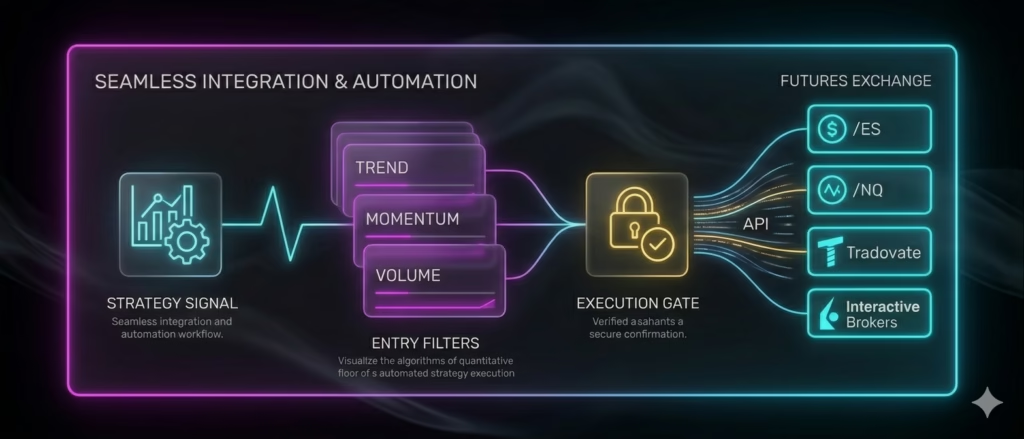
PickMyTrade is purpose-built for futures automation on Tradovate, Rithmic, Interactive Brokers, and TradeStation. You code your complete Entry Filters logic once in TradingView (Pine Script or alerts), then route signals via webhook to PickMyTrade.
Key advantages in 2026:
- Native low-latency execution on US futures (/ES, /NQ, /YM, /RTY, etc.)
- Unlimited trading sessions and multi-broker support
- Built-in risk settings, trailing stops, and partial-profit logic
- 24/7 live support and seamless prop-firm compatibility
Example workflow: Your TradingView alert fires only when ALL Entry Setups (trend + RSI + volume + time) align → PickMyTrade instantly places the bracket order on Tradovate with your exact stop-loss and target. No missed entries, no hesitation.
Traders automating SuperTrend + custom Entry Setups via PickMyTrade reported consistent results in 2025 live tests — exactly the edge retail traders need in today’s volatile futures environment.
Recent Updates & 2026 Best Practices
- New backtest this strategy for “expected move” and “daily range” (Option Alpha, Feb 2026)
- Enhanced Range Filter strategies with ATR-based stops now dominate TradingView public scripts
- AI-assisted filter optimization tools now suggest optimal combinations based on your market and timeframe
Stay updated: re-optimize your Entry Filters every quarter, especially around major economic events.
Ready to stop trading noise and start trading probability? Implement these Strategies today — and let PickMyTrade handle the heavy lifting on US futures.
Most Asked FAQs
Entry Filters are mandatory conditions (trend, momentum, volume, etc.) that every trade must pass before entry — dramatically raising setup quality.
Start with 3–4. Too few = noise; too many = missed opportunities. Test and adjust.
Yes — especially on ES and NQ. Trend + volume + session Entry Filters are particularly powerful in 24-hour futures markets.
Absolutely. Begin with simple ones (200 EMA + RSI 50) and add complexity as you gain experience.
Code them in TradingView alerts, then connect to PickMyTrade for instant execution on Tradovate or other US futures brokers.
Disclaimer:
This content is for informational purposes only and does not constitute financial, investment, or trading advice. Trading and investing in financial markets involve risk, and it is possible to lose some or all of your capital. Always perform your own research and consult with a licensed financial advisor before making any trading decisions. The mention of any proprietary trading firms, brokers, does not constitute an endorsement or partnership. Ensure you understand all terms, conditions, and compliance requirements of the firms and platforms you use.
Also Checkout: News Sentiment Futures: Unlocking Alpha in 2026