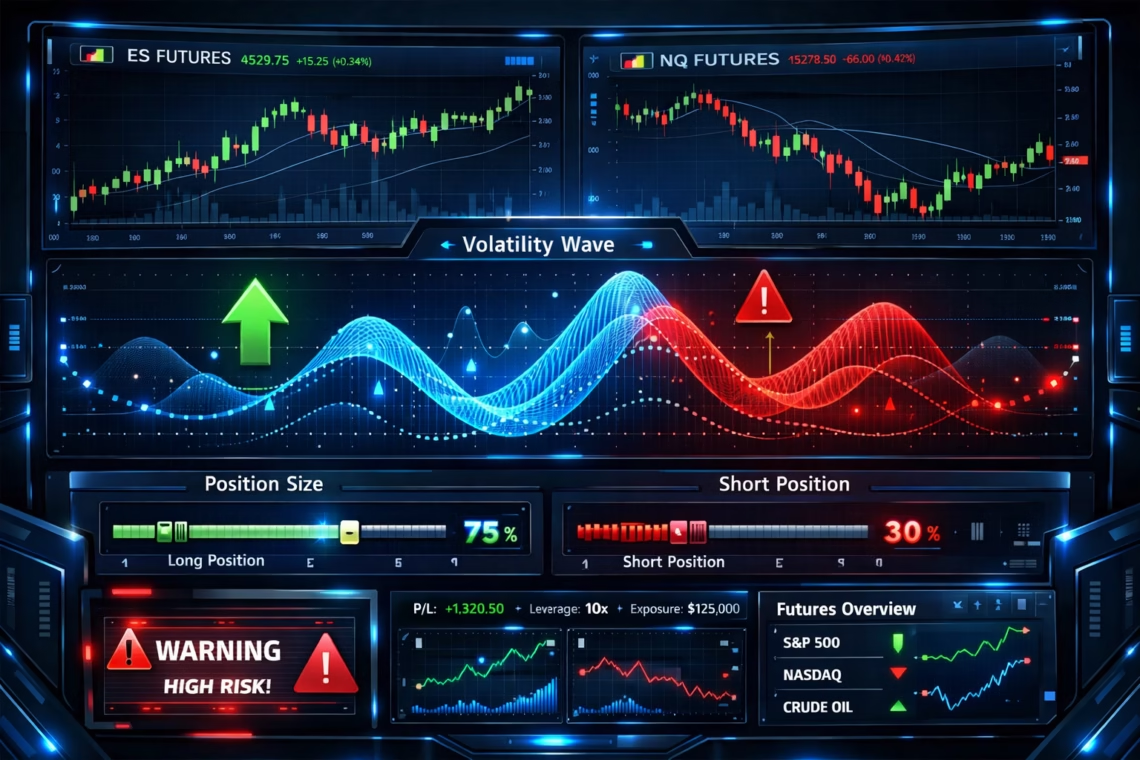
In the fast-evolving world of trading, especially futures on US markets, one factor often separates consistent winners from those who struggle: dynamic position sizing. Unlike static methods that risk the same amount per trade, dynamic position sizing adapts in real-time to market volatility, account performance, trade confidence, and other variables. This approach maximizes returns while protecting capital—essential in today’s volatile environments.
As markets in 2026 continue to show heightened volatility from economic shifts and AI-driven trading, dynamic position sizing has become a cornerstone of modern algorithmic and automated strategies.
What Is Dynamic Position Sizing?
Dynamic position sizing refers to adjusting the size of your trades based on current conditions rather than fixed rules. Traditional fixed fractional sizing risks 1% per trade regardless of context. In contrast, dynamic methods scale positions up during high-conviction setups or low-volatility periods and down during uncertainty or drawdowns.
Key benefits include:
- Better risk-adjusted returns
- Reduced drawdowns in turbulent markets
- Alignment with real-time market dynamics
Recent insights from 2025-2026 highlight its role in surviving volatility spikes while capturing trends.
Why Dynamic Position Sizing Matters in 2026
Markets remain unpredictable, with futures like E-mini S&P 500 (/ES) and Nasdaq (/NQ) experiencing rapid regime shifts. Static sizing exposes traders to outsized losses during high-volatility events. Adaptive approaches, incorporating factors like ATR (Average True Range), drawdown levels, and signal strength, maintain stable risk exposure.
Studies and trader discussions from recent years show adaptive position sizing improves Sharpe ratios and Calmar ratios by dynamically responding to conditions—shrinking sizes in high-volatility regimes and expanding in favorable ones.
In futures trading, where leverage amplifies risks, this adaptability is crucial for long-term survival.
Key Adaptive Position Sizing Algorithms and Strategies
Several proven methods dominate recent developments:
- Volatility-Based Sizing (ATR Method) Position size = (Account Risk % × Equity) / (Stop-Loss Distance × ATR Multiplier). This reduces size when volatility rises, keeping dollar risk constant. Popular in futures for its simplicity and effectiveness in volatile US indices.
- Drawdown-Adjusted Sizing Reduce positions after losses (e.g., halve size at 10% drawdown). Resume normal sizing on recovery. This preserves capital during streaks, a common theme in 2025-2026 algo updates.
- Kelly Criterion and Variants Optimal sizing based on win probability and reward:risk. Modern adaptations use fractional Kelly for conservatism, avoiding overbetting.
- Confidence or Edge-Based Sizing Scale up on high-conviction signals (e.g., via logistic regression models measuring trade probability). Recent MQL5 and algo advancements automate this for self-optimizing systems.
- Portfolio and Correlation Adjustments Factor in correlations and overall exposure to avoid overconcentration.
Recent advances include AI-enhanced models for regime detection and trailing stops calibrated to intra-day volatility, as seen in crypto and futures trend-following frameworks achieving high Sharpe ratios.
Click Here To Automate Futures Trading
Implementing Dynamic Position Sizing in Futures Trading
For US futures traders, automation simplifies execution. Platforms enable seamless integration of dynamic position sizing into strategies.
PickMyTrade stands out as a leading tool for automation in US markets. It supports Tradovate, Rithmic, Interactive Brokers, and more, allowing traders to automate TradingView strategies with built-in risk management—including adaptive sizing, breakeven stops, and volatility-based adjustments.
With PickMyTrade, you can deploy unlimited bots for futures like /ES, /NQ, or micros, ensuring precise execution 24/7 without manual intervention. Its focus on futures automation makes it ideal for applying dynamic position sizing in live markets, helping traders scale efficiently while controlling risk.
Tools and Best Practices for Success
- Backtest rigorously with historical data.
- Combine with stop-loss and diversification.
- Monitor regime changes (e.g., volatility compression to expansion).
- Start small and scale as confidence grows.
In 2026, integrating adaptive position sizing with automation platforms like PickMyTrade can elevate your edge in competitive US futures trading.
Most Asked FAQs
Static uses fixed risk per trade; dynamic adjusts based on volatility, drawdown, or signal strength for better adaptation.
ATR measures volatility to set stop distances and scale positions, ensuring consistent risk in changing markets.
Yes, start with simple ATR-based rules. Automation tools like PickMyTrade make it accessible without advanced coding.
It significantly reduces risk by scaling down during adverse conditions, though no method eliminates losses entirely.
Automation enforces rules precisely 24/7, as with PickMyTrade for US futures, preventing emotional overrides.
Disclaimer:
This content is for informational purposes only and does not constitute financial, investment, or trading advice. Trading and investing in financial markets involve risk, and it is possible to lose some or all of your capital. Always perform your own research and consult with a licensed financial advisor before making any trading decisions. The mention of any proprietary trading firms, brokers, does not constitute an endorsement or partnership. Ensure you understand all terms, conditions, and compliance requirements of the firms and platforms you use.
Also Checkout: NinjaTrader vs TradingView: Key Differences in 2026