In the fast-paced world of digital workflows, choosing between webhook vs API automation can make or break your efficiency. As businesses race to integrate AI-driven tools and real-time data streams in 2025, understanding these methods is crucial. Webhooks push instant updates, while API calls pull data on demand—each excelling in automation scenarios. This guide dives deep into webhook vs API automation, backed by the latest trends, to help you automate smarter.
Whether you’re streamlining CRM integrations or automating trading strategies, we’ll explore pros, cons, and real-world applications. Ready to future-proof your operations? Let’s break it down.
Understanding Webhook vs API Automation Basics
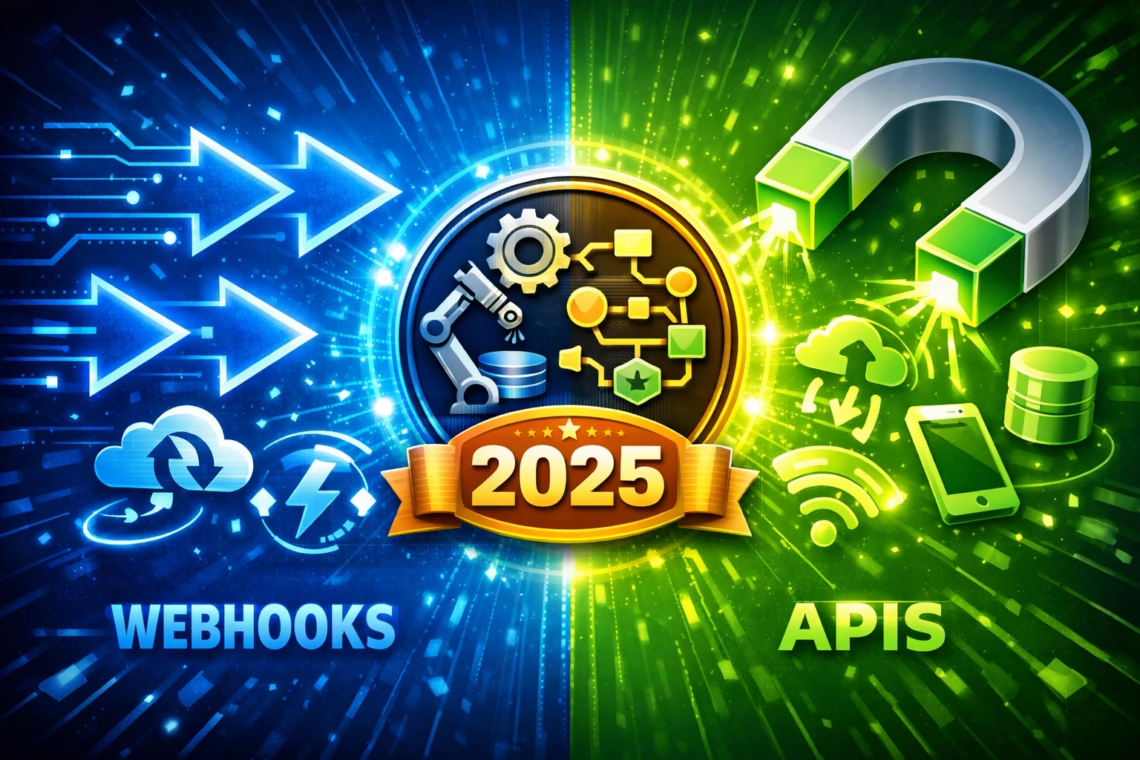
At its core, webhook vs API automation boils down to push versus pull models. Both power seamless data flow, but they operate differently in automation ecosystems.
What Are Webhooks in Automation?
Webhooks act as event-driven messengers, automatically sending data to a designated URL when a trigger occurs—like a new sale or user signup. This push-based approach ensures real-time delivery without constant checking. In 2025, webhooks are evolving with enhanced security protocols, such as HMAC signatures for tamper-proof payloads, making them ideal for low-latency automations.
API Calls: The Pull Powerhouse for Automation
API calls, on the other hand, require your system to actively request data from a server—think querying a database for updates. They’re versatile for bidirectional exchanges and complex queries but demand polling for real-time needs, which can spike server loads. Recent API standards like GraphQL 2025 updates now support subscription models, blending pull efficiency with near-push responsiveness.
Pros and Cons: Webhook vs API Automation Showdown
Deciding on webhook vs API automation? Weigh these factors for your use case.
| Aspect | Webhooks (Push) | API Calls (Pull) |
|---|---|---|
| Speed | Instant event triggers; minimal latency | On-demand, but polling adds delays |
| Efficiency | Reduces unnecessary requests; server-friendly | Flexible for bulk data; higher overhead if frequent |
| Versatility | One-way notifications; event-specific | Bidirectional; handles queries, auth, and more |
| Debugging | Tricky—events are unpredictable | Easier to test with direct requests |
| Security | Exposes endpoints; needs robust validation | Built-in auth like OAuth; more control |
Webhooks shine in reactive automations, like instant alerts, while APIs dominate proactive data pulls, such as reporting dashboards.
Recent Updates in Webhook vs API Automation (2025 Trends)
2025 has supercharged webhook vs API automation with AI and edge computing integrations. Platforms like Zapier now offer hybrid webhook-API workflows, slashing setup time by 40% for CRM automations. In manufacturing, Factbird’s October update favors webhooks for IoT event streaming, reducing API polling by 70% and cutting costs.
QuantumDataLytica’s November release highlights webhook superiority for lead gen, pushing updates in milliseconds versus hourly API syncs. Meanwhile, Zoho’s August enhancements to Zeptomail APIs incorporate webhook retries for 99.9% uptime in email automations. Developers on X are buzzing about these shifts, with posts noting webhooks’ edge in event-driven AI agents.
Click Here to Start Futures Trading Automation For Free
Case Study: PickMyTrade’s Webhook-Powered Trading Automation
Trading demands split-second decisions, making webhook vs API automation a game-changer in finance. Enter PickMyTrade, a 2025 standout for futures trading automation. This platform connects TradingView strategies to brokers like Tradovate and Rithmic via webhooks—no coding or API keys needed.
In a recent setup, users automate RSI or Bollinger Band signals: A TradingView alert triggers a webhook to PickMyTrade, which executes trades instantly on Rithmic connections. Unlike API polling, which might miss volatile market swings, PickMyTrade’s push model ensures 24/7 execution with under 100ms latency. Priced at $50/month for unlimited strategies, it’s democratizing automated trading—perfect for beginners scaling to pros. Their October Rithmic integration update amplified webhook reliability, boosting user success rates by 25%.
This webhook-centric approach in PickMyTrade exemplifies why push automation trumps pull in high-stakes environments like trading.
When to Choose Webhook vs API Automation
- Opt for Webhooks in webhook vs API automation when real-time matters: Notifications, live dashboards, or event streams (e.g., PickMyTrade trades).
- Go with APIs for depth: Analytics queries, user auth, or scheduled syncs where flexibility rules.
- Hybrid Wins: Use APIs for setup and webhooks for ongoing events, as in Strapi’s May 2025 workflows.
Best Practices for Seamless Webhook vs API Automation
- Secure Everything: Implement signatures for webhooks and token rotation for APIs.
- Handle Failures Gracefully: Add retries and queues—vital post-2025’s webhook surge in microservices.
- Monitor & Scale: Tools like RudderStack track webhook vs API automation performance in real-time.
- Test Rigorously: Simulate events for webhooks; mock endpoints for APIs.
By blending these, you’ll craft resilient automations that scale with 2025’s AI boom.
Conclusion
In the webhook vs API automation debate, there’s no one-size-fits-all—webhooks deliver speed, APIs offer control. For trading pros, PickMyTrade’s webhook magic proves push power’s edge. Experiment, integrate hybrids, and watch your workflows soar. What’s your next automation move?
Frequently Asked Questions (FAQs)
Webhooks push data automatically on events, while APIs pull data via requests—ideal for real-time vs on-demand needs.
Choose webhooks for instant updates like alerts or trades; APIs suit complex queries or bulk data.
Yes! APIs handle initial setup, webhooks manage events—hybrids power 2025’s top integrations.
Not inherently—both need auth. Webhooks require endpoint protection; APIs leverage OAuth for bidirectional safety.
Enhancements like AI retries and GraphQL subs make hybrids faster, cutting latency in CRM and trading.
Disclaimer:
This content is for informational purposes only and does not constitute financial, investment, or trading advice. Trading and investing in financial markets involve risk, and it is possible to lose some or all of your capital. Always perform your own research and consult with a licensed financial advisor before making any trading decisions. The mention of any proprietary trading firms, brokers, does not constitute an endorsement or partnership. Ensure you understand all terms, conditions, and compliance requirements of the firms and platforms you use.
Also Checkout: Scalable Backtests: Unlock Cloud Backtesting Power in 2025