In the fast-paced world of futures markets, gaining an edge requires more than just price charts. Futures Order Flow Trading provides traders with real-time insights into market dynamics, revealing the intentions of buyers and sellers before price moves. This algorithmic approach, enhanced by footprint data, has evolved significantly with recent technological advancements. Whether you’re a seasoned trader or new to futures, understanding these tools can transform your strategy.
What Is Futures Order Flow Trading?
Futures Order Flow Trading focuses on analyzing the flow of buy and sell orders in real-time to predict price movements. Unlike traditional technical analysis, it examines actual trade executions, liquidity levels, and order imbalances. This method helps identify hidden market sentiments, such as aggressive buying or selling pressure.
Key benefits include:
- Early detection of trends and reversals.
- Improved entry and exit timing.
- Reduced emotional decision-making through data-driven insights.
In 2026, with markets influenced by volatility from economic shifts and AI-driven trading, Futures Order Flow Trading remains essential for navigating critical sectors like commodities and indices.
Decoding Footprint Data in Futures Trading
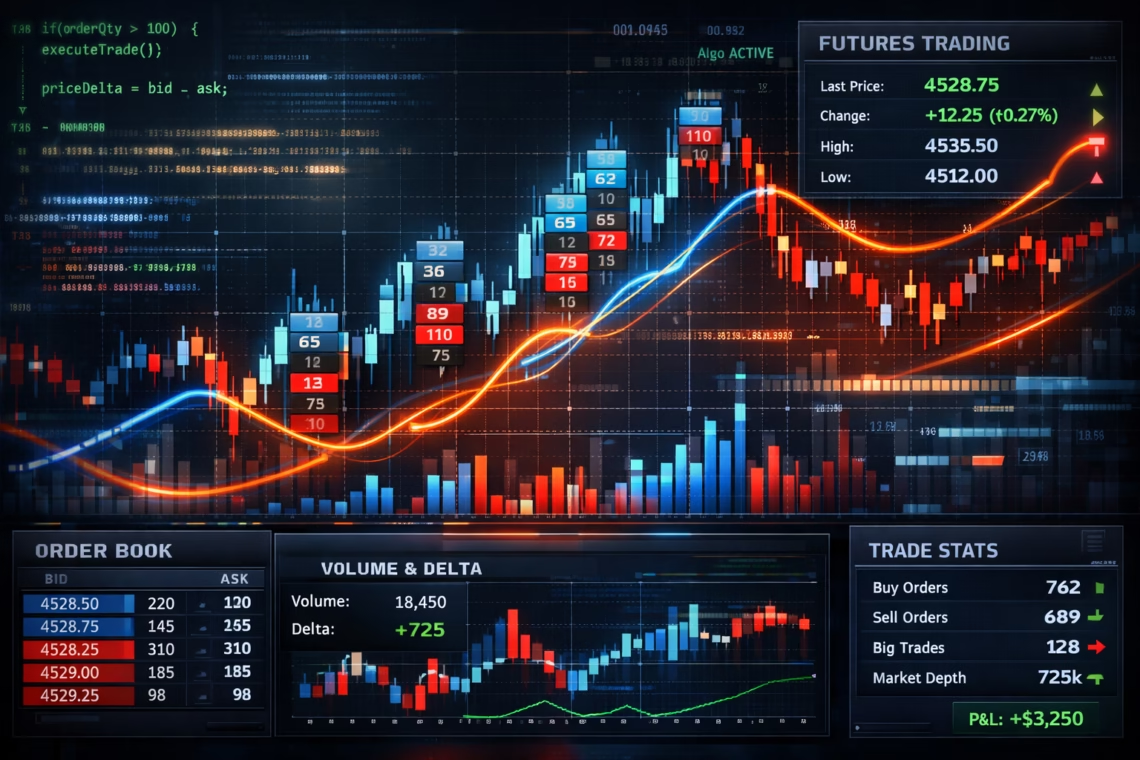
Footprint data, often displayed via footprint charts, breaks down volume traded at each price level within a candlestick. These charts—also known as cluster charts—reveal bid/ask volumes, delta (net buying/selling), and imbalances, offering a granular view of market activity.
Why Footprint Data Matters
- Bid/Ask Analysis: Spot aggressive order flow where buyers overwhelm sellers or vice versa.
- Volume Profiles: Identify high-volume nodes for support/resistance levels.
- Delta Imbalances: Use cumulative delta to gauge momentum shifts.
Recent tools like Bookmap and NinjaTrader’s Order Flow Suite integrate footprint data with real-time visualizations, helping traders detect iceberg orders and absorption zones. In 2025 updates, platforms like Optimus Flow enhanced footprint strategies with stacked imbalances and unfinished auctions, making them more accessible for futures like ES and NQ.
Algorithmic Approaches to Futures Order Flow Trading
Algorithmic trading automates Futures Order Flow Trading by using predefined rules to execute based on order flow signals. Common strategies include:
- Trend-Following Algos: Enter trades on order imbalances during breakouts, using moving averages and volume acceleration.
- Market Making: Dynamically adjust quotes based on real-time flow, volatility, and inventory.
- Mean Reversion: Target imbalances with tools like linear regression and entropy for reversion setups.
In 2026, AI integration—such as reinforcement learning for adaptive spreads—has boosted efficiency. Platforms like SensaMarket now use flow algos to track unusual options flow, providing edges in volatile sessions.
Building Your Algorithmic System
Start with data sources like CME feeds for accurate order book info. Test strategies on historical data, focusing on low-latency execution to capitalize on fleeting imbalances.
Recent Updates in Futures Order Flow Trading (2024-2026)
The landscape has shifted with AI and enhanced data tools:
- 2024-2025 Developments: Increased focus on volumetric bars and cumulative delta for forex/CFD proxies. Tools like Bookmap Global+ offer full-depth history for liquidity analysis.
- 2026 Trends: Platforms emphasize stable real-time data amid volatility. New strategies incorporate on-chain analytics for crypto futures, with adaptive AMMs reducing operator risks.
- Regulatory Notes: Scrutiny on payment for order flow (PFOF) continues, pushing brokers toward transparent models.
Events like data-center outages in 2025 highlighted the need for robust backups, while AI co-pilots like Google’s Gemini aid in risk management and post-mortem reviews.
Click Here To Automate Futures Trading
Leveraging PickMyTrade for Automation in Futures Order Flow Trading
To implement algorithmic strategies seamlessly, tools like PickMyTrade automate Futures Order Flow Trading. This no-code platform connects TradingView alerts to brokers like Tradovate, enabling 24/7 execution of order flow-based signals.
How PickMyTrade Enhances Your Approach
- Automate footprint data triggers for entries/exits.
- Support for multiple assets, including futures, with risk controls.
- Unlimited strategies and accounts for scaling.
In 2026, PickMyTrade’s integration with Rithmic and Interactive Brokers makes it ideal for prop firms, turning complex order flow analysis into automated profits without coding.
Effective Strategies Using Footprint Data and Order Flow
- Absorption Trading: Enter on delta divergences where price holds despite heavy selling.
- Imbalance Reversals: Use footprint charts to spot trapped traders and unfinished auctions.
- High-Volume Node Plays: Combine with algorithmic filters for confirmation in ES or NQ futures.
Tips for success:
- Use multi-timeframe analysis: Higher frames for direction, lower for entries.
- Risk 1% per trade; incorporate stop-losses based on order flow thresholds.
- Backtest with 2025-2026 data to adapt to AI-driven markets.
Conclusion: Elevate Your Futures Order Flow Trading Game
Futures Order Flow Trading, powered by footprint data and algorithmic tools, offers a competitive edge in 2026’s dynamic markets. By integrating recent updates and automation like PickMyTrade, traders can achieve consistent results. Stay informed, test rigorously, and let data guide your decisions.
Most Asked FAQs on Futures Order Flow Trading
Footprint data visualizes volume at specific price levels, showing bid/ask activity and imbalances for deeper market insights.
Algorithms automate order flow analysis, executing trades on imbalances with speed and precision, reducing human error.
In 2025-2026, AI integration, adaptive tools like flow algos, and real-time data platforms like Bookmap have advanced the field.
Yes, its no-code setup connects to brokers like Tradovate, making it accessible for automating footprint-based strategies.
Disclaimer:
This content is for informational purposes only and does not constitute financial, investment, or trading advice. Trading and investing in financial markets involve risk, and it is possible to lose some or all of your capital. Always perform your own research and consult with a licensed financial advisor before making any trading decisions. The mention of any proprietary trading firms, brokers, does not constitute an endorsement or partnership. Ensure you understand all terms, conditions, and compliance requirements of the firms and platforms you use.
Also Checkout: Top Tick Data Futures Sources for 2025: Ultimate Guide