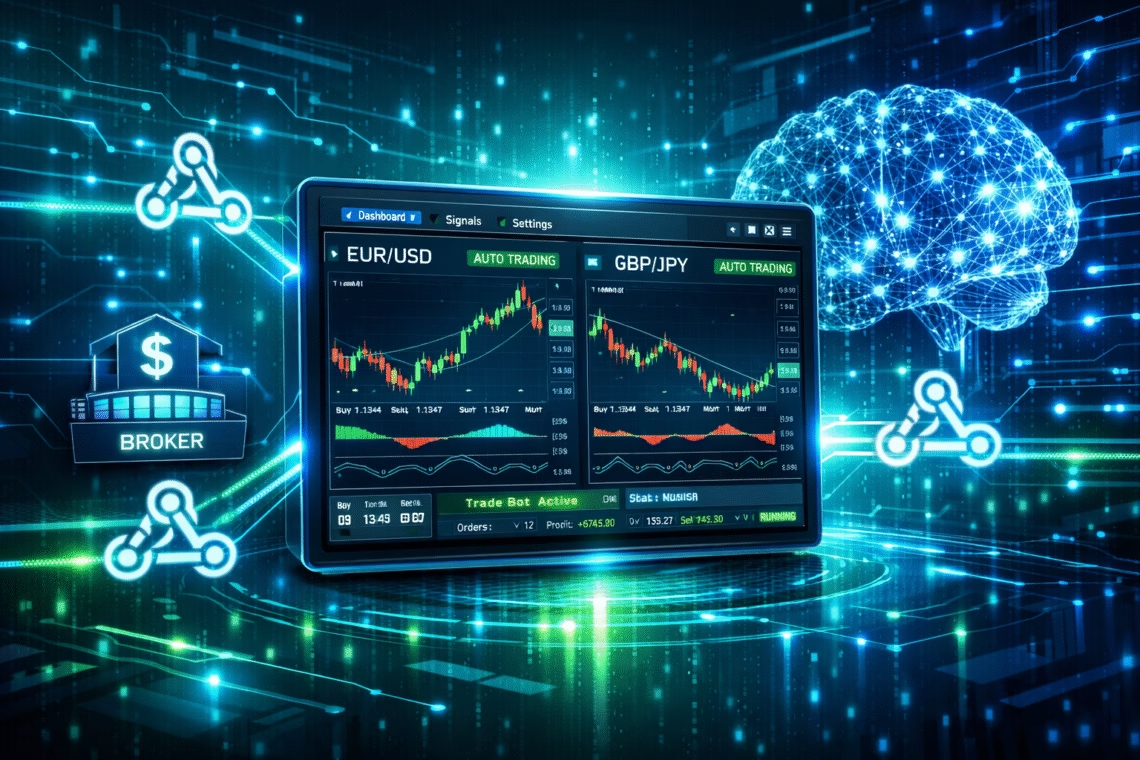
In the fast-paced world of forex, where over $7.5 trillion changes hands daily, manual trading often falls short against relentless market swings. Enter forex trading systems—rule-based algorithms that execute trades around the clock, stripping away emotional biases for retail traders like you. This guide dives deep into building, testing, and automating these systems, with a focus on seamless integration via PickMyTrade. Whether you’re chasing trends or scalping pips, discover how to turn strategies into consistent income streams.
Forex Trading Systems Essentials
Automated forex trading systems let retail traders execute predefined strategies without constant monitoring, leveraging the market’s 24/5 liquidity for hands-off profits. Key benefits include emotion-free decisions and scalability across pairs like EUR/USD; start with backtesting, integrate via webhooks, and manage risks with stops. By 2025, AI enhancements have boosted accuracy to 70-95%, making now the ideal time to automate.
Why Automate Your Forex Trading Systems?
The forex market never sleeps, spanning sessions from Sydney to New York. Retail traders often struggle with fatigue and inconsistency, but forex trading systems address this by processing vast data sets in milliseconds. Automation isn’t just convenient—it’s essential in a landscape where delays cost pips.
Benefits vs. Limitations of Forex Trading Systems
| Aspect | Benefits | Limitations |
|---|---|---|
| Efficiency | Runs 24/5, handling multiple pairs simultaneously for diversified exposure. | Requires initial setup time and ongoing tweaks for market shifts. |
| Consistency | Eliminates FOMO or revenge trading, sticking to rules for steady equity curves. | Over-optimization can lead to curve-fitting, failing in live conditions. |
| Scalability | Easily scales from micro-lots to full accounts with tools like PickMyTrade. | High-frequency systems demand low-latency brokers, adding costs. |
| Learning Curve | Democratizes pro-level strategies for retail traders via user-friendly platforms. | Black swan events (e.g., flash crashes) can bypass safeguards. |
Recent data shows automated algo trading markets hitting $24 billion in 2025, driven by AI integrations that predict volatility with unprecedented precision.
Core Strategies for Forex Trading Systems
Building effective forex trading systems starts with proven strategies. Each uses indicators like moving averages (MAs) or Relative Strength Index (RSI)—simple tools that signal buy/sell based on price action.
Trend-Following Systems: Ride the Momentum
These forex trading systems spot upward or downward moves and join them. Key takeaway: Ideal for volatile pairs during economic news.
- How it works: A 50-day MA crossing above a 200-day MA triggers buys; reverse for sells.
- Example: On GBP/USD, enter long if price breaks a 20-day high, exit on MA reversal.
- Pro tip: Add Average True Range (ATR) for dynamic stops—adjust 2x ATR below entry to adapt to volatility.
Mean Reversion Systems: Bet on Pullbacks
In ranging markets, prices snap back to averages. These systems thrive on overbought/oversold signals.
- Setup: Use RSI below 30 for buys on EUR/JPY; Bollinger Bands squeezing signal entries.
- Risk note: Avoid during strong trends—pair with ADX (Average Directional Index) to confirm ranges.
Carry Trade and Scalping: Yield and Speed Plays
Carry trades borrow low-interest currencies (e.g., JPY) to buy high-yield ones (e.g., AUD), automated to roll positions overnight. Scalping forex trading systems grab 5-10 pips on USD/CAD micros, firing dozens of trades per session via low-latency execution.
Real-World Use Cases for Forex Trading Systems
- Retail Day Trader: A New York-based trader automates EUR/USD scalping during London open, netting 1-2% daily without screen time.
- Swing Enthusiast: Automates AUD/NZD mean reversion, holding 2-5 days, profiting from RBA rate decisions.
- Global Nomad: Uses carry trades on emerging pairs like USD/ZAR, with PickMyTrade handling weekend gaps.
- News Junkie: Triggers breakouts on USD/JPY post-Fed announcements, filtering false signals with volume.
- Portfolio Builder: Runs diversified systems across 8 majors, rebalancing quarterly for 15% annual returns (hypothetical, based on backtests).
Selecting Currency Pairs for Your Systems
Not all pairs suit every strategy. Majors like EUR/USD offer tight spreads (0.5 pips) and high liquidity—perfect for beginners. Crosses (e.g., EUR/GBP) enable diversification, while exotics (TRY/USD) promise yields but spike on geopolitics.
Bold takeaway: Correlate pairs inversely (e.g., EUR/USD vs. USD/CHF) to hedge risks. As of late 2025, EUR/USD volatility hit 12% annualized amid ECB hikes.
Click Here To Start Forex Trading Automation For Free
Risk Management: The Backbone of Profitable Systems
No forex trading systems survives without safeguards. Position size via Kelly Criterion (risk 1-2% per trade), set trailing stops at 1.5x ATR, and cap drawdowns at 10%.
- Dynamic sizing: Scale lots based on account equity—e.g., 0.01 lot per $1,000.
- News filters: Pause trading 30 minutes around NFP releases to dodge whipsaws.
Integrating Economic Indicators
Forex trading systems shine with news overlays. Use APIs for GDP or CPI data; automate pauses during high-impact events. Example: If non-farm payrolls beat forecasts, short USD pairs.
Automating with PickMyTrade: Platforms and Setup
Forget clunky EAs—PickMyTrade bridges TradingView alerts to brokers like Match-Trader, Interactive Brokers (IB), Tradovate, or TradeLocker via secure webhooks. No coding needed; deploy in minutes.
Regulatory and 24/5 Considerations
Choose CFTC-regulated brokers for safety. Systems must adapt to Asian/London/New York sessions—e.g., reduce scalping volume post-NY close. Holidays? Build in calendar checks.
Common Setup Pitfalls
- Webhook mismatches: Forgetting to URL-encode symbols (e.g., “EURUSD” vs. “EUR_USD”).
- Alert delays: TradingView free tiers lag; upgrade for real-time.
- Broker mismatches: Ensure payload matches API specs—test in sim mode first.
Advanced Tips
- Layer AI filters: Use 2025’s ML models for sentiment analysis on Fed speeches.
- Multi-broker failover: Route alerts to IB primary, Rithmic backup.
- Backtest with slippage: Simulate 1-2 pip costs for realistic edges.
Most-Asked FAQs
Rule-based algorithms that automate entries/exits based on indicators like MAs, running 24/5 for consistent forex trades.
Use TradingView for strategy coding, backtest on MT5 data, then automate via PickMyTrade webhooks.
Yes, with proper risk management—hypothetical backtests show 10-20% annual returns, but live results vary.
Trend-following on majors like EUR/USD; simple and forgiving during trends.
Send TradingView alerts as JSON payloads to execute on brokers like IB—no API coding needed.
Absolutely—PickMyTrade supports unlimited strategies for $50/month, diversifying across pairs.
Disclaimer:
This content is for informational purposes only and does not constitute financial, investment, or trading advice. Trading and investing in financial markets involve risk, and it is possible to lose some or all of your capital. Always perform your own research and consult with a licensed financial advisor before making any trading decisions. The mention of any proprietary trading firms, brokers, does not constitute an endorsement or partnership. Ensure you understand all terms, conditions, and compliance requirements of the firms and platforms you use.
Also Checkout: Understanding Rithmic Latency in Futures Trading