In the fast-evolving world of financial markets, delta neutral algo trading stands out as a sophisticated approach to managing risk while capitalizing on volatility. This strategy allows traders to maintain positions that are insensitive to small price movements in the underlying asset, focusing instead on other factors like time decay or implied volatility. As we enter 2026, advancements in automation and algorithmic tools have made delta neutral algo trading more accessible and efficient for both institutional and retail traders. This comprehensive guide explores the fundamentals, strategies, recent developments, and practical implementation, including platforms like PickMyTrade for seamless automation.
Understanding Delta Neutral Algo Trading
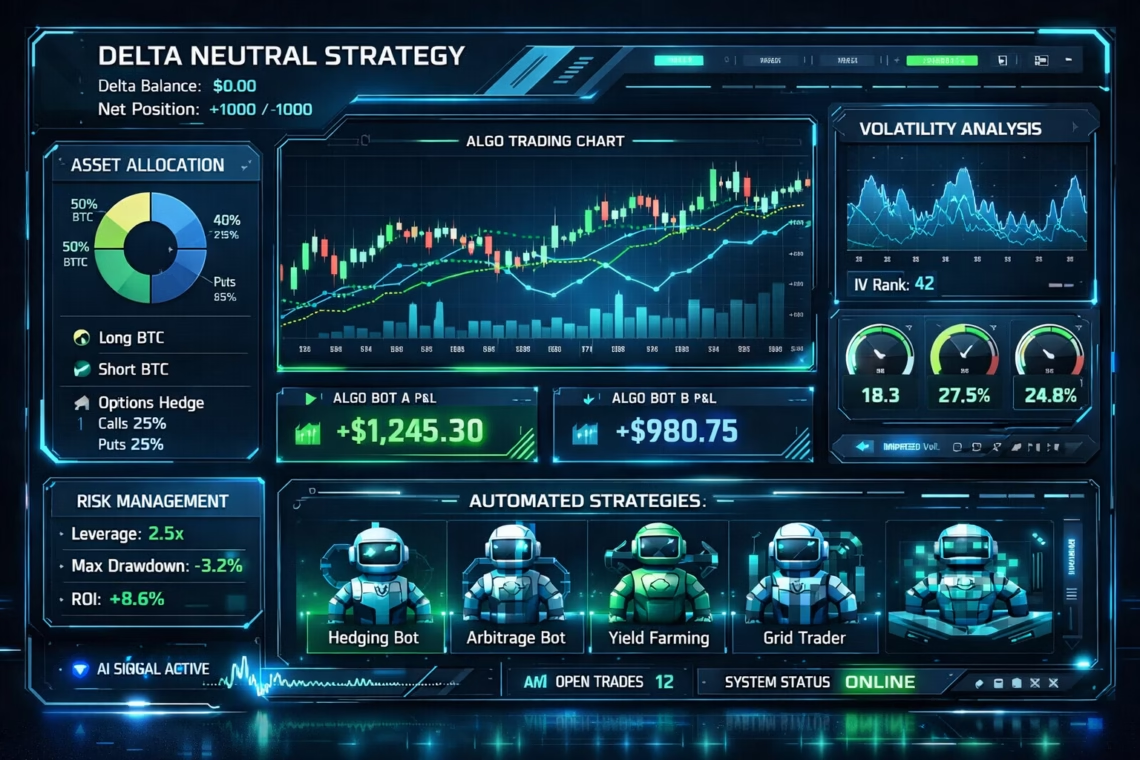
Delta neutral algo trading involves constructing a portfolio where the overall delta—a measure of how much an option’s price changes relative to the underlying asset—is zero. By balancing positive and negative deltas through a combination of options, futures, and equities, traders can hedge against directional market risks. For instance, holding long shares (positive delta) can be offset with put options (negative delta), ensuring the portfolio remains stable amid minor price fluctuations.
At its core, delta neutral trading relies on dynamic hedging. Algorithms continuously monitor and adjust positions to maintain neutrality, as delta values shift due to gamma (the rate of change in delta). This automation is crucial in high-frequency trading environments, where manual adjustments would be impractical. Popular in options markets, it enables profits from volatility without betting on market direction.
Benefits of Delta Neutral Algo Trading
Adopting delta neutral trading offers several advantages in today’s volatile markets. First, it minimizes directional risk, allowing traders to profit from implied volatility or theta decay rather than price trends. This is particularly valuable in sideways or uncertain markets, where traditional strategies might falter.
Second, automation enhances precision and speed. Algorithms can execute trades 24/7, rebalancing portfolios in real-time to respond to market shifts. This reduces emotional decision-making and operational costs. For buy-side firms, delta neutral algo trading has become essential for risk management in 2025’s fluctuating environments, with brokers adapting to meet growing demand. Additionally, it supports scalability, enabling traders to handle complex multi-asset portfolios efficiently.
In 2026, with global markets influenced by AI-driven tools, delta neutral algo trading promotes consistent returns by focusing on non-directional factors, making it ideal for hedge funds and quantitative traders.
Key Delta Neutral Trading Strategies
Several proven strategies fall under delta neutral algo trading, each tailored to specific market conditions.
- Gamma Scalping: This dynamic approach involves frequent adjustments to capture profits from volatility. Traders buy straddles or strangles (combinations of calls and puts) and hedge delta as the underlying moves, scalping small gains from gamma. It’s especially effective in choppy markets and has gained traction in 2025 for navigating pricing volatility.
- Straddles and Strangles: In delta neutral algo trading, a long straddle (buying at-the-money call and put) creates zero delta, profiting from large price swings. Strangles use out-of-the-money options for lower costs but require bigger moves. Algorithms automate entry and exit based on volatility thresholds.
- Delta-Neutral Options with Futures: Hedge funds often combine options books with futures for neutrality. For example, short calls can be offset with long futures, focusing on relative pricing inefficiencies. This playbook has been refined in 2025 for better hedging amid neutral volatility scenarios.
- Volatility Arbitrage: Algorithms exploit differences between implied and realized volatility in delta neutral setups, common in crypto and equities. Recent integrations with machine learning enhance prediction accuracy.
These strategies are adaptable to various assets, from stocks to cryptocurrencies, and are increasingly automated for optimal performance.
Click Here to Start Crypto Trading Automation For Free
Recent Updates (2025-2026)
The landscape of delta neutral trading has seen significant evolution through 2025 into 2026. Amid neutral volatility, delta one trades—synthetic positions mimicking underlying assets—have surged in popularity as managers prepare for potential 2026 downturns. Buy-side firms are prioritizing delta-neutral approaches to counter market fluctuations, prompting brokers to enhance support.
In options trading, 2025 trends emphasize volatility-focused strategies like gamma scalping, integrated with AI for better forecasting. Algorithmic trading overall is reshaping global investing, with delta-neutral elements boosting HNI and family office participation. Regulatory updates in September 2025 highlighted best practices for algo controls, including delta-neutral setups, to prevent market disruptions.
Looking to 2026, advancements in quantum computing and blockchain are expected to refine delta neutral algo trading, enabling faster rebalancing and cross-asset neutrality. Platforms are incorporating ESG factors into algorithms, aligning with sustainable investing trends.
Implementing Delta Neutral Algo Trading with Automation Tools
To execute delta neutral algo trading effectively, automation is key. Platforms like PickMyTrade simplify this by connecting TradingView strategies to brokers such as Tradovate, Rithmic, and Interactive Brokers without coding. For instance, traders can set up alerts for delta rebalancing in futures or options, automating executions 24/7.
PickMyTrade’s automation trading features allow unlimited strategies for a flat fee, making it ideal for delta neutral setups. Users can automate gamma scalping by linking volatility indicators to trade signals, ensuring precise hedging. In 2025, it emerged as a top tool for TradingView automation, offering stability for futures and crypto traders. Start by defining your strategy in TradingView, then use PickMyTrade to route trades seamlessly, monitoring performance via integrated dashboards.
Challenges and Risks
While powerful, delta neutral algo trading isn’t without hurdles. Gamma risk can lead to frequent rebalancing costs, especially in illiquid markets. Slippage in high-frequency executions and over-reliance on models during black swan events pose threats. Regulatory scrutiny on algo trading in 2025 underscores the need for robust controls.
Mitigate these by backtesting strategies, diversifying assets, and using reliable automation like PickMyTrade to minimize latency.
Conclusion: Embracing Delta Neutral Trading in 2026
Delta neutral trading represents a resilient path to profits in unpredictable markets. With recent advancements and tools like PickMyTrade, traders can automate complex strategies for efficiency and edge. As 2026 unfolds, staying updated on tech integrations will be crucial for success. Whether you’re a novice or pro, this approach offers a neutral yet profitable stance in trading.
Most Asked FAQs
It’s an automated strategy where algorithms maintain a portfolio’s delta at zero, hedging against price movements to profit from volatility or decay.
Unlike directional bets on price up/down, it focuses on non-directional factors like volatility, making it less risky in sideways markets.
Key ones include gamma scalping, straddles, strangles, and volatility arbitrage, often automated for precision.
Yes, with platforms like PickMyTrade, which automate setups without coding, though understanding options basics is essential.
Main risks include transaction costs from rebalancing, gamma shifts, and model failures during extreme volatility.
Disclaimer:
This content is for informational purposes only and does not constitute financial, investment, or trading advice. Trading and investing in financial markets involve risk, and it is possible to lose some or all of your capital. Always perform your own research and consult with a licensed financial advisor before making any trading decisions. The mention of any proprietary trading firms, brokers, does not constitute an endorsement or partnership. Ensure you understand all terms, conditions, and compliance requirements of the firms and platforms you use.
Also Checkout: Top 5 Passive Trading Bots for Busy Pros 2026