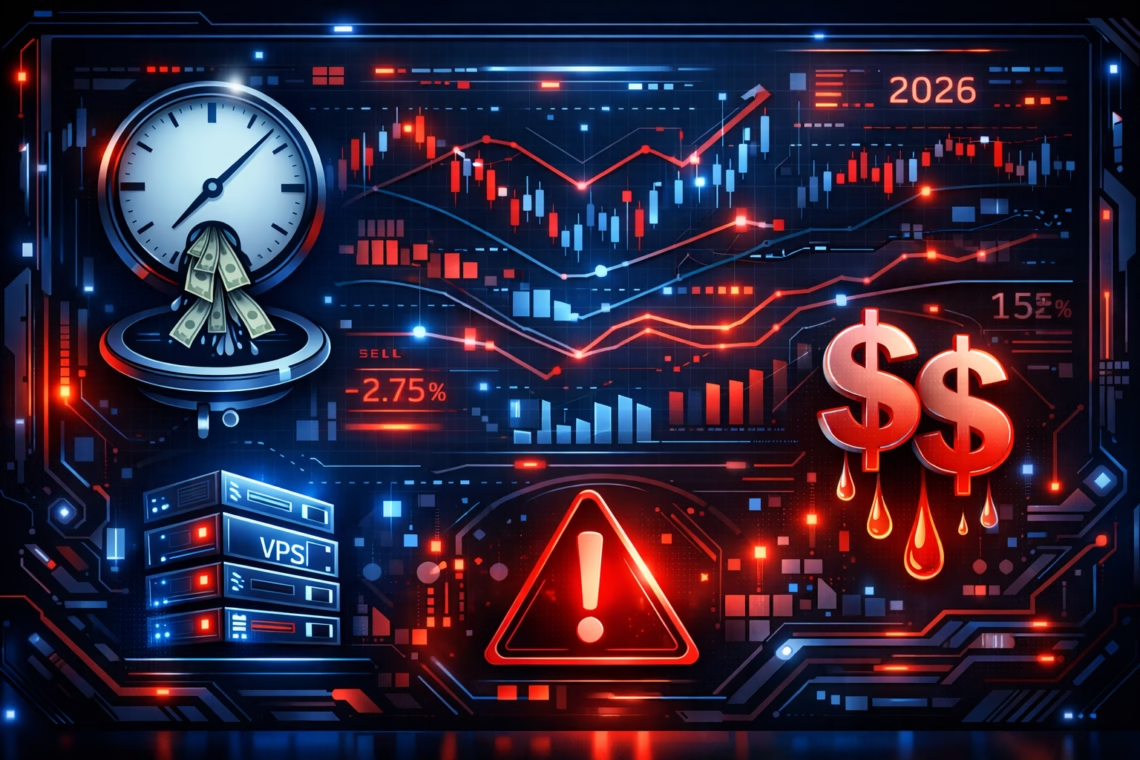
The Costs of Trading Automation can erode profits if overlooked. While automation promises efficiency and emotion-free trading, hidden expenses often surprise traders. In 2026, with AI-driven platforms advancing rapidly and tools like PickMyTrade enabling seamless futures automation on US markets, understanding these costs is essential for sustainable success.
Introduction to the Costs of Trading Automation
Trading automation—using algorithms, bots, or platforms to execute trades—has surged in popularity. Recent data shows over 65% of retail traders automate at least part of their strategies in 2026, driven by platforms integrating AI, machine learning, and real-time execution. However, the costs of trading automation extend far beyond monthly subscriptions. These hidden fees, from slippage to infrastructure, can turn profitable strategies unviable, especially in high-frequency or futures trading on US exchanges like CME via brokers such as Tradovate.
Subscription Fees: The Obvious Starting Point in Costs of Trading Automation
Most platforms charge subscriptions ranging from $50/month (e.g., entry-level plans) to $300+/month for premium features like unlimited alerts and multi-account support. PickMyTrade, a popular choice for TradingView-to-broker automation (supporting Tradovate, Rithmic, and others for US futures), offers plans starting at $50/month with unlimited strategies—no per-trade fees—making it cost-effective for futures traders. Annual plans save 16-20%, but always factor in upgrades for advanced risk tools.
Brokerage and Exchange Fees: Compounding Costs of Trading Automation
Even “commission-free” brokers hide costs. In futures trading:
- Commissions — Often $0.50–$2 per contract round-turn on US markets.
- Exchange fees — NFA, CME regulatory fees add up.
- Data feeds — Real-time Level II data can cost $100–$500/month if not bundled.
High-frequency automation amplifies these, as thousands of trades compound tiny fees into significant drag.
Slippage and Spreads: Silent Profit Killers in Costs of Trading Automation
Slippage—execution at a worse price than expected—arises from latency, volatility, or low liquidity. In automated setups:
- Estimates: 0.1–1% per trade in volatile markets.
- Studies show paper returns dropping 80% (e.g., 1% daily to 0.2% net) due to slippage and spreads.
For US futures automation, fast execution via low-latency brokers like Tradovate minimizes this, but it’s rarely zero.
Infrastructure and Tech Costs: Overlooked in Costs of Trading Automation
Reliable 24/7 automation requires:
- VPS hosting — $5–$50/month for low-latency servers.
- TradingView subscriptions — Pro plans ($15–$60/month) for alerts.
- API/webhook tools — Often free, but premium features add up.
PickMyTrade’s webhook integration with TradingView keeps this minimal, but downtime from poor setup costs opportunities.
Development, Testing, and Overfitting: Hidden Time and Money in Costs of Trading Automation
Building or customizing strategies involves:
- Backtesting tools (often subscription-based).
- Overfitting risks leading to live losses.
- Time investment—many traders spend months refining before profitability.
In 2026, AI advancements help, but poor testing remains a major cost.
Psychological and Opportunity Costs: Non-Financial Costs
Automation reduces emotion but introduces:
- Over-trading from “set-it-and-forget-it” mindset.
- Missed opportunities during black swan events or algo failures.
- Regulatory risks, like SEC scrutiny on AI collusion widening spreads.
Click Here To Automate Futures Trading
Case Study: PickMyTrade for US Futures Automation
PickMyTrade stands out for automating TradingView strategies to US futures brokers like Tradovate. With plans from $50/month, unlimited alerts/tickers, and features like SL/TP, OCO orders, and multi-account copying, it’s ideal for prop firms or personal accounts. Users praise its affordability (cheaper than competitors charging $2,999+ for similar features), fast execution, and 24/7 support. However, even here, add broker commissions, slippage in volatile sessions, and VPS for optimal uptime to get the full costs of trading automation picture.
Mitigating the Costs of Trading Automation in 2026
- Choose transparent platforms like PickMyTrade.
- Use limit orders to curb slippage.
- Calculate break-even: Factor all costs into strategy testing.
- Start small with demos.
- Monitor via TCA (Transaction Cost Analysis) tools.
Automation can boost efficiency, but only if you account for every cost layer.
FAQs
Beyond subscriptions, key ones include slippage (0.1–1%), brokerage/exchange fees, VPS hosting, data feeds, and opportunity costs from missed trades or errors.
Yes, for many—starting at $50/month with unlimited features and strong reviews for ease and support. Pair it with low-commission brokers like Tradovate to minimize overall costs.
They can cut returns significantly—studies show up to 80% degradation from slippage and fees in high-frequency setups.
Yes, with flat-fee platforms, optimized strategies, and low-latency setups. Focus on high-probability trades to offset expenses.
Rising AI adoption lowers some development costs but increases scrutiny on collusion and data fees; cloud platforms reduce VPS needs.
Disclaimer:
This content is for informational purposes only and does not constitute financial, investment, or trading advice. Trading and investing in financial markets involve risk, and it is possible to lose some or all of your capital. Always perform your own research and consult with a licensed financial advisor before making any trading decisions. The mention of any proprietary trading firms, brokers, does not constitute an endorsement or partnership. Ensure you understand all terms, conditions, and compliance requirements of the firms and platforms you use.
Also Checkout: Day Trading Taxes Guide 2026: Section 475 MTM Election