Imagine diving into the stock market with a powerful ally that spots opportunities faster than you can blink, executes trades flawlessly, and learns from past data to refine your approach. For many aspiring traders, the world of finance feels like a maze of charts, numbers, and split-second decisions. But with the right algorithmic trading software, you can transform that chaos into calculated success. Whether you’re a novice testing the waters or a seasoned investor seeking efficiency, discovering the best algorithmic trading software can elevate your game. In this guide, we’ll explore top options, key features, and practical tips to help you choose wisely and trade confidently.
Understanding Algorithmic Trading Software and Why It Matters
Algorithmic trading software automates the buying and selling of assets using predefined rules and mathematical models. It scans markets in real-time, identifies patterns, and triggers trades without human intervention. This technology isn’t just for Wall Street giants—it’s a game-changer for everyday traders aiming to minimize emotions and maximize precision.
At its core, this software relies on algorithms: step-by-step instructions that process data like price fluctuations, volume trends, or economic indicators. For instance, it might buy shares when a stock dips below a certain moving average and sell when it rebounds, all while adhering to your risk limits. The importance lies in its speed and consistency—humans can’t match the ability to monitor thousands of assets simultaneously or execute orders in milliseconds.
In volatile markets like forex or crypto, where prices swing wildly, algorithmic trading platforms reduce errors and capture fleeting opportunities. They also promote discipline by sticking to strategies, helping beginners avoid impulsive decisions driven by fear or greed.
A Beginner-Friendly Guide to How Algorithmic Trading Works
Think of an algorithm as a recipe for success in trading. It outlines exact conditions for entering or exiting positions. A basic example: If Company ABC’s stock falls 5% below its 50-day average amid high volume, purchase 50 shares; if it rises 10%, sell to lock in profits. Advanced versions incorporate machine learning to adapt over time.
Automated trading systems use powerful computers to run these rules continuously. This leads to high-frequency trading, where positions open and close in seconds to exploit tiny price gaps. The result? Potential for higher returns with lower effort, though risks like market crashes or glitches remain.
New traders often start with simple strategies, like trend-following or mean reversion, before scaling up. Picture a retiree using algo software to manage a portfolio passively, rebalancing assets quarterly based on performance data—freeing up time for hobbies while growing wealth steadily.
Who Benefits from Algorithmic Trading Platforms?
Institutional players like hedge funds and banks lead the pack, deploying custom systems backed by vast resources and data centers. They handle massive volumes, using algos for arbitrage across global exchanges.
On the individual side, quantitative analysts (quants) with coding skills build personalized tools, while less technical traders opt for off-the-shelf solutions from brokers. Even hobbyists in emerging markets, such as day traders in India focusing on NSE stocks, use these platforms to compete on equal footing.
The rise of retail trading apps has democratized access, allowing beginners to simulate strategies without real capital. For example, a young professional juggling a 9-5 job might use algo software to trade forex overnight, waking up to automated profits or protected losses.
The History and Growth of Algorithmic Trading
Algorithmic trading evolved from manual floor trading in the 1970s to computerized systems in the 1980s, fueled by advancements in computing power. The 2000s saw explosions in high-frequency trading, now accounting for over 50% of U.S. equity volume.
Today, with AI integration, platforms predict trends using big data from social media or news feeds. This shift has made markets more efficient but also sparked debates on fairness. For beginners, understanding this evolution highlights why modern software emphasizes user-friendly interfaces over raw coding.
Should You Build or Buy Your Automated Trading Software?
Buying pre-built software provides instant access and professional support, ideal for time-strapped beginners. Options like those from brokers integrate seamlessly, but watch for hidden fees that could erode profits—think subscription costs eating into a 10% annual return.
Building from scratch offers ultimate customization, such as tailoring algos for niche markets like sustainable energy stocks. However, it demands programming expertise and testing time. A hybrid approach: Start with a buy option, then modify via APIs as you gain confidence. Consider a scenario where a freelance developer creates a custom bot for crypto arbitrage, saving thousands in fees long-term.
Risks are real—poorly designed systems can amplify losses during black swan events like the 2020 market crash. Always prioritize robust testing.
Essential Features to Look for in the Best Algorithmic Trading Software
Top-tier platforms share core traits that ensure reliability and performance. Here’s what to evaluate:
Real-Time Data Access and Integration
Reliable software pulls live market quotes, company earnings, and economic reports. Built-in feeds or easy integrations with providers like Bloomberg prevent data silos. For global traders, compatibility with formats like FIX protocol is crucial for seamless multi-exchange operations.
Multi-Market Connectivity
Support for stocks, forex, crypto, and futures across exchanges. Third-party aggregators standardize data, simplifying analysis. Imagine trading U.S. equities while monitoring European indices—all from one dashboard.
Minimizing Latency for Peak Efficiency
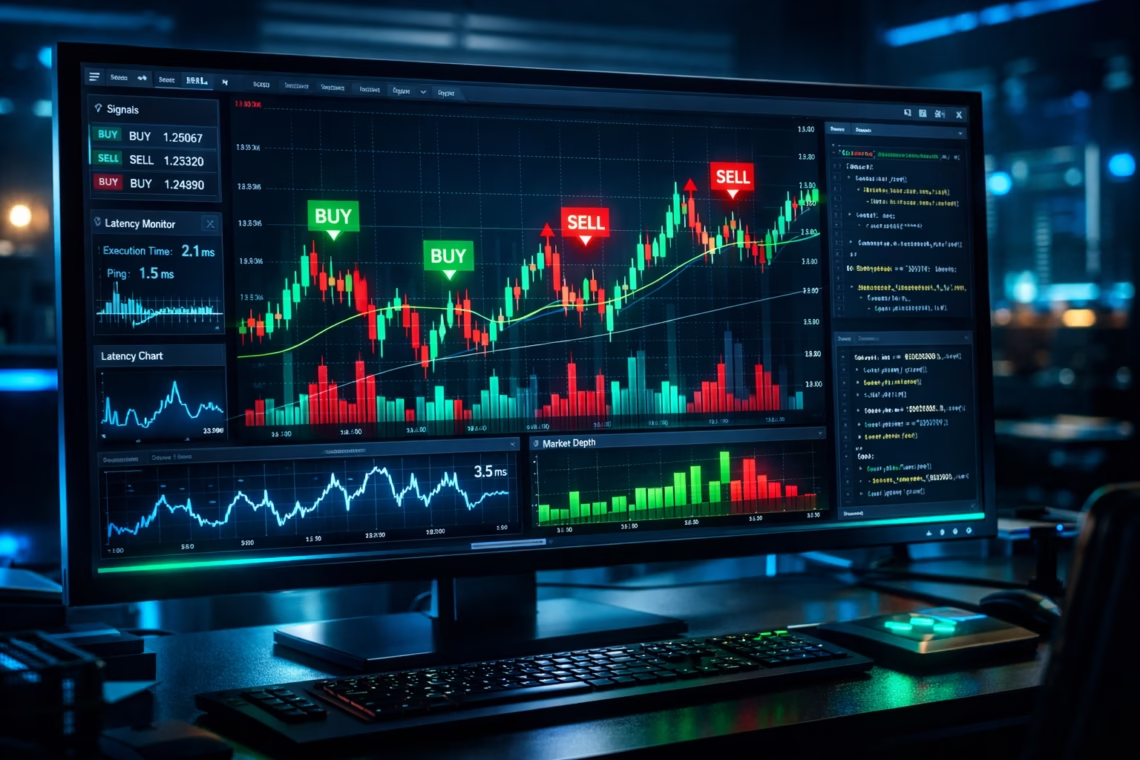
Latency—the time lag in data transmission—can cost fortunes. Aim for under 1ms execution. Strategies include direct exchange links, optimized algorithms, and broker bypassing. In high-stakes forex, a 0.5-second delay might miss a currency spike triggered by news.
Customization and Configurability Options
Go beyond defaults like moving average crossovers. Adjustable parameters let you test variations, such as 30-day vs. 100-day averages for volatility plays.
Custom Programming Capabilities
Languages like Python or Java enable bespoke bots. User-friendly platforms allow no-code tweaks for beginners.
Backtesting on Historical Data
Simulate strategies against years of data to gauge viability. Essential for refining rules—e.g., backtesting a momentum strategy on 10 years of S&P 500 data reveals weaknesses in bear markets.
Seamless Broker and Interface Integration
Direct order routing cuts delays. Factor in fees; high-frequency setups need low-commission brokers.
Plug-and-Play with Other Tools
APIs connect to analytics like Matlab or news aggregators, scaling your setup.
Platform Independence
Cross-OS compatibility ensures flexibility as your needs evolve.
Transparency in Operations
Demand clear documentation to understand the “black box.” Avoid opaque systems promising miracles.
Top 25 Algorithmic Trading Platforms in 2026
Based on features, ease of use, and performance, here are standout options. We’ve focused on beginner-friendly picks with growth potential.
No-Code & Alert-Based Automation Platforms
These excel for traders who want quick setup without programming, often bridging charting tools like TradingView to live execution.
- PickMyTrade — The top no-code bridge for TradingView users. It connects alerts directly to brokers like Tradovate, Rithmic, Interactive Brokers, TradeStation, TradeLocker, and ProjectX—no APIs or coding required. Setup takes under 5 minutes, with millisecond execution, unlimited strategies/alerts/accounts, advanced risk management (SL/TP, OCO, position sizing), and multi-asset coverage (futures, stocks, crypto, options, forex). Ideal for beginners automating indicators or strategies reliably; priced at $50/month with 24/7 support and a free trial. Perfect for hands-free execution in volatile markets like futures scalping.
Hosting & Infrastructure for Continuous Algo Execution
Essential for running bots 24/7 without interruptions, especially for automated strategies.
- QuantVPS — Optimized for hosting algos with ultra-low 1ms latency. Supports major platforms like NinjaTrader, MetaTrader, and more. Great for continuous forex or futures execution, backed by 100% uptime and round-the-clock support. Beginners benefit from easy deployment to eliminate home setup issues.
User-Friendly Broker Platforms with Built-in Algo Tools
Broker-integrated options that combine trading access with simple automation features.
- TradeStation — Excellent for equities and crypto with EasyLanguage for straightforward coding. Build basic trend-following strategies in hours, plus solid educational resources for market scanning.
- Interactive Brokers — Tech-savvy yet beginner-accessible with API support (e.g., Python bots) and commission-free tiers. Vast education library covers basics to advanced order routing.
- IC Markets — Leading forex broker with MT4/5 and cTrader support for automated trading. Low spreads boost scalability, and copy trading lets you share or follow strategies.
- FXCM — Strong developer tools for MT4/TradingView bots, GitHub resources for custom EAs, and social copy options like ZuluTrade.
Charting & Analysis-Focused Platforms with Automation
Powerful visualization tools that include backtesting and strategy automation.
- TrendSpider — Stands out for macro data (e.g., FRED integration) and multi-chart setups with auto-drawing. Helps busy U.S. traders visualize and automate strategies.
- TradingView — The global charting leader with Pine Script for custom indicators, auto-pattern detection, backtesting, and a massive community for sharing ideas across stocks, crypto, and more.
- Trade Ideas — Comprehensive for no-code charting, backtesting, and scanning. Uncovers hidden stock opportunities with extensive tool libraries.
Pre-Built & Alert Services for Hands-Off Insights
Services delivering ready-made algos or signals with proven backtests.
- Stock Market Guides — Provides pre-built algos with backtested edges (e.g., 79.4% average annualized returns for stocks). Affordable alerts at $69/month; suits options traders wanting minimal effort.
- Mindful Trader — Community-driven at $47/month. Follow Eric Ferguson’s rule-based trades, learn strategies directly, and get personalized support.
Crypto & Specialized Asset Automation
Tailored for volatile markets like cryptocurrencies or commodities.
- Coinrule — Crypto-centric with template bots. Easy rule customization and Telegram alerts for assets like Bitcoin.
- Botsfolio — Minimal barrier: Pick a strategy, set risk, and automate. Great for fast crypto entry without technical hurdles.
- Bitcode AI — Fully automated crypto bot using AI scanning. Low daily oversight with customization for passive setups.
- Oil Profit — Commodity-focused (oil) with AI-driven trades. No extra fees beyond $250 deposit; accounts for geopolitical factors.
- Bitcoin Prime — High-speed crypto support for multiple coins with fast execution for frequent trading.
- NFT Profit — Targets NFT derivatives via Ethereum conversion. Simple entry into trending digital assets.
- Bitcoin Era — Crypto algo with demo accounts for practice, custom strategies, and manager guidance.
- Immediate Edge — Rapid crypto CFD execution (up to 15 trades/minute) with high leverage potential.
AI-Driven & Pattern Recognition Platforms
Leverage machine learning for predictions and portfolio management.
- Tickeron — AI pattern recognition delivering 40-169% annualized bot gains. Offers precise stock picks and diversified portfolios.
- VectorVest — Blends fundamentals and timing signals with proprietary ratings. Historically outperforms the S&P; simplifies buy/sell decisions.
Copy & Social Trading Platforms
Automate by mirroring experts—ideal for learning while trading.
- eToro Copy Trading — Automatically mirror top traders with a low $200 minimum. Smart Portfolios handle rebalancing for stocks, crypto, and more.
- Ava Mirror Trader — CFD platform with tools like DupliTrade and ZuluTrade. Social features connect you to mentors for mirrored strategies.
Advanced & Pro-Level Algo Environments
Better for those scaling up after beginner stages.
- QuantConnect — Professional-grade with over 100,000 algorithms. Supports CFDs, equities, options, and more; shines for experienced algorithmic options trading.
- PowerX Optimizer — Options specialist with unique “Wheel” feature for premium collection and expiration management.
Click Here To Start Free Trial For Trading Automation
How to Select the Right Automated Trading Software for Your Needs
Match software to your skill level, markets, and budget. Beginners: Prioritize intuitive interfaces like PickMyTrade. Pros: Seek APIs for customization.
- Tech Skills: Code-heavy? Choose QuantConnect. No-code? PickMyTrade.
- Assets: Crypto? Coinrule. Forex? IC Markets.
- Costs: Free trials help; factor ongoing fees.
- Reliability: Uptime and support are non-negotiable.
- Community: Platforms like TradingView offer forums for troubleshooting.
Key Takeaways and Final Thoughts
Algorithmic trading software empowers smarter decisions through automation, speed, and data-driven insights. Key features like low latency, backtesting, and customization are vital for success. For beginners, start with user-friendly options like TradeStation or eToro to build confidence.
Remember, no tool guarantees profits—combine with education and risk management. Test thoroughly, diversify strategies, and monitor performance. By choosing the best algorithmic trading software aligned with your goals, you’ll navigate markets more effectively and potentially boost returns. Ready to automate? Explore free trials today and step into efficient trading.
Disclaimer:
This content is for informational purposes only and does not constitute financial, investment, or trading advice. Trading and investing in financial markets involve risk, and it is possible to lose some or all of your capital. Always perform your own research and consult with a licensed financial advisor before making any trading decisions. The mention of any proprietary trading firms, brokers, does not constitute an endorsement or partnership. Ensure you understand all terms, conditions, and compliance requirements of the firms and platforms you use.
Also Checkout: Master Algorithmic Trading Without Writing a Single Line of Code