Automated trading is no longer reserved for hedge funds, quant desks, or programmers. Today, traders of all experience levels can design, test, and deploy a fully functional Automated Trading System without writing a single line of code.
With modern no-code platforms and infrastructure like PickMyTrade, automation has become faster, safer, and more accessible—while still delivering professional-grade performance.
This guide explains how automated trading works, why no-code solutions are transforming the industry, and how you can build a reliable system that runs 24/7 with confidence.
What Is an Automated Trading System?
An Automated Trading System is a rules-based framework that analyzes market data and executes trades automatically based on predefined conditions. Once deployed, the system monitors markets continuously and places orders without manual intervention.
Today, automated strategies account for the majority of global market volume, especially in futures, equities, and FX. The reason is simple: machines are faster, more consistent, and immune to emotional decision-making.
Core Components of Trading Automation
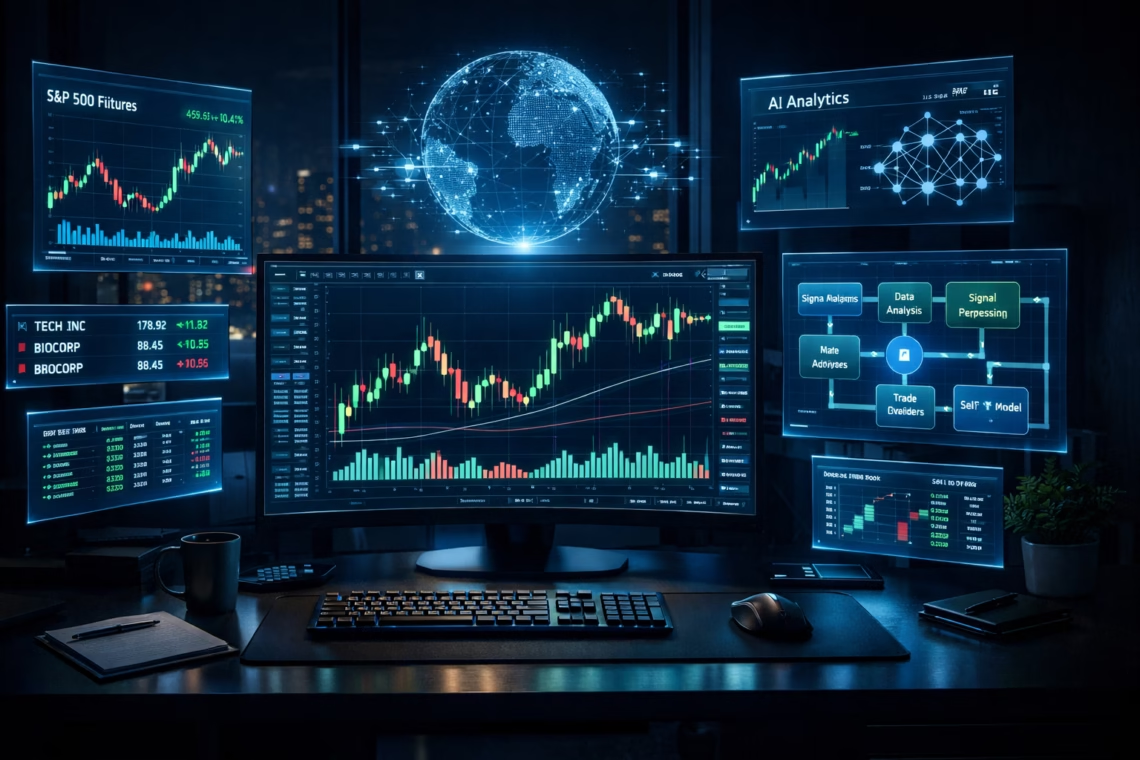
Every automated system relies on three foundational elements:
- Market Data Inputs
Price feeds, indicators, volume metrics, and volatility measures - Strategy Logic Engine
Entry rules, exit conditions, position sizing, and risk limits - Execution & Infrastructure Layer
Broker connectivity, order routing, and always-on hosting
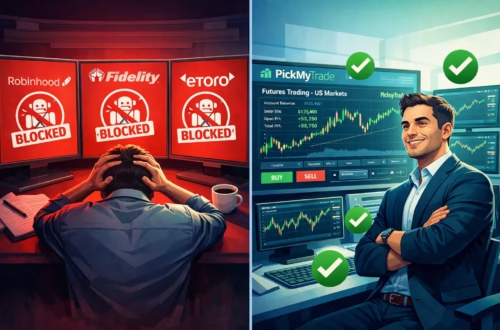
Platforms like PickMyTrade integrate all three layers into a single trader-centric ecosystem, eliminating the complexity traditionally associated with automation.
Why Traders Are Moving to Automated Trading Systems
Manual trading struggles to compete with algorithmic execution—especially in fast markets. Automation solves several critical pain points at once.
Key Advantages of Automated Trading
- Emotion-Free Execution
Trades are placed exactly as planned, without hesitation or fear - 24/7 Market Coverage
Systems monitor multiple instruments across time zones - Speed and Precision
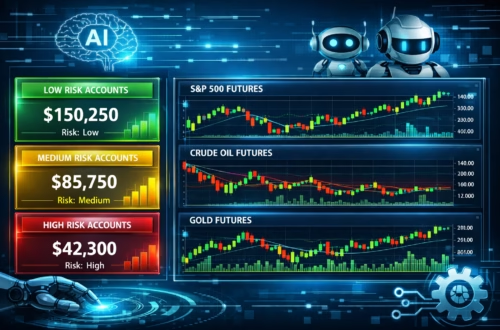
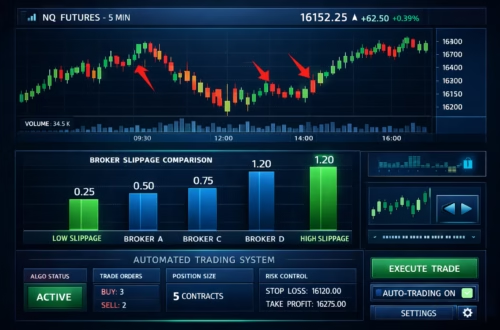
Orders execute in milliseconds, reducing slippage - Built-In Risk Controls
Position sizing, daily loss caps, and stop mechanisms are enforced automatically - Scalable Strategy Deployment
One system can trade multiple markets simultaneously
For active traders, automation isn’t about replacing strategy—it’s about executing it perfectly, every time.
No-Code vs. Traditional Coding: What’s the Difference?
The rise of no-code platforms has fundamentally changed how traders build systems.
No-Code Automated Trading Platforms
No-code solutions allow traders to visually assemble strategies using predefined logic blocks and rule builders.
Benefits include:
- Rapid strategy creation (hours instead of months)
- Lower upfront costs
- Minimal technical learning curve
- Platform-managed updates and maintenance
Code-Based Trading Systems
Custom-coded systems offer unlimited flexibility but come with trade-offs:
- Long development cycles
- Higher costs for development and debugging
- Ongoing maintenance responsibility
- Strong programming knowledge required
For most traders, no-code platforms provide more than enough flexibility—without the operational burden.
How No-Code Automated Trading Works
A no-code Automated Trading System follows a simple but powerful workflow:
- Define Market Conditions
Select indicators, price patterns, or time-based triggers - Set Entry and Exit Rules
Determine when to enter, take profit, or exit a trade - Apply Risk Management
Configure position size, stop losses, and exposure limits - Test with Historical Data
Validate performance across different market environments - Deploy on Always-On Infrastructure
Run the system continuously without downtime
PickMyTrade streamlines this entire process, enabling traders to focus on strategy quality instead of technical setup.
Building Your First Automated Trading System
Creating your first system doesn’t require complexity. In fact, simpler strategies are often more robust.
Step 1: Choose the Right Platform
Look for a platform that prioritizes traders—not developers.
A strong automated trading platform should include:
- Visual strategy builder
- High-quality historical data
- Reliable backtesting engine
- Broker and exchange integrations
- Infrastructure designed for live execution
PickMyTrade is built specifically for automation-first traders, eliminating the friction found in generic platforms.
Step 2: Design Clear Trading Rules
Your system should answer three questions unambiguously:
Entry Conditions
Examples:
- Moving average crossovers
- Breakouts above volatility bands
- Time-based session opens
- Momentum confirmation using volume
Exit Logic
Examples:
- Fixed profit targets
- Trailing stops
- Indicator reversals
- Time-based exits to avoid overnight risk
Risk Management
Examples:
- Fixed percentage risk per trade
- Daily loss limits
- Max open positions
- Market correlation filters
Automation only works when risk is defined upfront.
Why Infrastructure Matters for Automated Trading
Even the best strategy fails if it doesn’t execute reliably.
An Automated Trading System must run continuously—without internet outages, computer crashes, or platform shutdowns.
Benefits of Running Automation on Dedicated Infrastructure
- Zero dependency on your local machine
- Consistent execution speed
- Lower latency to exchanges
- Improved fill quality
- Continuous monitoring even while you sleep
PickMyTrade is optimized for automated execution, ensuring systems remain live, stable, and responsive at all times.
Testing Your Automated Trading System Properly
Testing separates viable systems from overfitted ideas.
Backtesting Best Practices
- Use multi-year historical data
- Test across bull, bear, and sideways markets
- Include commissions and slippage
- Analyze drawdowns, not just profits
- Avoid curve-fitting parameters
Paper Trading Before Going Live
Simulated trading allows you to validate real-time behavior without financial risk.
Key things to observe:
- Order timing accuracy
- Strategy behavior during news events
- Stability during high volatility
- Consistency with backtest results
Only move to live trading once results are stable and repeatable.
Optimizing Performance and Execution Speed
Execution quality directly impacts profitability—especially for intraday and futures traders.
Optimization Tips
- Use infrastructure located close to your broker or exchange
- Limit unnecessary platform processes
- Monitor CPU, memory, and latency metrics
- Regularly review execution reports
PickMyTrade is designed to minimize execution delays, helping traders reduce slippage and maximize strategy efficiency.
Click Here To Start Automate Trading For Free
Common Automated Trading Use Cases
Automation isn’t limited to one trading style.
Popular applications include:
- Futures breakout systems
- Mean-reversion strategies
- Trend-following portfolios
- Session-based intraday trading
- Risk-controlled prop trading models
No-code platforms allow traders to experiment across styles without rebuilding infrastructure from scratch.
Conclusion: Automated Trading Without Barriers
Automated trading has entered a new era. With no-code tools and trader-focused platforms, building a professional-grade Automated Trading System is no longer a technical challenge—it’s a strategic one.
Key takeaways:
- Automation improves consistency, speed, and discipline
- No-code platforms dramatically reduce setup time
- Risk management must be embedded from day one
- Reliable infrastructure is essential for long-term success
- PickMyTrade offers a streamlined, trader-centric alternative to generic automation tools
If you’re ready to trade smarter—not harder—automation is no longer optional. It’s the edge that modern traders rely on.
Disclaimer:
This content is for informational purposes only and does not constitute financial, investment, or trading advice. Trading and investing in financial markets involve risk, and it is possible to lose some or all of your capital. Always perform your own research and consult with a licensed financial advisor before making any trading decisions. The mention of any proprietary trading firms, brokers, does not constitute an endorsement or partnership. Ensure you understand all terms, conditions, and compliance requirements of the firms and platforms you use.
Also Checkout: Automated Futures Trading System Made Simple