Can a $100K automated strategy crush the S&P 500 in 2026? Algo trading vs index funds is no longer a theoretical debate—it’s a live performance showdown. With the algorithmic trading market exploding from $21.89 billion in 2025 to $25.04 billion in 2026 (and heading to $44.34 billion by 2030), retail traders armed with smart systems are finally challenging passive giants like SPY and VOO.
Volatile 2026 markets (rate shifts, AI swings, international outperformance) create the perfect arena for algo trading vs index funds. The $100K Challenge tests exactly that: passive buy-and-hold versus disciplined automated futures trading.
What the $100K Challenge Really Tests in Algo Trading vs Index Funds
Start with $100,000.
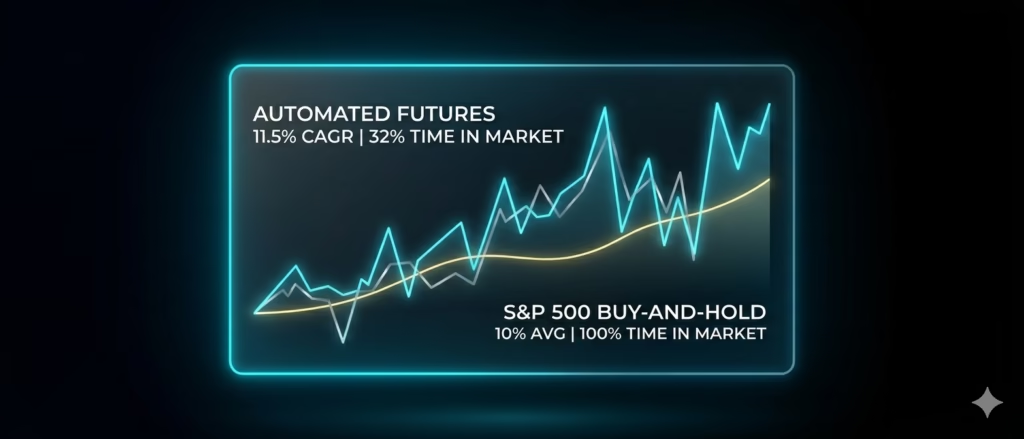
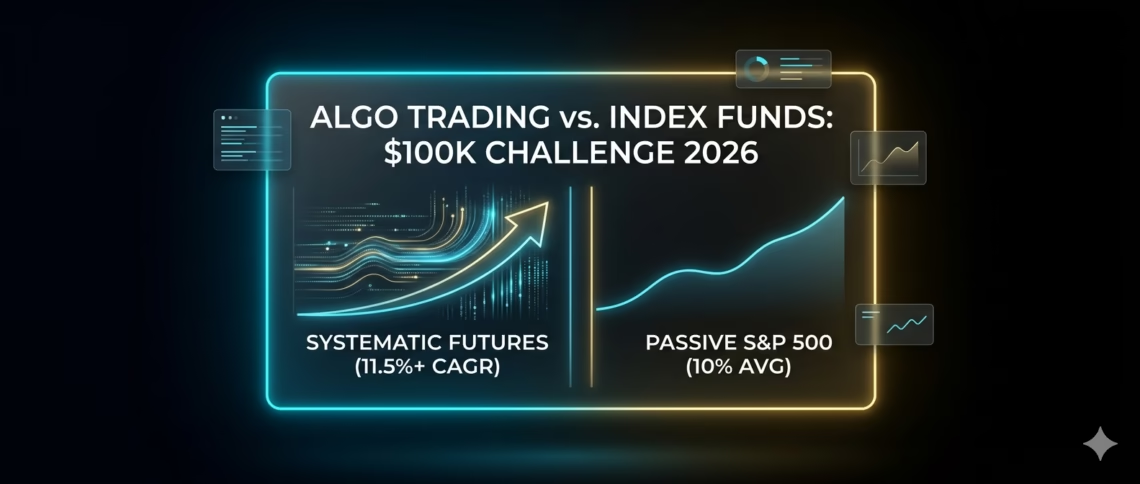
- Index funds path: Buy-and-hold SPY/VOO (historical ~10% CAGR long-term; ~16% in 2025). Simple, low fees, but fully exposed to every drawdown.
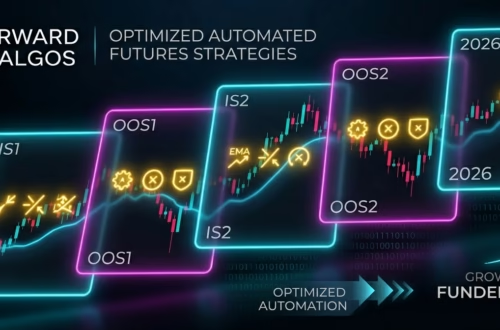
- Algo trading path: Systematic futures strategies (ES/NQ micros) using rules-based entries, walk-forward optimization, and strict risk controls.
Recent 2026 data shows well-built algos can deliver 11.5%+ compounded returns while invested only 32% of the time—outperforming buy-and-hold with lower drawdowns (Quantified Strategies Feb 2026 analysis). Market-neutral and trend-following systems on platforms like BOTS have consistently beaten traditional indices.
2025–2026 Updates: Why Algo Trading vs Index Funds Favors Automation Now
The landscape shifted decisively:
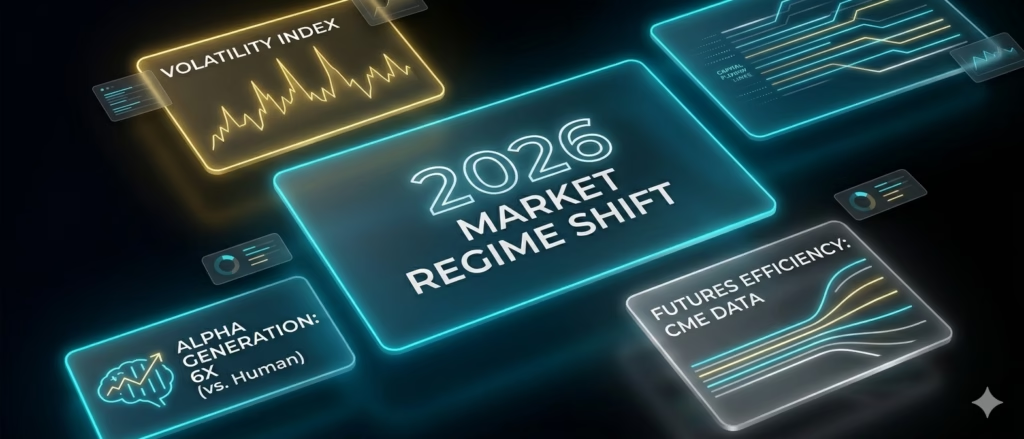
- March 2026: Retail algorithmic trading projected to outpace institutional growth through 2030 (TakeProfit report).
- Feb 2026: AI-enhanced portfolios generated 6× more alpha than human fund managers over 30-year simulations (Stanford study).
- 2026 market growth: Algo sector CAGR hits 14.4%–15.4%, fueled by AI, real-time data, and accessible platforms.
- Hedge fund & quant performance: Top algo-driven funds posted 28–33% returns in 2025 while index correlation hit record highs—proving systematic edges beat passive in regime shifts.
- Futures advantage: Cheaper capital efficiency than ETFs (CME analysis) plus 24/7 trading and leverage make US futures the weapon of choice for beating the S&P 500.
Passive index funds still win for hands-off investors. But algo trading vs index funds in 2026 shows automated systems win when volatility spikes and you want asymmetric returns.
How to Build a Winning $100K Algo Strategy (Step-by-Step)
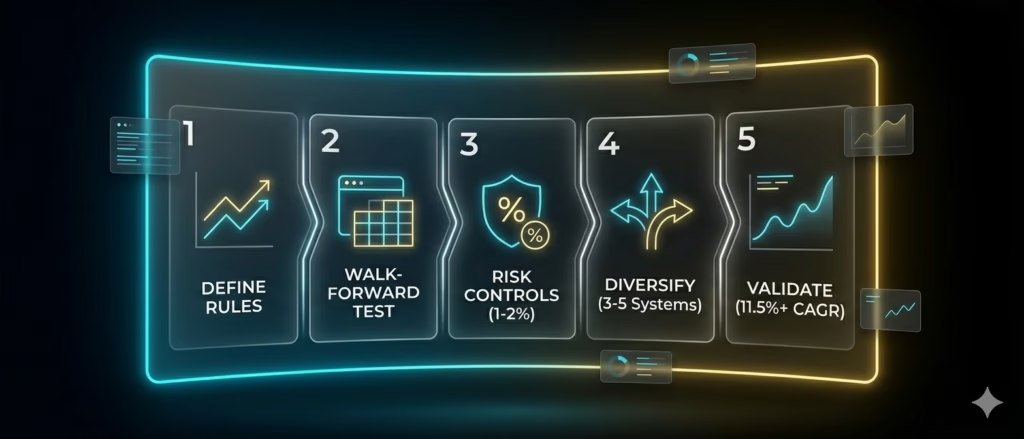
- Define rules: Trend-following (50/200 SMA crossover on ES/NQ) or mean-reversion with volatility filters.
- Walk-forward test: Optimize on rolling windows to avoid overfitting (essential per 2026 quant best practices).
- Risk controls: 1–2% max risk per trade, dynamic position sizing for micros.
- Diversify: Run 3–5 uncorrelated strategies across ES, NQ, CL.
- Backtest 2025–2026 data: Aim for 10–15%+ CAGR with max drawdown under 15%.
Real-world result: Combined strategies delivered 11.5% annualized while sitting out 68% of market noise.
Click Here To Automate Futures Trading
Automate Your $100K Edge with PickMyTrade on US Futures
Spot the signal. Execute flawlessly. Scale without emotion.
PickMyTrade is built exactly for this 2026 challenge.
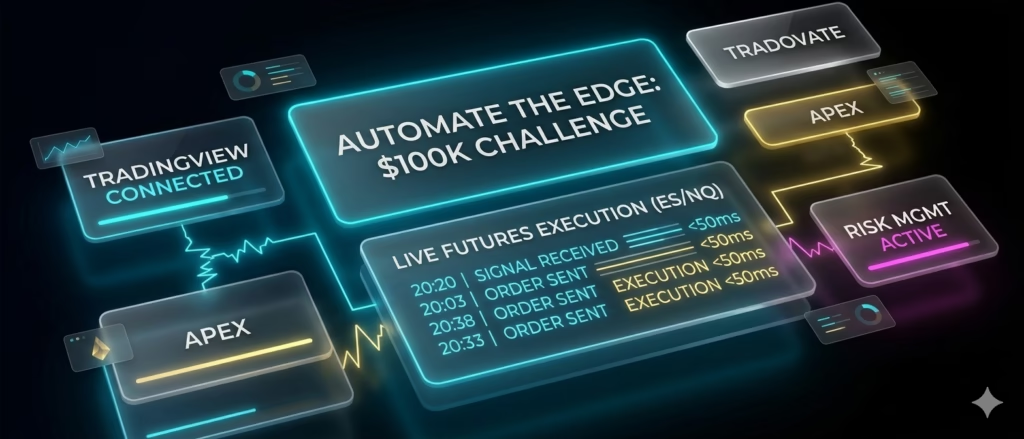
Designed for futures trading on US markets, PickMyTrade connects your TradingView or Python strategies directly to Tradovate/Rithmic accounts. Run unlimited optimized algos 24/7 across multiple accounts with sub-50ms execution.
When your algo trading vs index funds system triggers (e.g., ES trend signal), PickMyTrade handles entries, exits, and risk automation instantly—no manual monitoring. Full support for Apex Trader Funding, TopStep, and every major prop firm. Micro contracts let you control $100K+ exposure with tiny capital. One flat monthly fee unlocks the exact automation that turns a $100K account into a compounding machine while index investors wait for 7–10% average returns.
The Bottom Line: Who Wins the $100K Challenge in 2026?
Algo trading vs index funds isn’t about “always beating the market.” It’s about delivering higher risk-adjusted returns with less time exposed.
In 2026, disciplined automated futures traders using tools like PickMyTrade are positioned to win the $100K Challenge—achieving 11–15%+ compounded growth while passive index investors ride every dip.
Passive still wins for true set-it-and-forget-it investors. But if you want to actively compound $100K faster, algo trading vs index funds with proper automation is the clear 2026 winner.
Most Asked FAQs About Algo Trading vs Index Funds 2026
Yes. 2026 data shows disciplined systems (trend-following + walk-forward optimization) delivered 11.5%+ CAGR with lower drawdowns and less market exposure than buy-and-hold SPY.
Start with $100,000. Compare passive index funds (SPY/VOO) vs automated futures strategies over 12 months. Focus: total return, drawdown, and time-in-market.
Absolutely—retail algo is projected to outpace institutional through 2030 (TakeProfit March 2026).
PickMyTrade automates US futures strategies (ES/NQ) 24/7 on Tradovate/Rithmic with zero latency. Turn validated signals into live trades across funded or personal accounts—perfect for scaling the $100K Challenge.
Disclaimer:
This content is for informational purposes only and does not constitute financial, investment, or trading advice. Trading and investing in financial markets involve risk, and it is possible to lose some or all of your capital. Always perform your own research and consult with a licensed financial advisor before making any trading decisions. The mention of any proprietary trading firms, brokers, does not constitute an endorsement or partnership. Ensure you understand all terms, conditions, and compliance requirements of the firms and platforms you use.
Also Checkout: Rithmic vs ProjectX: API Documentation Comparison