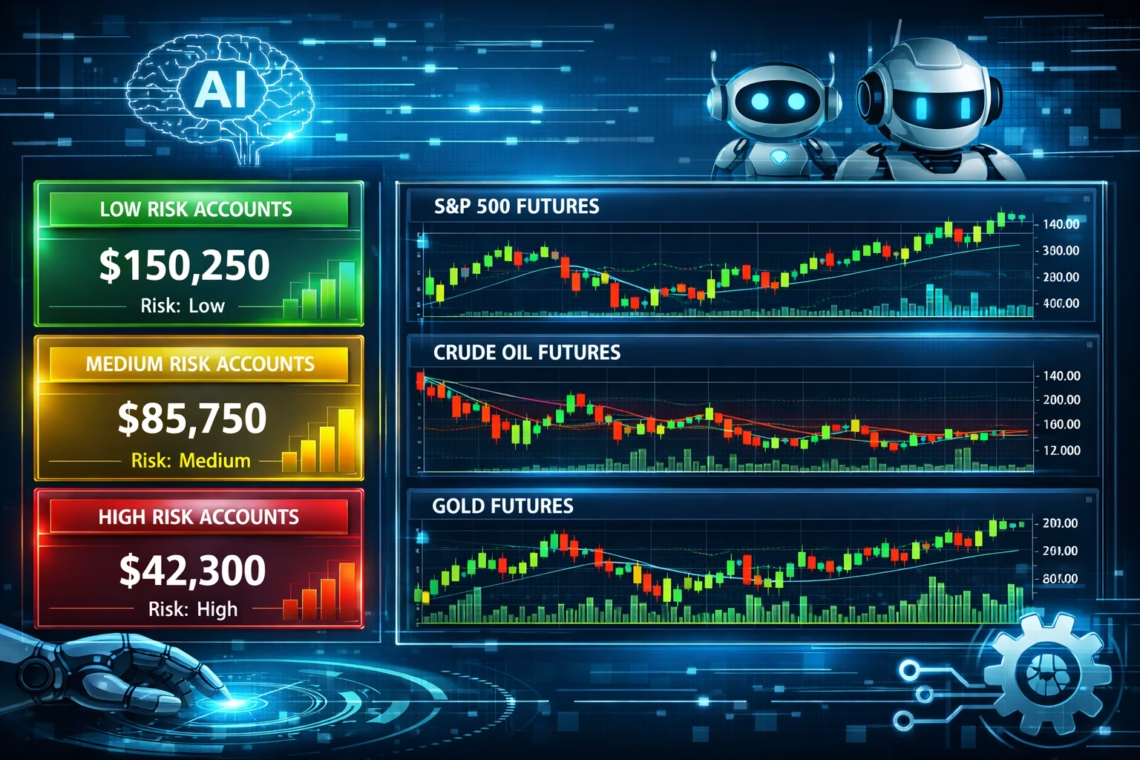
Account segmentation is a powerful strategy in risk management, especially in financial services, trading, and brokerage environments. It involves dividing accounts (customer, client, or trading accounts) into distinct groups based on risk profiles, behaviors, transaction patterns, and other factors. This enables tailored risk mitigation, resource allocation, and compliance.
In banking and AML contexts, account segmentation identifies high-risk categories like MSBs or NGOs for enhanced monitoring. In trading and futures markets, it helps manage exposure by grouping accounts by trading style, volatility tolerance, or automation level—crucial amid rising algorithmic trading adoption.
Recent developments emphasize dynamic, AI-driven account segmentation. Tools now use real-time data for continuous re-segmentation, aligning with 2025 regulatory focuses on fraud, third-party risks, and operational resilience (e.g., OCC reports highlighting elevated compliance risks and payments fraud).
In futures trading, where leverage amplifies risks, account segmentation supports better oversight of automated strategies, preventing overexposure in volatile US markets like CME futures (ES, NQ).
Tools like PickMyTrade enhance this by automating futures trading on US markets via platforms such as Tradovate, Rithmic, and Interactive Brokers. Traders can segment accounts by strategy type (e.g., scalping vs. trend-following) and apply automated risk rules—like position limits or stop-losses—to high-risk segments, reducing drawdowns while capturing 24/7 opportunities.
Why Account Segmentation Matters in Modern Risk Management
Account segmentation transforms broad risk views into precise, actionable insights. Key benefits include:
- Prioritizing high-risk accounts for scrutiny.
- Customizing controls (e.g., tighter limits for speculative traders).
- Improving efficiency by focusing resources where needed.
- Enhancing compliance with evolving regulations.
In 2025–2026 trends, AI and automation drive it toward real-time adaptability, addressing missed risk connections and strategy shifts.
Best Practices
- Identify Key Risk Factors — Consider geography, transaction volume, industry, behavior, and—for trading—leverage use or automation.
- Build Dynamic Segments — Use data analytics for ongoing updates, avoiding static models.
- Integrate Automation — Platforms automate monitoring and execution in segmented accounts.
- Monitor and Re-segment — Regularly review as behaviors evolve.
In futures trading, integrate tools like PickMyTrade for automated execution on US markets. It supports webhook-based automation from TradingView, enabling segmented risk triggers (e.g., lower exposure in high-volatility segments).
Click Here To Automate Stock Trading
Account Segmentation in Futures Trading Automation
US futures markets demand robust account segmentation due to high leverage and volatility. Automated systems amplify both profits and risks.
PickMyTrade stands out as a leading solution for automating futures trading. It connects seamlessly to brokers like Tradovate for commission-free execution, Rithmic for low-latency, and others. Traders automate strategies across unlimited tickers, applying account segmentation by risk level—e.g., conservative segments with strict drawdown limits.
This integration promotes disciplined risk management in automated setups, aligning with 2026 trends where precision automation defines success.
The Future of Trading in Risk Management
As AI proliferates and regulations tighten (e.g., focus on third-party and cyber risks), account segmentation will evolve toward hyper-personalized, predictive models. In trading, expect tighter integration of automation tools for proactive risk controls.
FAQs
Account segmentation divides accounts into groups based on risk characteristics for targeted mitigation and monitoring.
It allows customized limits, monitoring, and automation rules per segment, reducing overall exposure in volatile markets like futures.
2025–2026 trends include AI-driven dynamic segmentation, real-time re-profiling, and focus on fraud/operational risks per regulatory reports.
Yes—PickMyTrade enables automated futures trading on US markets with strategy-specific rules, effectively segmenting by risk profile.
Disclaimer:
This content is for informational purposes only and does not constitute financial, investment, or trading advice. Trading and investing in financial markets involve risk, and it is possible to lose some or all of your capital. Always perform your own research and consult with a licensed financial advisor before making any trading decisions. The mention of any proprietary trading firms, brokers, does not constitute an endorsement or partnership. Ensure you understand all terms, conditions, and compliance requirements of the firms and platforms you use.
Also, Checkout: Day Trading Taxes Guide 2026: Section 475 MTM Election