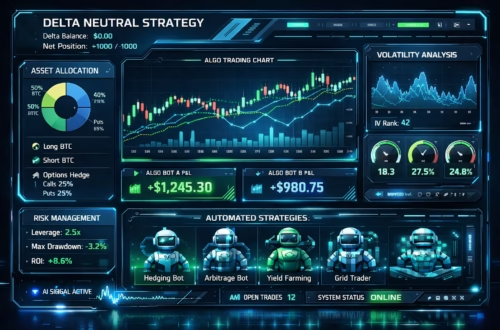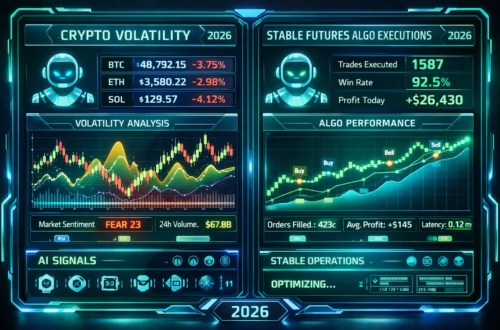
The crypto market in 2025 has been a rollercoaster, with Bitcoin experiencing record highs followed by sharp sell-offs, potentially marking its first annual decline since 2022. Amid this volatility, automated trading tools have surged in popularity, but many traders face crypto trading bot failure due to inadequate safeguards.
This 2026 guide explores why bots often underperform or cause significant losses without proper risk control bots and strategies. We’ll cover common pitfalls, real-world examples, and essential risk management techniques to help you build resilient automated systems.
Understanding Crypto Trading Bot Failure in Volatile Markets
Crypto trading bots promise 24/7 execution, emotion-free decisions, and efficiency in a market that never sleeps. However, without robust risk controls, they amplify losses rather than mitigate them.
In 2025, increased correlation with traditional equities—driven by AI stock movements and macro factors—has made bots vulnerable to broader market swings. Overfitting to historical data, technical glitches, and black swan events like exchange outages or sudden regulatory shifts have led to widespread crypto trading bot failure.
Studies and reports from 2025 highlight that a substantial percentage of bots fail to generate consistent profits, often due to ignoring real-world costs like fees, slippage, and volatility.
Common Reasons for Crypto Trading Bot Failure Without Risk Controls
Bots without integrated risk management expose traders to amplified dangers. Here are the top culprits behind crypto trading bot failure:
1. Lack of Stop-Loss and Position Sizing
Many bots chase profits aggressively but lack automatic exits. During 2025’s flash crashes or BTC drops, unprotected bots incurred massive drawdowns. Risk control bots with dynamic stop-loss (e.g., based on ATR) and fixed position sizing (1-2% risk per trade) prevent account wipeouts.
2. Overfitting and Poor Backtesting
Bots tuned perfectly to past data falter in live markets. Curve-fitting caused failures when 2025’s shifting volatility invalidated old patterns. Thorough forward testing and adaptive parameters are crucial.
3. Technical and Connectivity Issues
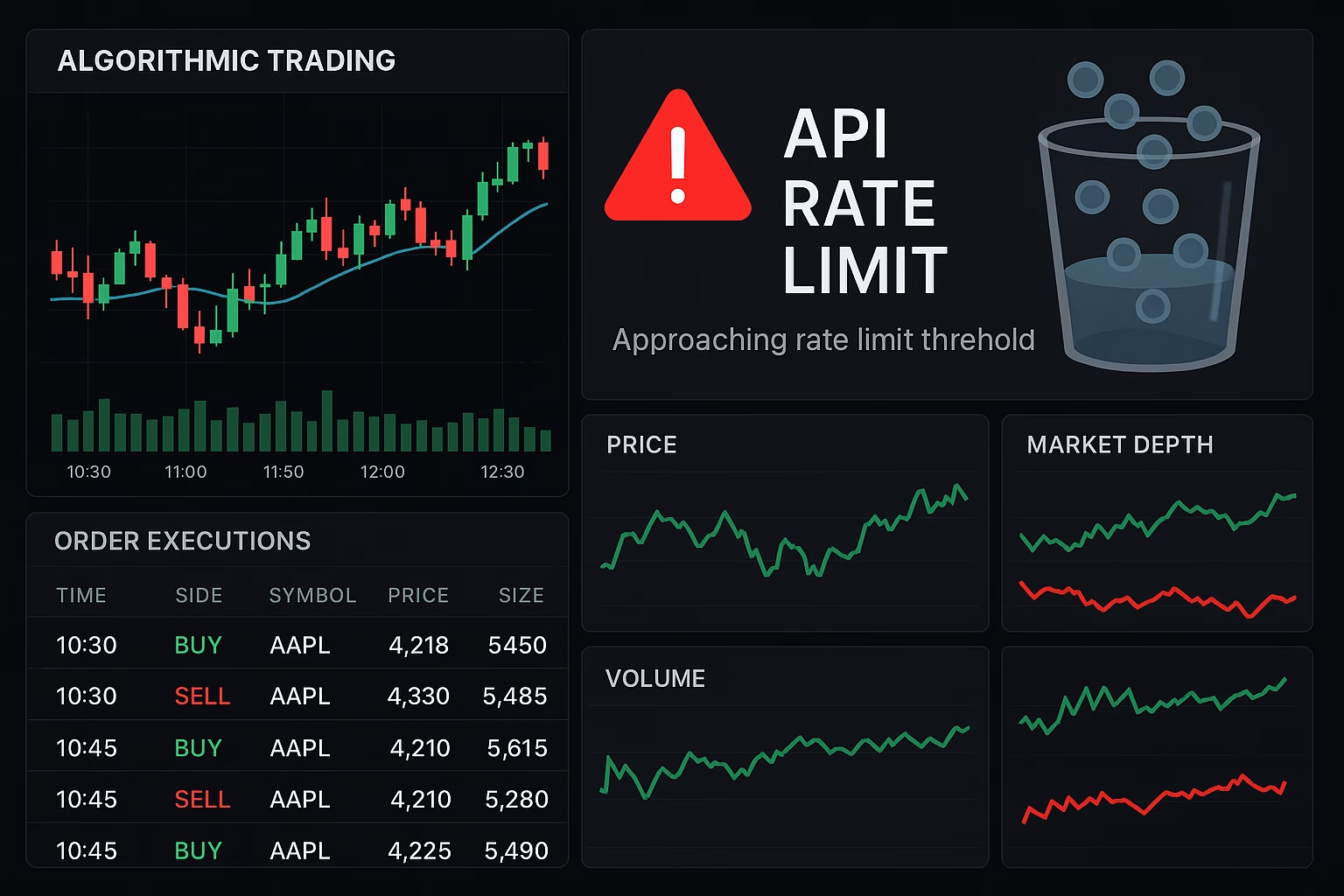
Latency, API failures, or exchange downtimes halt executions at critical moments. In high-volatility 2025 events, this led to missed stops or erroneous trades.
4. Overleveraging and Ignoring Black Swans
Leveraged bots magnify losses in unexpected events, like potential 2025 regulatory shocks or hacks. Without daily risk caps or circuit breakers, one event can erase months of gains.
5. Security Vulnerabilities
Malicious bots or poor API practices led to thefts, including 2025 scams draining millions via fake MEV bots.
Click Here To Start Crypto Trading Automation For Free
Essential Risk Control Bots and Strategies for 2026 Success
To avoid crypto trading bot failure, prioritize platforms and tools with built-in risk controls. Leading strategies include:
- Diversification — Spread across assets and strategies to buffer volatility.
- Dynamic Risk Management — Use volatility-based stops, portfolio-level limits, and hedging.
- Monitoring and Alerts — Regular oversight with real-time logs.
- Advanced Features — Multi-level take-profits, partial closes, and reverse actions.
One standout tool for reliable automation is PickMyTrade, a cloud-based platform that connects TradingView strategies to brokers like Tradovate or Interactive Brokers with millisecond precision. PickMyTrade emphasizes risk-aware execution, supporting features like risk percentage sizing, multi-account management, and customizable order controls—no coding required. Traders using PickMyTrade report consistent performance by layering their strategies with these built-in safeguards.
Building Resilient Risk Control Bots: Best Practices for 2026
- Start small and paper trade.
- Incorporate fees and slippage in tests.
- Set global drawdown limits.
- Adapt to 2026 trends like AI agents and increased regulation.
- Combine automation with human oversight.
With proper risk control bots, automation becomes a powerful ally rather than a liability.
Most Asked FAQs on Crypto Trading Bot Failure and Risk Controls
Most fail due to poor risk management, overfitting, and vulnerability to volatility or technical issues—exacerbated in 2025’s turbulent market.
Amplified losses from crashes, overleveraging, black swans, and security breaches.
Use stop-losses, position sizing, diversification, and tools like PickMyTrade for precise, risk-aware execution.
Absolutely—markets are evolving toward adaptive AI, making integrated risk features essential for survival.
No bot predicts them, but strong risk controls (e.g., auto-pause on extreme volatility) minimize damage.
Disclaimer:
This content is for informational purposes only and does not constitute financial, investment, or trading advice. Trading and investing in financial markets involve risk, and it is possible to lose some or all of your capital. Always perform your own research and consult with a licensed financial advisor before making any trading decisions. The mention of any proprietary trading firms, brokers, does not constitute an endorsement or partnership. Ensure you understand all terms, conditions, and compliance requirements of the firms and platforms you use.
Also Checkout: Best Trading Setup 2025: Automated Wins Revealed