In the fast-evolving world of trading, Trade Journaling remains a cornerstone for achieving consistency and profitability—especially with automated systems. While algorithms handle execution, journaling provides the human insight needed to refine strategies, spot hidden patterns, and adapt to changing markets.
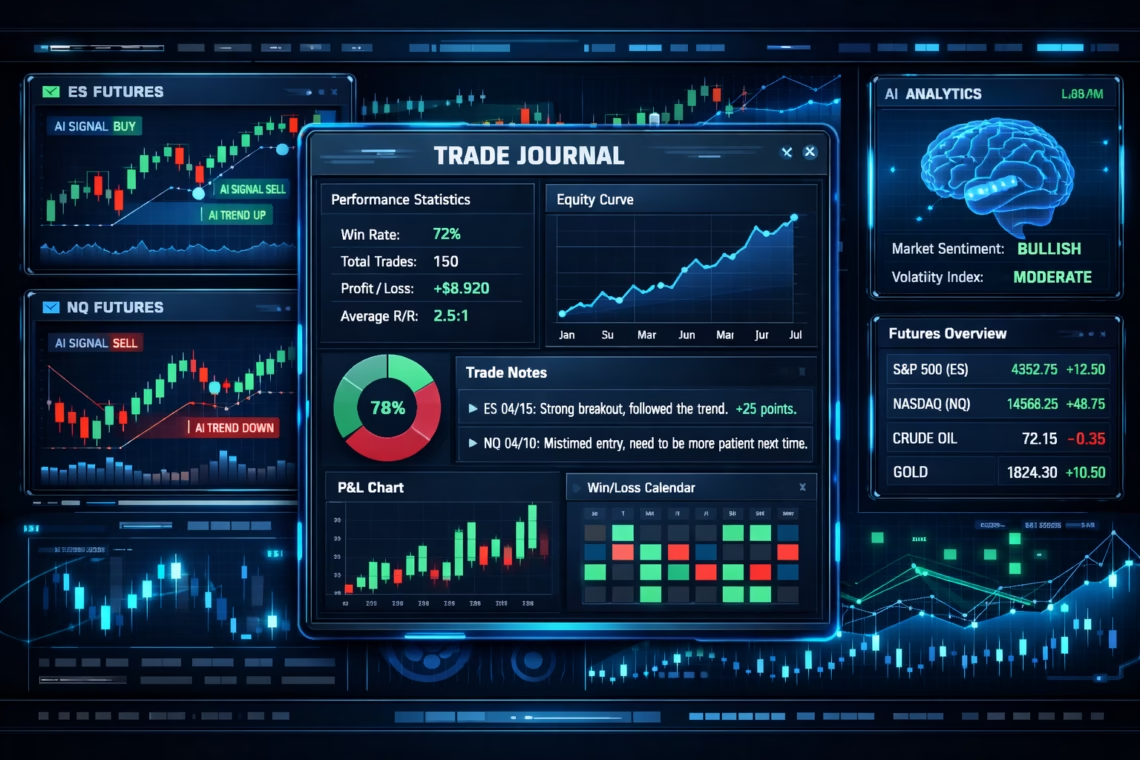
As of 2026, Trade Journaling has shifted toward heavy automation, AI-driven insights, and seamless integrations. Tools now auto-import trades, generate performance analytics, and even offer AI coaching to accelerate improvement.
Why Trade Journaling Matters for Automated Trading Systems
Automated trading removes emotion from execution, but it doesn’t eliminate the need for oversight. Trade Journaling bridges this gap by documenting every trade’s context, performance metrics, and outcomes.
Key benefits include:
- Performance Analysis — Identify which strategies perform best under specific conditions, like volatility spikes or session times.
- Risk Management Refinement — Track drawdowns, position sizing, and stop-loss effectiveness to prevent systemic flaws.
- Strategy Optimization — Spot over-optimization or curve-fitting by reviewing historical data against live results.
- Psychological Edge — Even in automated setups, note overrides, parameter tweaks, or external events influencing decisions.
- Regulatory and Compliance Tracking — Essential for futures traders under CFTC rules, ensuring auditable records.
Recent 2025-2026 trends show traders prioritizing automation in journaling. Platforms now feature AI summaries, advanced metrics, and broker syncs, reducing manual effort while boosting insights.
How to Implement Effective Trade Journaling in Automated Systems
Start simple and scale:
- Choose Automation-Friendly Tools — Opt for journals with direct broker/API imports to capture trades in real-time without manual entry.
- Log Key Details — Beyond P&L, record strategy parameters, market conditions, entry/exit rules, and any manual interventions.
- Review Regularly — Weekly or monthly analyses help detect drifts in performance.
- Leverage AI Features — Modern tools provide automated pattern recognition and suggestions.
- Integrate with Your Workflow — Combine with backtesting and simulation for forward-testing adjustments.
Popular platforms in 2026 include TradeZella, TraderSync, Tradervue, TradesViz, and Edgewonk—known for automated imports, AI analytics, and futures support.
Click Here To Automate Futures Trading
PickMyTrade: Enhancing Trade Journaling for US Futures Automation
For traders focusing on US futures markets, PickMyTrade stands out as a powerful automation platform. It enables seamless execution of TradingView strategies on brokers like Tradovate, Rithmic, Interactive Brokers, and TradeStation—ideal for 24/7 futures trading.
While PickMyTrade excels at low-latency automation, risk controls, and multi-account management, pairing it with a dedicated journaling tool amplifies results. Auto-executed trades flow into journals for deep analysis, helping refine algorithms for better edge in volatile futures like ES or NQ.
This combination supports compliant, emotion-free trading while maintaining detailed records for ongoing improvement.
Best Practices for Trading in 2026
- Automate wherever possible to ensure consistency.
- Use tags for strategy types, market regimes, and performance categories.
- Incorporate screenshots or charts from platforms like TradingView.
- Focus on qualitative notes: Why did the system underperform? What external factors played a role?
- Simulate adjustments in a risk-free environment before live tweaks.
By mastering Trade Journaling, automated traders turn data into actionable intelligence, driving long-term success.
Most Asked FAQs
Trade Journaling is the practice of systematically recording and analyzing trades to improve performance, especially valuable for automated systems to monitor strategy health.
Yes—automation handles execution, but Trade Journaling reveals patterns, inefficiencies, and optimization opportunities that algorithms alone miss.
PickMyTrade automates futures trading on US markets (via Tradovate, etc.), and its executed trades can feed into journaling platforms for analysis and refinement.
Review weekly for short-term tweaks and monthly for strategy overhauls to stay ahead of market shifts.
Disclaimer:
This content is for informational purposes only and does not constitute financial, investment, or trading advice. Trading and investing in financial markets involve risk, and it is possible to lose some or all of your capital. Always perform your own research and consult with a licensed financial advisor before making any trading decisions. The mention of any proprietary trading firms, brokers, does not constitute an endorsement or partnership. Ensure you understand all terms, conditions, and compliance requirements of the firms and platforms you use.
Also Checkout: Prop Firm Technology in 2026: How to Launch & Automate