In the fast-paced world of futures scalping, where traders aim to capture small price movements through dozens—or even hundreds—of trades daily, To optimize trading costs is not optional—it’s essential for long-term profitability. Every tick counts, and commissions, exchange fees, NFA charges, and slippage can erode slim margins quickly.
As of 2026, with micro futures (like MES, MNQ) gaining massive popularity among retail scalpers due to lower capital requirements, understanding round-trip (round turn) versus per-contract (often quoted per side) commission structures has become more critical than ever. Recent broker offerings show per-side fees dropping to as low as $0.10-$0.50 for micros, but all-in costs (including exchange and regulatory fees) still range from $0.50-$2+ per round turn depending on the contract and volume.
This updated guide explores how to optimize trading costs effectively, compares commission models, and highlights tools like PickMyTrade automation for US futures markets to streamline execution and minimize expenses.
Why Optimizing Trading Costs Matters for Scalpers
Scalping futures involves high-frequency trades—often 10-50+ per day—targeting 1-5 ticks (e.g., $12.50-$62.50 per contract on ES or micros). With average pre-commission profits of $5-$50 per trade, even modest fees multiply rapidly.
For example:
- A scalper making 20 round-trip trades daily on micro E-minis could face $20-$100 in daily commissions alone if not optimized.
- In 2025-2026 data from brokers like Optimus Futures, AMP, and Tradovate, all-in round-trip costs for micros hover around $0.50-$1.50, while standard contracts range $2-$5+.
Failure to optimize trading costs turns a winning edge into breakeven or losses, especially with added slippage in volatile sessions.
Round-Trip vs Per-Contract Commissions: Key Differences
Futures brokers typically quote commissions in two ways:
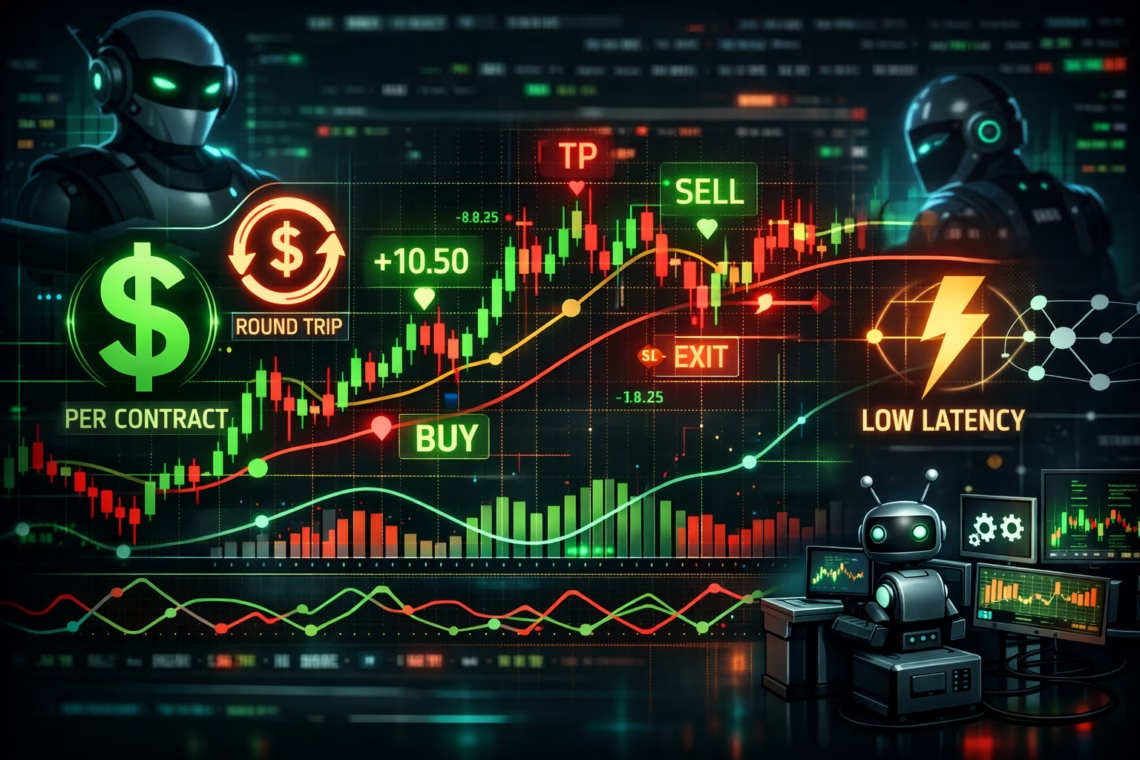
- Per-Contract (Per-Side): Charged separately for entry and exit (e.g., $0.50 per side = $1 round trip before extras). Common in 2026 low-cost brokers for high-volume scalpers.
- Round-Trip (Round Turn): Total cost for a complete buy-sell cycle, often marketed as “all-in” but usually excluding exchange/NFA fees.
Recent 2026 Insights:
- Many brokers advertise “$0 commission + $0.25-$0.50 per side” for micros, translating to $0.50-$1 round trip base.
- Exchange fees (CME) + NFA ($0.02 per side) add $0.50-$2+ depending on product.
- Volume discounts kick in for active traders (e.g., Interactive Brokers tiered to $0.10-$0.25 per side).
For scalpers, per-side structures often appear lower but require calculating true round-trip to compare. A “$0.39 per side” plan might total $1+ all-in—still competitive but not always the cheapest after extras.
Click Here To Automate Futures Trading
How to Optimize Trading Costs in Futures Scalping
- Choose Low All-In Brokers — Look beyond headline commissions. Top 2026 picks for scalpers include Interactive Brokers (tiered low as $0.10/contract), Optimus Futures ($0.25/side micros), and Tradovate (flexible plans). Avoid high flat fees if trading high volume.
- Trade Micro Futures — Lower tick values but proportionally reduced fees make them ideal for cost optimization. Round-trip costs often under $1 vs $4+ on standards.
- Leverage Volume Discounts & Negotiate — High-frequency scalpers can secure rebates or lower rates.
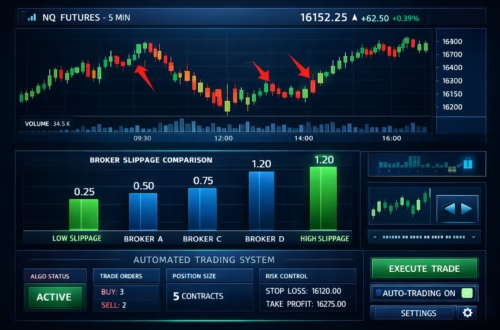
- Minimize Slippage & Errors — Use direct market access (DMA) platforms with low latency.
- Incorporate Automation — Manual execution leads to missed entries or extra trades. Tools like PickMyTrade automate TradingView strategies directly to US brokers (Tradovate, Rithmic, Interactive Brokers), ensuring precise, emotion-free execution 24/7. This reduces overtrading and optimizes costs by executing only high-probability signals—perfect for scalpers in US markets like ES, NQ, or micros.
By automating with PickMyTrade, scalpers maintain discipline, cut unnecessary trades, and focus on strategy refinement while keeping commissions low through efficient volume.
Broker Comparison for Optimizing Trading Costs (2026)
| Broker | Micro Per Side (Base) | Round-Trip All-In Est. | Best For Scalpers? | Automation Friendly? |
|---|---|---|---|---|
| Interactive Brokers | $0.10-$0.25 | $0.50-$1.50 | High-volume pros | Yes (API) |
| Optimus Futures | $0.25 | $0.75-$1.50 | Low-cost entry | Yes |
| Tradovate | $0.29-$0.39 | $1-$2 | Cloud-based | Excellent (PickMyTrade native) |
| AMP Futures | Varies low | $0.88-$4+ | Budget scalpers | Yes |
Always verify current rates and add exchange/NFA fees.
Final Thoughts: Make Cost Optimization Your Edge
To thrive as a futures scalper in 2026, prioritize optimizing trading costs through smart broker selection, micro contracts, and automation. Round-trip views give the full picture, while per-contract quotes help compare apples-to-apples. Integrate tools like PickMyTrade to automate futures trading on US markets, reduce errors, and scale efficiently without inflating costs.
Master these elements, and your scalping strategy can turn consistent small wins into substantial gains.
Most Asked FAQs on Optimizing Trading Costs
Round-trip is the total cost for opening and closing a position; per-contract (per-side) charges fees separately for entry and exit—double it for round-trip comparison.
All-in round-trip often $0.50-$1.50 per contract, with base per-side as low as $0.10-$0.50 at top brokers.
Interactive Brokers, Optimus Futures, Tradovate, and AMP offer competitive rates; choose based on volume and platform.
Yes—tools like PickMyTrade automate strategies on US futures brokers, reducing manual errors, overtrading, and unnecessary fees.
Disclaimer:
This content is for informational purposes only and does not constitute financial, investment, or trading advice. Trading and investing in financial markets involve risk, and it is possible to lose some or all of your capital. Always perform your own research and consult with a licensed financial advisor before making any trading decisions. The mention of any proprietary trading firms, brokers, does not constitute an endorsement or partnership. Ensure you understand all terms, conditions, and compliance requirements of the firms and platforms you use.
Also Checkout: Best Trading Bot Hardware for 10+ Bots in 2026