In the fast-evolving world of futures trading, futures trend algo examples remain a cornerstone for systematic, emotion-free profits. As we step into 2026, trend following strategies continue to shine amid volatile markets driven by geopolitical shifts, AI advancements, and adaptive systems.
Recent performance reports show managed futures and trend-following indexes delivering positive returns, with adaptive approaches incorporating AI volatility filters gaining traction. This updated guide dives into a proven futures trend algo example, blending classic indicators with modern automation.
Why Trend Following Works in Futures Trading in 2026
Trend following capitalizes on sustained price moves in futures contracts like E-mini S&P 500 (ES), Nasdaq (NQ), or commodities. Unlike mean reversion, it rides momentum rather than fighting it.
In 2025-2026, trends strengthened in equities, precious metals, and currencies, while adaptive trend following—using dynamic parameters and machine learning—helps navigate whipsaws. Simple systems like moving average crossovers still outperform in trending regimes, as seen in historical backtests and real-world CTA performance.
Core Components of a Futures Trend Algo Example
A robust futures trend algo example relies on these key elements:
- Trend Identification → Moving Averages (e.g., 50-period EMA and 200-period EMA)
- Momentum Confirmation → MACD (12,26,9) or RSI (14-period) to avoid false signals
- Entry/Exit Rules → Crossover for entries, trailing stops for exits
- Risk Management → Position sizing at 1-2% risk per trade
Classic example: Buy when the short-term moving average crosses above the long-term one in an uptrend, confirmed by MACD above zero.
Practical Futures Trend Algo Example: Moving Average Crossover with MACD Filter
Here’s a timeless yet effective futures trend algo example for 2026:
- Indicators Setup:
- 50-period EMA (fast)
- 200-period EMA (slow)
- MACD (12,26,9)
- Entry Rules:
- Long: 50 EMA crosses above 200 EMA and MACD line > signal line
- Short: 50 EMA crosses below 200 EMA and MACD line < signal line
- Exit Rules:
- Trailing stop below recent swing low (longs) or above swing high (shorts)
- Or reverse signal
This strategy excels in trending markets like NQ futures during tech rallies.
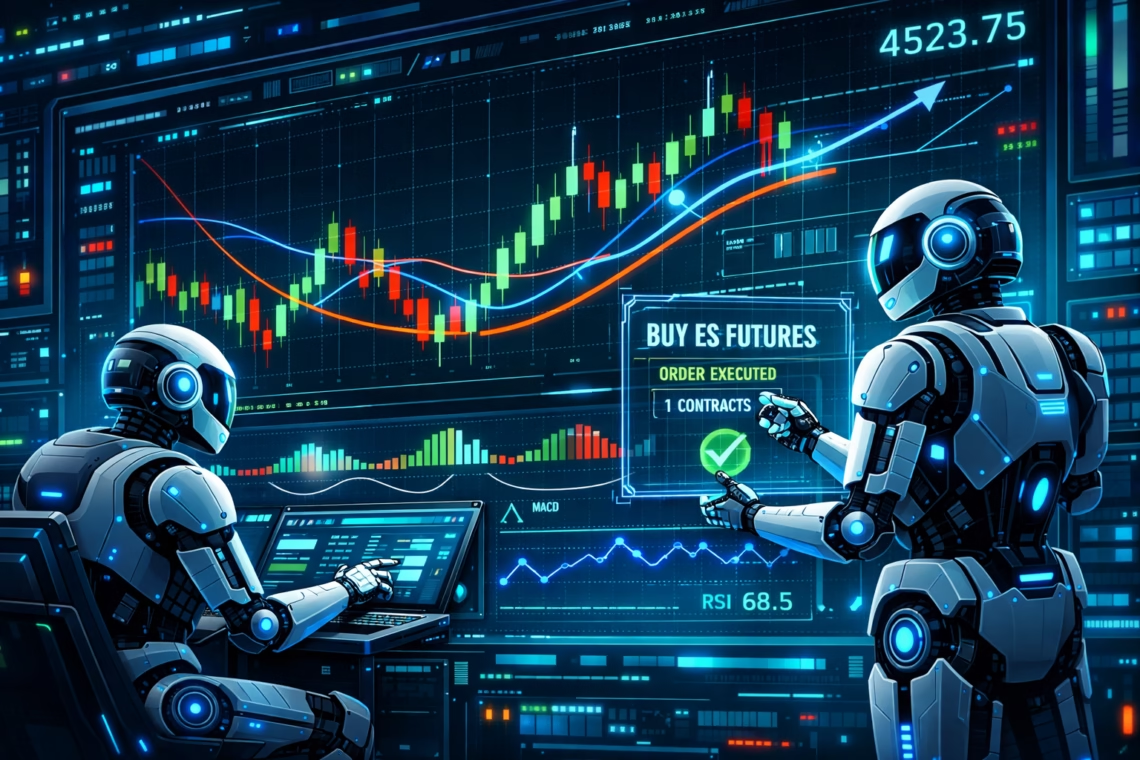
For visual clarity, here are examples of trend-following charts in action:
(Note: In a full blog, we’d render searched images here of moving average crossovers on ES futures charts, MACD signals during trends, and automated execution dashboards.)
Automate Your Futures Trend Algo with PickMyTrade
To bring this futures trend algo example to life without coding hassles, use PickMyTrade—a leading no-code automation platform.
PickMyTrade connects TradingView strategies directly to brokers like Tradovate, Rithmic, and Interactive Brokers. Set up alerts for your moving average crossover or MACD signals, and it executes trades instantly with built-in risk tools: stop-loss, take-profit, trailing stops, and position sizing.
Popular for futures automation, it supports 24/7 execution on contracts like ES, NQ, or crypto-linked futures. Traders report seamless integration for trend strategies, turning signals into real trades across multiple accounts.
In 2026’s high-volatility environment, automating your futures trend algo example with PickMyTrade reduces emotional errors and captures trends faster. Join thousands automating futures today.
Get a 5 – day Free Trial of Futures Trading Automation
Advanced Tips for 2026 Trend Following Success
- Add adaptive elements: Use AI-driven volatility filters to adjust periods dynamically.
- Combine with RSI: Avoid entries if RSI >70 (overbought) or <30 (oversold).
- Backtest rigorously: Test on recent data including 2025 dislocations.
- Diversify: Apply across asset classes for better risk-adjusted returns.
Trend following isn’t dead—it’s evolving. Simple, robust algos still deliver in 2026.
Most Asked FAQs
A futures trend algo example is an automated system that identifies and trades sustained price trends using rules like moving average crossovers or MACD, often implemented via platforms like TradingView and PickMyTrade.
Yes, especially adaptive versions. Reports show positive performance in equities, metals, and currencies, with CTAs benefiting from systematic rules amid volatility.
Moving averages for trend direction, MACD for momentum, and RSI for overbought/oversold filters. Combine them for higher accuracy.
Use PickMyTrade to link TradingView alerts to brokers like Tradovate for no-code execution with risk management.
Disclaimer:
This content is for informational purposes only and does not constitute financial, investment, or trading advice. Trading and investing in financial markets involve risk, and it is possible to lose some or all of your capital. Always perform your own research and consult with a licensed financial advisor before making any trading decisions. The mention of any proprietary trading firms, brokers, does not constitute an endorsement or partnership. Ensure you understand all terms, conditions, and compliance requirements of the firms and platforms you use.
Also Checkout: Why Deep Historical Backtesting Matters