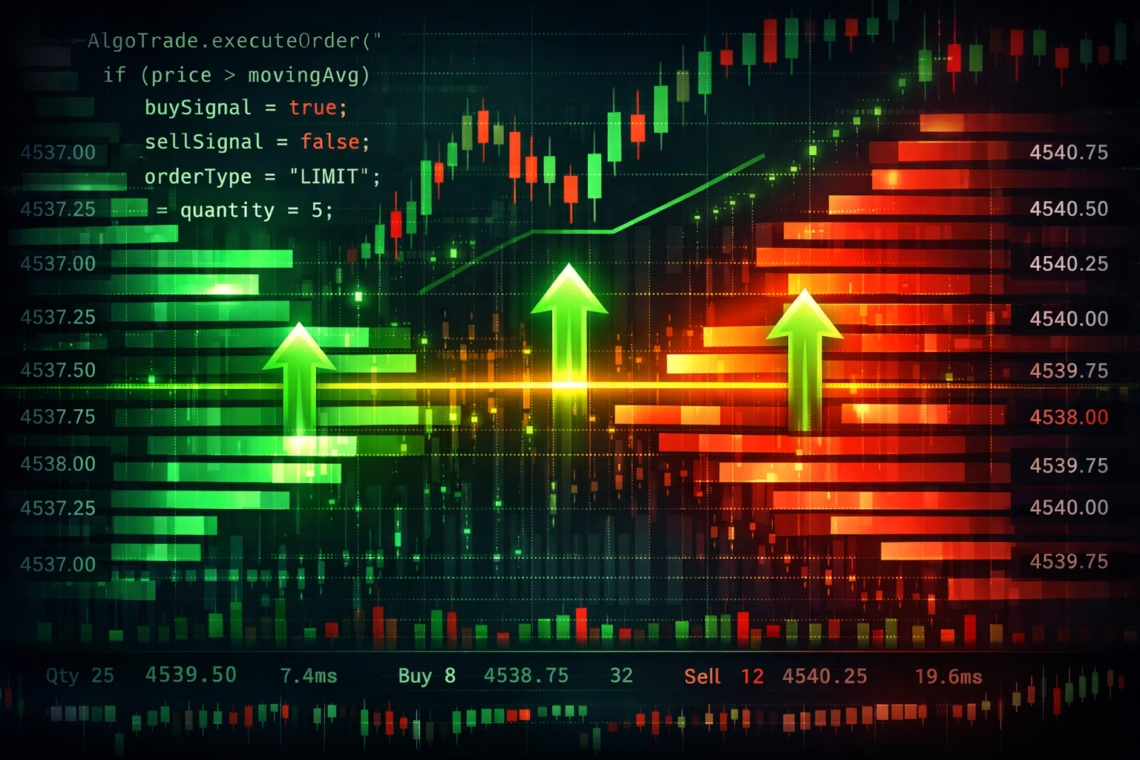
In the fast-paced world of order book data analysis, algorithmic traders gain a critical edge by interpreting real-time market depth to time precise entries. Order book reveals pending buy (bid) and sell (ask) orders, exposing liquidity, imbalances, and institutional intent before price moves appear on charts. As algorithmic trading surges—with global market size projections reaching billions in revenue by 2030—leveraging order book data has become essential for futures markets like E-mini S&P 500 (ES), Nasdaq (NQ), and commodities on US exchanges such as CME.
Recent developments highlight how AI and machine learning enhance order book data processing. Studies show algorithmic trading improves efficiency by incorporating past market and limit order flows, while tools filter noise in high-frequency updates for better directional signals like order book imbalance (OBI). In 2025-2026, advancements include multi-level OBI models, liquidity-aware strategies, and real-time feeds enabling sub-millisecond decisions amid volatility events.
Why Order Book Data Matters in Algorithmic Futures Trading
Order book data provides unmatched transparency into supply and demand dynamics. Unlike lagging indicators, it shows live intent:
- Imbalances signal potential price direction—e.g., heavy bids suggest upward pressure.
- Spoofing detection helps avoid traps from fake large orders.
- Absorption patterns reveal where aggressive orders meet resting liquidity, often leading to reversals or breakouts.
In futures, where leverage amplifies outcomes, order book data helps minimize slippage and predict short-term moves. Research from 2025 indicates filtered order book data boosts prediction accuracy in high-frequency environments, especially for index futures.
Key Strategies Using Order Book for Algo Entries
- Order Book Imbalance (OBI) Entries Calculate OBI as (bid volume – ask volume) / total volume across top levels. Enter long on positive imbalance spikes, short on negative. Advanced 2025 models use multi-horizon, deep learning-enhanced OBI for intraday to longer horizons.
- Liquidity Heatmap and Cluster Analysis Visualize resting orders to spot support/resistance. Algo entries trigger when price approaches clusters with thinning opposite-side liquidity, confirming breakouts.
- Absorption and Delta Divergence Monitor cumulative delta (aggressive buys minus sells). Enter against absorption—e.g., price rises but delta turns negative, signaling exhaustion.
- False Breakout Traps Watch large orders at key levels. If price breaks but liquidity rebuilds opposite, reverse entry for high-probability setups.
Combine these with volume profile for confluence, as institutional activity clusters create reliable zones.
Click Here To Automate Futures Trading
Integrating Order Book Data into Algo Systems for US Futures Markets
Modern algos ingest order book via low-latency feeds (e.g., CME depth-of-market). Use platforms supporting real-time Level 2 data for backtesting and live execution. AI-driven filtration reduces noise from flickering orders, improving signal quality.
For seamless automation in US futures markets, tools like PickMyTrade stand out. This platform specializes in futures trading automation, connecting signals (including order book – derived alerts from TradingView or custom indicators) to brokers like Tradovate, Rithmic, Interactive Brokers, and TradeStation. With no-code setup, webhook integration, and 24/7 execution, PickMyTrade enables traders to automate entries based on order book strategies—such as OBI triggers or heatmap patterns—while incorporating risk controls like stop-loss multipliers. Ideal for scalping ES/NQ or spread trading, it supports unlimited alerts and multi-account management, making it a top choice for hands-free algo trading in volatile US futures.
Recent Updates and Trends (2026)
As of early 2026, algorithmic adoption grows rapidly in North America (dominant share), driven by AI for microstructure analysis. Regulatory focus (e.g., SEC timestamping) emphasizes precise execution. Tools now feature AI order flow combos, with platforms bridging analysis to automation. Volatility events like 2025 tariff impacts showed order book resilience in assessing true liquidity beyond depth.
Traders combining order book with AI see edges in regime-adaptive strategies, avoiding always-on pitfalls.
In summary, order book transforms algo entries from reactive to predictive. Master it for sharper timing, reduced risk, and consistent edges in futures.
Most Asked FAQs
Order book data displays all pending limit buy and sell orders at various price levels, showing real-time market depth and liquidity.
It reveals imbalances, absorption, and intent for precise entries, reducing slippage and predicting moves before charts reflect them.
Key ones include OBI entries, liquidity cluster trades, absorption reversals, and false breakout detection.
Yes, with tools like heatmaps and platforms automating signals; start with demo accounts on futures like ES.
PickMyTrade automates futures strategies via webhooks from order book data indicators, executing on US brokers like Tradovate with risk management.
Disclaimer:
This content is for informational purposes only and does not constitute financial, investment, or trading advice. Trading and investing in financial markets involve risk, and it is possible to lose some or all of your capital. Always perform your own research and consult with a licensed financial advisor before making any trading decisions. The mention of any proprietary trading firms, brokers, does not constitute an endorsement or partnership. Ensure you understand all terms, conditions, and compliance requirements of the firms and platforms you use.
Also Checkout: Automated Trading Systems for Futures & Prop Firms